Showing posts with label poetry. Show all posts

Thursday, October 23, 2025

'Karma' 2.0 — a secular spin on Edward Arlington Robinson

Ennui was in the air, and one lament
From me, one of a few confusing flaws
In divers of self-images. Because
The world round me would not march to my bent,
Was I to answer for my discontent?
I pondered, and the reason for it was 
A purveyor of a religious cause
Warning the world that it must repent.
 
Accepting a wonted disgust at this
I magnified a fancy that I wished
His own evil led to an end so grim.
Then, my eye rove, found solace if not bliss
And, from the pavement before me, I fished …
A dime for myself who was dead to men.
 
====
 
 
Christmas was in the air and all was well
With him, but for a few confusing flaws
In divers of God's images. Because
A friend of his would neither buy nor sell,
Was he to answer for the axe that fell?
He pondered; and the reason for it was,
Partly, a slowly freezing Santa Claus
Upon the corner, with his beard and bell.
 
Acknowledging an improvident surprise,
He magnified a fancy that he wished
The friend whom he had wrecked were here again.
Not sure of that, he found a compromise;
And from the fulness of his heart he fished
A dime for Jesus who had died for men.

Thursday, February 22, 2024

A Monty Python-esque poetic fairy tale mashup

 Written in response to a semi-challenge on Goodreads, when I snarkily responded to a friend's talk about "b&b" angles on a fairy tale and said "bed and breakfast" even as I knew it was "Beauty and the Beast" knockoff talk:

Once upon a midnight dark and dreary

Sleepless in the bed with eyes so bleary

Because their breakfast had made me teary

There be dragons there, hear ye, hear ye!


The beauty smoked Gauloises in the park

While the beast lurked behind her in the dark

The tale of pending horror loomed so stark

There be dragons there, out on a lark!


The beast was Jack, indeed the Ripper

But the beauty brained him with her slipper!

It was glass, remember, sized to fit her

But her stride uneven might just trip her

The three-inch heel like that of stripper?

There be dragons there with smoked kipper.


It WAS the mightiest beast in the parkland forest

And that herring cut it down to death most goreless.

Saturday, September 16, 2023

Grieving, friendship, family and philosophy

I grieved for

The closure that would never happen,

Even though closure is a myth


I grieved for

The childhood fear and anger

Of him, and about him

That I could never more fully express to him,

Never more get him to understand,

Never again try to make him understand.


I grieved for

The fact that he never would abandon

The myth of control

Over his family, his fatherhood

And the narratives he had spun to himself

About all of this.


I grieved for

The fact that he had walled himself up

Over the bits of my childhood fear and anger

That I had told him about,

As he built that wall of control higher

Against the perceived Mongol invaders,

Or whatever he thought of these challenges.


I grieved for

Any form of an “us”

That growing or changing, could have continued.


But

I grieved for

Me

Most of all

Because I still hadn’t gotten past that fear enough.


Real friends,

Friends for life,

Whether in families or not

Let their friends grow

In ways that are good for them,

And, offer suggestions first,

Stronger comments second,

And maybe rebukes next,

When they see friends growing in unhealthy ways.


— As inspired by Kieran Setiya

Thursday, March 30, 2023

The bacon on the grill for Ramadan and beyond

I ate the bacon

That was on the grill


And which

You were surely ignoring

And not only

Because of Ramadan.

Or Yom Kippur.

Or Good Friday.


It was delicious.

No forgiveness needed.


Riffing, of course, on William Carlos Williams' "This is Just to Say."


Note: I'm not a Gnu Atheist, but I do skewer at times. 

Also, I'm a semi-vegetarian, but here's how to get crisp oven-roasted bacon.

Thursday, July 21, 2022

New political-personal poetry: Middle-class precariat pseudo-leftist

Middle-class precariat pseudo-leftist

I know that I am the first and the second
And that they are intertwined.
Does this make me a pseudo-leftist as well.
Am I too afraid
Of giving up the scraps of security
In a bank account and elsewhere
That I have scraped for
To put myself in that middle class
And to try to avoid that precariat
(Even in a precariat career)
To be a "real leftist"?

As I get older
Maybe I'll know the answer
Or at least know it in larger part than now,
And as I learn it,
Maybe I'll be honest with myself.

It's easy to make excuses
But, in a dysfunctional life,
It's also easy to blame oneself,
Or to use the vocabulary of blaming oneself
To avoid deeper thought in general.

At the same time, where is there a dictionary
That can authoritatively, and unambiguously,
Define the term "real leftist"?
"If it feels leftist, then do it"?

Per old Idries Shah, sometimes overquoted
If there are more than two sides to this issue,
There's also a continuum of some sort.
And, I'm on that, and not at the zero point.
Real leftist in progress, or sympatico fellow traveler.

Thursday, January 02, 2020

Top blogging of 2019

 It was a very interesting year here by what readers liked.

A mix of debunking, takes on things Luther, pseudoscience debunking, philosophical hot takes and my poetry made up the 10 posts most read by readers this last year. More than half of the posts were pre-2019, but that's fine. Good stuff ages well.

No. 1? A decade-old blog post that I'd originally forgotten to put a header on and that eventually took off. (Spammers, maybe?) It was about "libertarian pseudoskeptic pseudoscience" and looked at some of the worst in pseudoskepticism, and sometimes pseudoscience, by leading libertarian lights in the Skeptics™ world like Brian Dunning and Michael Shermer.

No. 2? My take on a recent revelation that  early research on which Benjamin Libet based his "brain delay" studies, "undermines his research angle but also reinforces his philosophical scrivening." I chided some not to throw out the baby with the bath water; in other words, Libet ain't dead yet.

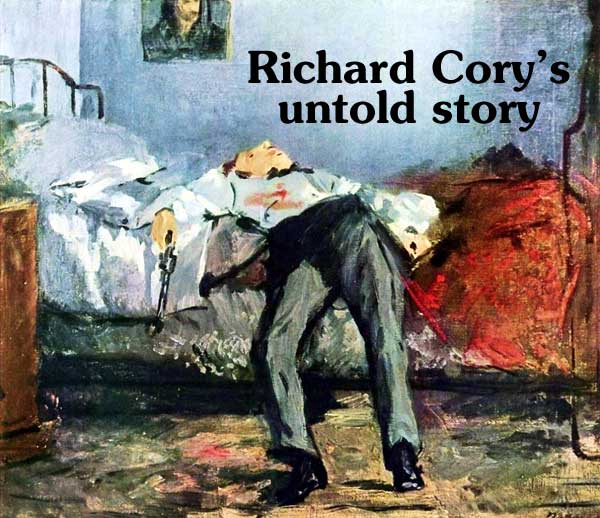
No. 3? My rewrite and update on Edward Arlington Robinson's classic "Richard Cory."

No. 4? A throwaway post, at least on the surface, from a decade ago. I encouraged intellectual types to be themselves in making small talk.

No. 5? An update to a 2017 blog post, where I further call out the cultural Catholicism lies of alleged atheist Tim O'Neill and his History for Atheists blog. (I found out, in the process of the update, that I'm far from alone.)

No. 6? Gun Nuts for Luther? Headquartered here in Tex-ass? My brother a member of their Facebook group? Whoda thunk? Here's the details.

No. 7? More Luther, this time my extended review of Lyndal Roper's 2017 biography. A solid 4-star work, but at the end of the year, with books newish and older, I still hadn't found a total 5-star tome.

No. 8? My uncle died just over a year ago. Rather than attend the funeral and be laden with religion and religious-based guilt-tripping, I wrote a poem about all that.

No. 9? Also from late 2018? I smacked around Andrew Sullivan for his latest (at that time) stupidities, and attached one of my most delightful Photoshoppings.

No. 10? Daring to touch the third rail of American foreign policy discussions, and based in part on my review of Yuval Noah Harari's "Homo Deus," I dared ask "Who's a Jew vis-a-vis Zionist claims?"

Finally, it was the most productive year blogging here since 2012. It's given me a diversion from my main blog. And, as 2019 readers can see, for the next two years, expect more Lutheran Reformation 500th anniversary posts.

Friday, April 05, 2019

Richard Cory Redux


My homage, in more modern times, to the classical poem by Edward Arlington Robinson.

Go here for the original.

RICHARD CORY REDUX

Whenever Tommy Johnson went up town
Haughty in high brick homes glared down at him
No gentleman he, not from sole to crown,
Half starving, preternaturally thin.

Poor was he, poor he’d been, poor would remain,
Alone, fam’ly gone, left to his own wit.
Even we at life’s edge felt his pain,
And yet … to that he would never admit.

Then one weekend, six numbers matched his list,
The dream of each and all of us come true.
The state had millions to fulfill his bliss;
Dear old TJ would be a bit less blue.

No more Tommy Johnson went up town;
Twas Thomas now, whether you please or not.
Imperially robed from sole to crown,
Without a care, even without a thought.

And he was now so flashily displayed,
Somehow he seemed less human when he talked;
Duded like a crosstown pimp, all us said,
Yet too inept to swagger when he walked.

Rich? Yes, with all his wealth could buy, and yet,
Each new monthly dollar meant yet less taste
But without fear, without regret or fret;
Envious, we wished we were in his place.

Christmas neared, and he fancied he wished
Peace on earth to all, good will to men,
And from the fullness of his heart he fished
Dimes for Santa to briefly pause his bell-din.

So on we worked, and waited for the light,
Went without heat, wishing old Tommy dead;
Then our quondam friend, one cold winter night,
Went home and put a bullet through his head. 

— With a nod to Edwin Arlington Robinson


Sunday, October 21, 2018

If funerals are for the living, I shall not attend:
Thoughts, poetry, Schnittke

If funerals are for the living, what then when the living, or one of the living, doesn't want to do to the funeral of a dead relative?

My uncle died a couple of days ago. My dad had the one sister and no brothers, and my mom was an only, so I have just his sister and her husband, the dead uncle as aunts and uncles. The funeral is Tuesday. I could surely get off work, but I am not interested.

I semi-swore to myself after my mom's death, at her funeral, that I would never need to see my oldest brother again, for various reasons. I put the issues of deaths of siblings out of mind as being decades in the future, barring accidents or early cancer or similar.

But, I forgot about aunt and uncle, and now he is dead.

And I don't want to go, and not just because he's is surely going to be there.

I also semi-swore to myself that, other than for possible courtesy visits to church when visiting my sister and her minister husband, that I never would set foot in a church again except to attend a concert or other artistic event.

I have no desire to go there, and, at a minimum, to be a hypocrite, and, at a maximum, be proselytized by my aunt, or her daughter (both former parochial school teachers), or my oldest or second-oldest brothers, with the likelihood from greatest to least being in that order. Years ago, my aunt sent me an Easter card that, in not so few of words, said "You know it's true," about fundamentalist Easter beliefs. A religious funeral among conservative Lutheran Christians is only likely to bring that all to the surface, not to mention that, pre-deconversion, I had been to her church umpteen times and some oldsters there may still know me.

No desire.

If funerals are for the living, I'm not going.

I then, with this adapted from handwritten journaling, thought about a poem. I had been thinking about writing one this afternoon. Hadn't sat down to do that.

Then, just after finishing up these notes, this extended haiku started to work its way out.

Death is for the dead
And life is for the living.
So don't fence me in.

Better yet, I won't
Fence myself by attending;
We're all better off.

Namaste for all —
A word that might well offend
Some others itself.

I touched dad's cold skin,
Satisfied that dead is dead
And shall remain so.

Schnittke's Requiem
Challenges old conventions;
Death is chaotic.

Emotional wounds
I shall not give, nor receive.
They will still result.

We will drift further.
I accept that is the price
Of preservation.

Not the first poem in this general vein. I wrote in the summer of 2017 about a dying secularist friend, and what to say to him, or not.

Thursday, June 14, 2018

JUDAS THE SON OF GOD


I am the Son of God.

I was born, I saw and I fell;
That last part due to mythmakers
Who rejected my message.
My name was Judas, Son of God.

The lies against my name are many.
Some claim I was demon-seized
And sold the man named Jesus
For 30 pieces of silver.
Others say I was his cosmic twin,
Judas Didymus Thomas
Later denigrated to move the force
To the one and only.
Others yet call me Ormazd
To his Ahriman,
The dark side of a dualistic god.
And others still a ???
Fated to play out a role;
A reasoning pawn in a cosmic play.
All are wrong.

Rather —
I was the one, the Monogenetes,
I was the Son of God, the Word made flesh.

Am I jealous of the Nazarene?
But of course. I am the Word made flesh.
With good motive — emotions no less dark
Than my father Yahweh had against Sodom
And against the Amalekites, then against Saul.

I am the Son of God.

I am.

Friday, July 28, 2017

Poem: SITTING SHTETL FOR THE LIVING

SITTING SHTETL FOR THE LIVING

He has six months left,
If it's even that.
What can I say to ease his pain?
We're both secularists; we both accept
The reality that presents itself to us.
Why do I feel the need to speak?
Is it to ease my pain, not his,
To ease my frustration for him?
He is not the first secularist friend
That I have had die.
But, he’s the first for whom
I’ve had this much advance notice.
Sitting shtetl is about listening.
Only then about speaking.
I can ease his pain best
By dealing with mine in other ways.

But, I’m still talking about me.
What, other than listening,
Will ease his pain?
I hope he knows of what will help
And reaches out
To one or more of his listeners.

It doesn’t have to be me.

“Control freak” is just a label that
I don’t have to use.
Others surely feel the same.
Helpless, frustrated, angry.

I’m sorry.
Rest in peace among the living,

For as long as you can.

Wednesday, November 16, 2016

Riffing on Robert Frost


I took the road less traveled
And later, in that New England chill
I met Robert Frost.
We talked, and conversed
About fences, and posts,
And autumn-time poignancy.
I soon recognized that,
Per the sages of the East,
The only good poet is a dead poet.
So, I shot Robert Frost,
And pushed him over the fence again.
Good fences good neighbors make.

It has been suggested that I misunderstand Frost in his original poem "Mending Wall." Rather, per that Wikipedia link, I see myself as picking up on just a couple of the themes of what is indeed a complex poem.

And, per what I said to an online friend on my Google Plus account, I partially agree, partially disagree. And, by "partially agreeing, partially disagreeing," arguably, I do pick up on the idea that Frost identifies explicitly with neither the narrator nor the neighbor.

Per this link, which would be rephrased as what my dad said, "Trust everybody but still cut the cards," Ben Franklin agreed with me.

And, per this roundup of professional literary critics, I may not be interpreting Frost so wrongly anyway. If, per the second critique, an unspoken punnery of playing on the word "Frost," as in the author's name, is not just "Something there is that doesn't love a wall," but that runs from there through the whole piece, then I've interpreted him on that one particular theme at least semi-correctly after all.

So, Frost remains shot, and pushed back over his fence.

Besides that, per a later critique which includes a quote from Frost, he arguably explicitly supported some sort of reader-response criticism.

George Montiero notes:

Asked once about his intended meaning, Frost recast the question: "In my Mending Wall was my intention fulfilled with the characters portrayed and the atmosphere of the place?" Characteristically, he went on to answer obliquely.
I should be sorry if a single one of my poems stopped with either of those things—stopped anywhere in fact. My poems—I should suppose everybody's poems—are all set to trip the reader head foremost into the boundless. Ever since infancy I have had the habit of leaving my blocks carts chairs and such like ordinaries where people would be pretty sure to fall forward over them in the dark. Forward, you understand, and in the dark. I may leave my toys in the wrong place and so in vain. It is my intention we are speaking of—my innate mischievousness.
No other poem in the Frost canon better illustrates his manner—as he described it—and his overall poetic intention.
"Good fences good neighbors make."

There, I've deliberately modified Frost's order. Frankly, I think my meter and cadence are better than his.
 
And, yes I do, and I stand by that.
 
Update, June 13, 2025: The start of my poem is of course riffing on "The Road Not Taken," itself complex and often misunderstood
 
That said, it's generally not perversely misinterpreted, as literary critic Adam Plunkett does to "The Freedom of the Moon" in his "Life and Need," presented as a bio of the life of Frost's poetry, but before I slammed the cover shut, surely presenting itself as a bio of Frost. 

Saturday, October 15, 2016

A Word to the Disabled

A WORD TO THE DISABLED

I wasn't disabled myself
But I was, briefly,
Semi-disabled.
A blur of gray,
An attempt to turn and spin and brake
And a crash.
A compact car loses
To a full-size truck.

I stare at my arm
And my displaced hand.
With numbness,
Then shock.
"Shattered,"
The doctor said;
"Not your typical break."

Lids don't turn;
Tops don't pop;
Tab don't pull.
Not for months, not easily.
Not with that left arm.
I learn that life is more difficult
When I can't open the diced tomatoes
With my hand can opener.
Having to learn new ways
Of putting on shirts
And not even wearing some,
Because it was too hard,
Is part of a process, too.

I've gotten better.
Fortunately, if not young,
Despite my PT's words,
I'm not old.
I'm healing
And looking at full recovery.

But, I've learned, 
At least briefly,
What it's like to be semi-disabled,
And gained
A bit of empathy
For the fully disabled.

It's not just physical challenges, 
Or so it seems.
Fear. Anxiety. Frustration.
Many other emotions.

And, to the disabled —
I hope I remember
At least a bit of what I have learned.

You don’t want patronization
Any more than pity.
You’d like respect, and understanding,
Along with sympathy.
Even better — empathy, if possible.

Above all, you’d simply
Like to be seen as human.
And not a mascot,
Not an “always on” inspiration,
Or otherwise on a pedestal.

Simply human.
With the full gamut
Of human emotions

And human drives.

I hope I remember.
If I don’t,
Especially if I know you personally —

Please remind me.

Thursday, September 08, 2016

Man’s Mindset vs. God Grandeur

A riff on, but no apologies to, Gerard Manley Hopkins


MAN’S MINDSET

The world is charged with the mindset of man
It will flame out, like shining from shook foil;
It gathers to a greatness, like the ooze of oil
Crushed. Why do we then now not think our plan?
Generations have gone, have gone, have gone;
And all is seared with trade; bleared, smeared with toil;
And wear’s man’s smudge and shares man’s smell; the soil
Is hard now, as foot can feel, worn to bone.

And in all this, nature is badly spent;
            There lies the dearest drearness deep down things;
And as the last lights of the black West went
            No morning at the brown brink eastward springs —
Spiritus Mundi flees from the rent

            World, pale with dead mist; no comfort it brings.

Saturday, February 14, 2015

THE THIRD AND FOURTH GENERATION

The following poem, as should be clear from the title, riffs on a famous quotation from Yahweh in the Old Testament/Tanakh. It also references a fairly famous saying of Jesus, one of Tolstoy and one of Wordsworth, concluding with Herbert Spencer.

THE THIRD AND FOURTH GENERATION

There is no sin,
As we have no gods to offend,
But offenses there are,
One human to another, in great regularity.
The offensiveness of familiarity
Nests above all in families dysfunctional,
Each alike in their own different way.
No gods need destroy, nor drive mad,
Those who burden themselves
And their descendants,
Unto the third and fourth generations,
With false guilt, shame, anxiety and worse.
Rather than the elders
Being weighted with millstones
And cast into the sea,
The thrust off these crushing weights
Onto the necks of the weaker and younger
Of their own households and families.

Social Darwinism starts at home.


            — Feb. 14, 2015

Friday, June 06, 2014

A little DABDA will do ya — outside of death and dying


A little DABDA

A little DABDA will do ya,
Or so, the grieving are told.
But there’s no right way, or wrong way, to mourn
Even if there are more common, and less common, ways.

Sometimes, loss doesn’t involve denial.
A death, a divorce, or similar, has been long anticipated.
Likewise for anger; it’s been wrestled with
And exhausted,
Before the loss.
Likewise for bargaining.
Depression? More common, and more normal,
Even before acceptance, which may never fully come for some.
Sometimes, they overlap.
Emotions, after all, aren’t discrete.
Sometimes, one emotion is experienced
Two or more times, even if others aren’t.

And maybe, just maybe
A little DABDA will do ya,
For things besides loss.
Like depression, even if it’s a “D” itself.
Or anxiety.

Don’t we deny our own emotions at times,
Or longer moods,
Or more complex psychological states?
Of course, especially if there’s reason for us to do that.
Don’t we get angry at being depressed,
Or frustrated at being anxious?
Yes.
Unfortunately, bargaining aside,
Depression or anger don’t fully disappear.
A little DABDA

A little DABDA will do ya,
Or so, the grieving are told.
But there’s no right way, or wrong way, to mourn
Even if there are more common, and less common, ways.

Sometimes, loss doesn’t involve denial.
A death, a divorce, or similar, has been long anticipated.
Likewise for anger; it’s been wrestled with
And exhausted,
Before the loss.
Likewise for bargaining.
Depression? More common, and more normal,
Even before acceptance, which may never fully come for some.
Sometimes, they overlap.
Emotions, after all, aren’t discrete.
Sometimes, one emotion is experienced
Two or more times, even if others aren’t.

And maybe, just maybe
A little DABDA will do ya,
For things besides loss.
Like depression, even if it’s a “D” itself.
Or anxiety.

Don’t we deny our own emotions at times,
Or longer moods,
Or more complex psychological states?
Of course, especially if there’s reason for us to do that.
Don’t we get angry at being depressed,
Or frustrated at being anxious?
Yes.
Unfortunately, bargaining aside,
Depression or anger don’t fully disappear.

Friday, February 14, 2014

Ray Kurzweil is not my savior


RAY KURZWEIL IS NOT MY SAVIOR

I uploaded my life to the cloud.
Ray Kurzweil said I could reinvent myself
As an immortal Singularitan.

Beyond not believing this was possible,
I didn’t know what I would do,
Or what it might feel like,
If it were the case.

What if the power went off?
Would I then not be immortal?
If I were rebooted, would I remember the down time?
A man’s cybermolecules scattered all across the damned universe,
Would I feel like “Immortal, Interrupted”?

What if I didn’t get a software upgrade
In a timely fashion?
What if I were on a slow connection speed?
Would I feel like “Immortal, Second Class”?
Ditto for all my necessary hardware.

What if resource wars break out
Because everybody else likes Kurzweil’s opportunity?
Will our planet run dry?
Will Kurzweil’s Fordies kill the rest of us, or make us drones?

These were only a few of the many questions
That wandered through my mind.
So I shut the lid to Pandora’s laptop
And toddled off to face a strange, unsettled sleep.

Thursday, September 26, 2013

Non-ideal, non-Platonic, ideas and bodies


I roll over in bed
And my arm touches
My slightly pudgy, definitely non-Platonic stomach.
My mass of human flesh
Feels vaguely warm, vaguely bland
On a semi-sleepless early night of sleep.
I feel detached from my self,
Reflected by being detached from my body.

More than detachment from my body,
Or from my self, in general,
I feel detached from life.
I feel burned out by the world.

It is of little help
To read that I am not alone
In modern America,
Or in the modern West.
Misery, when the psychological level
Of a low-grade, chronic toothache,
Cares little for company one way or another.

The world of Platonic ideas
Usually as currently dressed in Christian drag
Is thereby appealing for many.
But it is the ideas
That are shadows on the walls of the cave
And not the reality.

Friday, December 21, 2012

Our Atomic Lives


OUR ATOMIC LIVES

Our atomic lives can never be fused.
No nuclear furnace of love
Whether erotic, companionate or both
Can fuse two hydrogen’s into one permanent helium.
Nor can the deepest Pythian friendship
Save perhaps in the rarest of cases
Keep two bonded lives from some fissile shock;
Alone we are doomed to be.

Alone we are doomed to be.
But is that really true?
No doom has been pronounced upon us.
Our aloneness simply is.

Beyond this, the real, awful aloneness,
Is not the aloneness from others, but from our own selves.
Alienation is always, finally, internal.
For both introvert and extravert.

Sunday, November 04, 2012

Good-better-best haiku


Sometimes the good is
Enemy of the better;
An impatient move.

Sometimes better is
The enemy of the best
Also impatient

But at other times
Rather than wait, strike quickly
While iron is hot.

Wisdom is knowing
What is impatient, what is
Prudent and timely

Or foot-dragging fear,
Perfectionism, or just
Procrastination.

Wise self-honesty
After that, we may never know
What the best move is.

Procrastination
Is still a move, anyway
And so we move, move.

Fear the enemy
Of good, better and best all
But it cuts both ways.

Fear of sitting still
And waiting in the silence
Is just as deadly.

Tuesday, January 03, 2012

Poem: Too soon to tell


TOO SOON TO TELL

A new job.
New bosses. New responsibilities.
Not-so-new computers.
Anger. Antsiness. Impatience. Control issues.
Was this the right decision?
Did I choose wisely in coming here?
Per Zhou Enlai,
When he was asked about the success
Of the French Revolution:
“It’s too soon to tell.”
It’s too soon to tell.

My mind will be a jumble
And even a bit shell-shocked
For more than a month.
Will weekend visits to Austin help?
To the degree they do,will they be worth the price?
It’s too soon to tell.

Was it just fear of change?
Or was my intuition correctly ringing out
A blaze of three alarms or more?
Should I have suffered
Through yet more feelings of being trapped,
Through low-grade ongoing anxieties,
Rather than the potential of high-voltage unknowns?
It’s too soon to tell.

When I left Dallas for Odessa,
The first domino of moving to fall in this chain,
After two months of unemployment,
Anxious over job hunting,
And recognizing the severity of the recession,
Yet loath to move
And depressed as I drove across the Permian,
Was it good or bad?
It’s too soon to tell.

Good and bad are relative, and utilitarian;
I did nothing “wrong” any of these times.
But I made decisions
In uncertainty, without knowing even
Rough percentages on outcomes.
And, so, in that utilitarian sense,
As to whether these choices were good or bad?
It’s too soon to tell.

December 26, 1963 – was it good or bad?
It’s too soon to tell.

            Jan. 3, 2012