Showing posts with label existentialism. Show all posts

Saturday, September 23, 2023

Sarah Bakewell gets philosophy (and related) wrong again

Humanly Possible: Seven Hundred Years of Humanist Freethinking, Inquiry, and Hope

Humanly Possible: Seven Hundred Years of Humanist Freethinking, Inquiry, and Hope by Sarah Bakewell
My rating: 2 of 5 stars

After three-starring (perhaps high?) Bakewell's "Existentialist Cafe" book, I thought I would give her another shot. This is an extended review of what's on Goodreads.

This also is a three two-star, and it also has some of the same issues as that, the biggest being falling between the stools of something in a more formal style and depth versus something more casual. With that comes the issue of not writing something long enough for a more formal book, and a circumscribed scope as well.

The second is once again privileging Sartre over Camus, and, related to that, somewhat whitewashing Sartre by omission on his biggest sin.

We'll get more to whitewashing in a minute, because, he's whitewashed less than somebody else.

A small, but not THAT small issue? It’s limited to the “west” only. Yes, Rumi is a half century older than Petrarch, but you certainly could work him in. You could definitely add much more from non-Western thinkers of newer times.

Big problem? Minimizing. Like Le Bon David’s racism. Maybe she learned that from Julian Baggini?

I had seen a few nagging things throughout earlier chapters, but stuff that probably wouldn’t add up to more than a half-star. Then, I saw the Hume minimizing at the end of the “perpetual miracles” chapter and oops! Hume was not alone, of course; plenty of Enlightenment leading lights, whether humanists or not, were racists. Look at Locke, even if not generally called a "humanist." (Perhaps Bakewell figured he was too much to whitewash.) Look at the Reformation. Luther’s early adversary Eck, considered a religious humanist, was even more an anti-Semite than Luther. I then thought of Rumi.

She does address it in the next chapter. But, only in brief and lumped with others. The real question is whether these people should be considered humanist in the first place, and no, that’s not “presentism,” not since Hume was called out at the time — and she mentions it! She also doesn’t wrestle with the issue of the Enlightenment developing modern ideas of “race” in general, and at least some of them — Hume included — articulating the idea of polygenesis. She also doesn't discuss Hume's ethnic, or ethnonationalist, stereotyping of Italians and others. I cover ALL of this in detail.

One Chinese and one Cambodian get mention in passing in the post WWII era. Manabendra Roy does get a half a page. That’s it. The non-West is presented as only a backdoor. Within the West, Sartre of post-WWII is presented as countering Heidegger. No Camus at all. (She very much privileged Sartre over Camus in Existentialist Café as well.) Nor any mention of Sartre’s ongoing toadying for Stalin. The Sartre error is compounded here re humanism, not existentialism, because she explicitly calls Communism anti-humanist.

Frankly, I think, based on the two books together, her view of Sartre is outrightly hagiographic.

Here in the US? Though Zora Neale Huston is on the cover, she gets a throwaway mention and that’s that. On Frederick Douglass, there's no mention of him being not so humanistic about American Indians, as well as stereotyping Germans and Irish. (This says nothing of Hume's ethnic stereotypes on top of his racism.)

Also missing, as far as this not being in-depth? Until mention of the Humanist Manifesto, there's really not a lot of "meta"-level discussion of what humanism was considered as being, at times, other than an antiquarian belle lettres for the early Renaissance humanists. Nor

And gets on my newly created "meh" shelf. And, I recommend against reading her further. I'm not going out to hunt her Montaigne bio. I've read enough of his individual essays, I know the basics of his life, and I fear she probably has mucked things up if a more in-depth bio. And, I just don't get what critics see in her. 

Vita brevis, ars longior. You had two bites at my reading apple; I don't have time for a third.

View all my reviews

Thursday, December 08, 2022

Did Job originally end at the end of chapter 41? What's existentialism got to do with it?

I doubt it; I hugely doubt it.

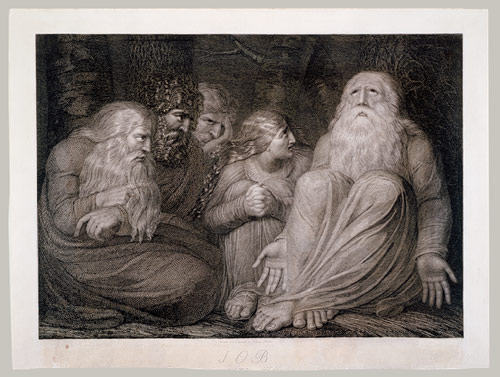
That's as, per the Blake painting, to riff on a biblical phrase, I wonder: "Who watches the comforters?"

I digress. Back to the main point.

Someone at one of the biblical subreddits made such a claim about the ending of the book of Job a while back. He based that claim by the comment just before the speeches of Yahweh starting, at the end of Job's last response to his "comforters" in Job 31:40, which ends:

The words of Job are ended.

This meant that chapter 42 had to be an addition. 

I first said, in essence, that no, that could mean, "Job is done speaking for now," not "done, period."

Then, the better answer hit me in the face, namely the start of Job 40:

40 The Lord said to Job:
2  “Will the one who contends with the Almighty correct him? Let him who accuses God answer him!”
3 Then Job answered the Lord:
4  “I am unworthy—how can I reply to you?  I put my hand over my mouth. 5  I spoke once, but I have no answer — twice, but I will say no more.”
6 Then the Lord spoke to Job out of the storm:
7  “Brace yourself like a man;  I will question you, and you shall answer me.

There you go. If you really believe Job 42 is a later addition because of 31:40, then you also have to believe Job 40:3-5 is, and for linguistic smoothness, you must also believe that either 40:1-2 or 40:6 is also an interpolation.

There's also the text-historical issue. We have a copy of Job at Qumran, and it ends pretty much the way today's does, and is dated to circa 100 BCE. Given the estimated compositional history of Job, it is just possible for a later redactional addition to have been made, but not likely. See discussion here; I agree with it that IF there were an earlier version, the "whirlwind speech" of 40-41 in general was likely not part of it. 

Mainly, though, I agree that, given the prose section is clearly older, there would have had to have been SOME prose conclusion. And, there's no way of knowing whether the current and original one was the same. We DO know that, by the time of scrolls being saved at Qumran, the current prose ending was where it ended.

The correspondent, who appears to be like me, a secularist with a graduate religious degree, seemed to be looking for an "existentialist" Job. Albert Camus is in the top rank of my philosophy pantheon. I've read a fair amount of Kierkegaard, some Sartre, and in even more modern times, lots of Walter Kaufmann. It's one thing to wish for that being true; it's another thing make unsustainable redaction-critical claims to that end.

As for one other claim there, I also don't believe David Clines' insinuation (page 7 of the PDF) that there was no wager between Yahweh and (the) Satan. (Here's the homepage to download the PDF if needed.)

Rather, as I said elsewhere on the thread, gods wagering with one another is a common enough thread in antiquity, and not just in the Ancient Near East, but in Greek myth, and also in the blinding of Baldur in Norse myth that it probably has its own subsection entry in Stith Thompson's encyclopedia of folklore motifs.

I think there was a bet, and as I said in my review of "God: An Anatomy," by Francesca Stravrakopoulou (saying she gets Job wrong, too), that, the wager may have been, if Satan won, he got to sit on Yahweh's throne a week or something. And, no, that's not being facetious. Then, when this thread started, I figured Yahweh's side of the wager would be that, if he won, Satan had to ONLY "wander the earth to and fro" for a while and couldn't sit in on the divine council. (Doorknob forgive me for sounding like David Heiser.)

The problem is, as I see it, is not only that the wager idea isn't spelled out completely, in the presumably older prose stratum, but that the shift to a monotheistic framework makes the whole divine wager more problematic when it's fused with the patient sufferer poetic narratives. (Clines is right, IMO, that Yahweh is the ultimate beneficiary of Job's suffering, but IMO, that doesn't make much sense if you're denying a wager was laid.)

And so, I stand by my comment to the correspondent that, even without Paul citing a mix of Isaiah and Job in his doxology at the end of Romans 15, Job is problematic at best. Reading the book either with or without Chapter 42, he looks like a capricious cad and you're in the middle of the problem of evil. Eliminating Chapter 42 is no answer otherwise. Rather, the correspondent's claim that Yahweh's monologue is "no answer" is wrong. Rhetorical questions at staccato tempo and high volume are indeed an answer.

With chapter 42, to put it in today's terms, Job as a whole reads to me like capriciousness being covered up with a success gospel conclusion.

The prose beginning, with the implied wager, is that Job is faithful precisely because, at least in modern dual-omni god terms, he doesn't have to fear god's capriciousness. In other words, the "natural evils" portion of "the problem of evil" is something that he doesn't have to worry about. That said, given the Chaldean raiders, Job faces both natural and human evils in chapter 1, but the ancient author probably wasn't thinking of the problem of evil.

The real problem, per the "see discussion here" is that Job is internally jumbled. By Chapter 10, Job himself is saying that he can't call Yahweh to account, but yet he hints at trying anyway, and later calls out for a "defense attorney" (NOT "redeemer"). And, of course, there's the problem of Elihu jumping in out of nowhere, without either being introduced earlier, OR without being listed in need of expiation in Job 42.

There's the option of going beyond C.L. Seow, Clines elsewhere and others, and postulating that Job originally ended at 31:40 with perhaps some brief speech by Yahweh, not Elihu's five chapters followed by Yahweh's four-chapter blast. That might satisfy my existentialist friend's ideas, but, if true, would have to be early indeed in the redactional history. And, it's not the theory he presented.

Otherwise, the archaicizing language? Assuming that it is an affectation, that makes sense as far as this being a post-exilic book. The (primary/original) author is trying to provide the idea of a sage of antiquity bringing wisdom to emerging Judaism. That "emerging Judaism" as well as looking for more orthodoxy could explain the addition of Elihu. Interestingly, C.L. Seow, cited by my correspondent as believing Job 42 is an addition, thinks the Elihu speeches are original. So does the author linked there, Ragnar Andersen, who doesn't explain why Elihu is missing at both beginning and end prose segments.

There's other problems. While Elihu's speeches do foreshadow Yahweh's in talking about divine power, they don't really offer anything different than the original three friends on the problem of evil and Job allegedly having a secret sin. It is possible that the foreshadowing is why Elihu's not seen in need of expiation, and just possible that this is why he's not mentioned with Job's other friends at the start. It's still awkward literarily.

That's more than enough.

The real puzzler is why, if under my idea, the "divine gamble" idea is at least halfway botched when moving it to a monotheistic deity, Job became "canonical" for Jews. For dual-omni Christians following in Paul's misinterpretation and misthinking tracks, it's a different story.

Also, as I said to a first-time questioner there asking about Ecclesiastes being "existential" or "nihilist" (after telling him the two are not the same) that I'm hesitant about using modern philosophy terms to describe the background or authorial mindset of biblical books, starting with the much different metaphysics. If you mean "existential" in a pop psychology sense, I get where you're coming from, but I'm then going to say that you need to treat the biblical book in question like pop psychology. (That's done plenty enough anyway.)

And, that's more than enough on Job.

Thursday, June 10, 2021

PTSD, journalism, accidents, existentialism

OK, last month, Pocket gave me this story from The Atlantic: "We Should All be More Afraid of Driving."

Summary? Joshua Sharpe works for the Atlanta Journal-Constitution. Reports on "police scanner news," to put it bluntly.

That includes car wrecks.

Of which he's had two himself.

The first? Hit a woman standing in the middle of I-75. Here's the intro: 
I thought I saw something in the road.
Meth addict, as it turns out.

Years later, he makes contact with her. The accident allegedly scared her straight, but it's unclear whether that lasted or not.

OK, for a while afterward, Sharpe peeled back on ambulance chasing. But eventually, picked it back up again.

Two years later, before contacting this woman, but leading to that decision? Second accident:
I thought I saw a car veering toward me. 
It was a bright morning in February 2018. I was driving to work on Clairmont Road when a car suddenly appeared to be merging into my lane from the right, bound to hit me. This time, I did swerve. I wrenched the wheel and turned into oncoming traffic.
Note the parallel in the opening?

That said, as he eventually did after the first accident, he contacts the others involved. The driver of the truck basically half hates him. The passenger fully hates him.

What's missing from the story?

No attempt to contact the swerving driver. No attempt to find out who it was, in fact.

So, I DM'ed Sharpe on Twitter after tagging him, then seeing his account was open to messages.

Here's what I asked:
One thing about your Atlantic piece on accidents I just DON'T GET! You said the 2nd accident was caused by a swerving driver, but ... you never talk(ed) to him. Did you never even try? Or was the "thought I saw" not actual, and itself an artifact from PTSD from the first accident? (I've been in one wreck bad enough to have a plate in my left forearm, so I get the background.)
No response yet.

To me, beyond the basic warning of the story, not having this information just leaves it limp to me.

Maybe Sharpe did "hallucinate" a swerving driver? Maybe he's afraid to say that, even though that could be part of his message? Or per highway traffic engineers, there's the lack of mention just how big today's pickups are. Whether the accident was his fault due to a PTSD episode, or an actual swerving driver's fault, it might have been less severe had he not swerved into a monster F-250.

Philosophically speaking, it seems to be a version of Job's "it rains on the just and the unjust." But, Sharpe never really comes close to saying that. Instead, I'm implying that he's inferring that. Here's the denouement:
After five years, I still think that I see Anne on the road. And I still wonder if she was traumatized by the wreck. Is she haunted by what happened to her, like I am? 
Anne’s brother suggested I contact their dad, because he was the relative who spoke most with Anne. I texted him to ask if he thought she would be up for talking with me. He said she was still too unwell. 
Then he stunned me. He apologized on behalf of his daughter for what she did to me. “Please forgive yourself,” he said. I wasn’t to blame, and neither was Anne. 
On the road, neither of us was in control. Her dad sent a picture of Anne from a recent holiday. In it, she sits next to her teenage son, a beaming boy with his beaming mom. Her hair’s fixed nicely, and she wears a white blouse and a cross on a thin gold chain. 
I started to cry, unsure why until I realized this: She looked normal, fine. As if none of this had ever happened.
And, that part of the issue is why I've cross-posted the piece here. It is existential that "Anne," the person he hit in his first accident, was barely hurt — less than him in the first accident, even though she was a pedestrian on a freeway, and far less than him in the second accident, as he has a shattered femur that doesn't want to heal, even with a rod in it.

I mean, if you read that whole denouement, other issues, like free will or the lack thereof, also come up. That said, I reject his "on the road, neither of us was in control." Even if her control was diminished by meth addiction, she had still, even with diminished choice, made a decision to be there. Sharpe was in control of his vehicle; it's not that he was out of control, but that, control has its limits. We can only control ourselves, not other people nor external intangibles. So, wrong lesson.

If her brother was correct in Sharpe perceiving a need to forgive himself, rather than lack of control needing to be addressed, that's a further PTSD issue that needs to be addressed.

And, with that, I jump way back up to this:
J. Gayle Beck, a psychology professor at the University of Memphis, is one of a handful of researchers who studies PTSD linked to car wrecks. Being in a serious accident, she told me, “violates our beliefs about how life should be and who we are.” We think we’re in control of what happens on the road. If we’re in control, then we must be responsible.
And, that, deliberately taken later, leaves the denouement more puzzling in one sense.

Beck is giving him a half-wrong answer. The correct answer is not denial of control; it's a recognition of its limits. The old "Serenity Prayer" knows that. Sharpe and Beck apparently do not. 

Thursday, April 22, 2021

On a genealogy of morals, so to speak

A recent blog post by Massimo Pigliucci, which contained within it a Philosophical Salon piece about the dichotomy between Hobbes thinking humans essentially (in the philosophical sense!) evil vs. Rousseau thinking them essentially good, got me to thinking, especially when Massimo also had psted a Pysche piece about Wilfrid Sellars and "the myth of the given."

First, contra Hobbes, if we truly were “evil” we’d never have developed the level of cooperation to create civilizations in the first place! I’m not sure if Hobbes ever even entertained that idea, but I think it pretty well kneecaps him.

That said, I was further inspired, per the title of this piece, to riff on Nietzsche and thing of a “genealogy of morals,” or rather, whether such a thing can totally exist.

Can we make such a simplistic judgment, or one that looks to be a simplistic judgment, as well as a species-wide one, and also one that still has a whiff of the religious about it? I say no, and here’s why.

And, what I really mean on species-wide descriptors of “good” or “evil” is that …. Could that not be seen as a recursive moral form of self-reference, and thus subject to a equivalent of Gödel / Tarski issues? Good thought on a morals-focused Christian religious holiday, eh? (Massimo normally posts on Fridays, and this one fell on Good Friday.) In other words, since humans as a species, in part via and because of that cultural evolution, define what “good” and “evil” are, isn’t this a form of recursive moral self-reference?

And now, to go further.

Taking this a step further, are human definitions of morality, if self-recursive, a version of something kind of like a Euthyphro dilemma?

In other words, is something evil because a near-absolute version of humans decides it’s evil? Or does evil exist independent of human judgment?

The former version risks going beyond consequentialist theories of ethics into pure relativism. After all, torture was thought to be highly moral not too many centuries ago. And, in a further ethical quagmire, was usually supported in terms of “higher good.”

The second half of the dilemmic fork is somewhat different than in Plato’s original, at least the way I am setting things up. As a methodological naturalist, of course, I see no Platonic Ideas of “good” and “evil.” But, if moral value judgments are not part of cultural evolution, then what? Evolutionary psychology, which to date has proven itself to be sexist and other things? A better-developed version, under different title, of the evolutionary development of psychological and philosophical structures?

The reality is that, per a comment by Massimo, in we critters, biological and cultural evolution have intertwined, and both probably have some parallel to epigenetics as well. What that means is, contra Nietzsche, there IS NO “genealogy of morals,” in that sense, to be laid out. 

Speaking of, I have just received in the mail a copy of Walter Sinnott-Armstrong's "Moral Skepticisms" and am looking forward to it. 

And, to go beyond moral skepticism to moral existentialism, to me, it is often better to say that, rather than either good or evil, humans simply "are."

Thursday, February 11, 2021

New insights on Camus

A Life Worth Living: Albert Camus and the Quest for MeaningA Life Worth Living: Albert Camus and the Quest for Meaning by Robert Zaretsky
My rating: 5 of 5 stars

Very, very insightful work on the life and thought of Albert Camus, which opened my eyes to several things.

First, as far as his life, other than knowing he was a pied-noir, that his father died when he was very young, that he was tuburcular, that he died young himself (but was NOT assassinated by the KGB!) and that he was a notorious womanizer, I knew nothing.

The details of his childhood explain that last element of his adulthood to some degree, perhaps, as well as one long-used intellectual tool of his.

Camus' father was called to the active duty at the start of World War I and killed in battle in 1914. Camus was a year old. At the time his dad was called up, his dad's mom took in Albert, his older brother, and their mom.

Camus' mom was deaf. Per Zaretsky, a few people said she could speak before her husband was killed and only went mute afterward; most say she was a life-long mute. Anyway, she was a mute. So was her uncle by marriage, her mother-in-law's brother, who also was in grandma Camus' house.

Meanwhile, grandma was illiterate. And, after Albert was old enough to read, Zaretsky says she took him to the movie theater in Algiers. In the 1920s, silent movies reigned, of course, and in France and possessions, as well as in the US, they usually had subtitles describing the action.

And, illiterate grandma told Albert to read them to her — ignoring, of course, all the other patrons in the theater telling him to shut up.

So, Camus grew up in a world of silence, either silent people or people calling for silence. And, that's the biographical backstory, I think, to his use of silence on the Algerian civil war.

Related to that, Zaretsky notes Camus was misquoted by Le Monde, deliberately, in his statement on his mother and justice.

He actually said:

"People are now planting bombs in the tramways of Algiers. My mother might be on one of those tramways. If THAT is justice, then I prefer my mother."

And, who could argue with that?

I also think this is where Camus' womanizing comes from. A mother deaf and silent to him, a grandmother seemingly using him and manipulating him, and him looking for connection. BUT ... when a woman got too close — and SOUNDED too close — off he went. Zaretsky doesn't make that connection, but it makes sense to me.

Zaretsky DOES divide Camus' literary output into two periods, plus implies the start of a third, before his death. And, he confines Camus' well-known absurdism to just the first period. (He's not alone in this framework, by any means; Wikipedia discusses it.)

That first period is exemplified by The Myth of Sisyphus and The Stranger. Sisyphus is of course the icon of absurdism.

Part two focuses on rebellion. The Rebel and various essays, most centered on the image of Prometheus, are key. Camus sees both Prometheus AND Zeus as having both innocent and sinful sides in their battle.

Looking at these two periods separately, Zaretsky says that Camus had moved beyond absurdism. He doesn't say Camus rejected it, unlike Hume rejecting the Treatise. It was nothing Camus was afraid of. He simply thought that rebellion, or beyond rebellion, the difference between rebellion and revolt, was "the issue" of the post-World War II world.

He does note that near the end of his first period through his second period, Camus read more on Nietzsche, though ultimately rejecting his nihilism. Apropos Camus, Zaretsky notes Nietzsche was silent after his 1889 horse-hugging then institutionalization.

While not claiming that Camus' last years, possibly represented by The Fall and the posthumously published The First Man, represent a third phase of Camus' thought, Zaretsky does leave that door open. He notes that the "mistress suicide" scene from The Fall is seen by many as quasi-autobiographical, and The First Man of course is.

That said, the book's not perfect. It could have used a bit more coverage about The Fall (The First Man gets more) and The Plague as well as The Rebel in Camus' second period.

But this is still a very good look at Camus and all in just 200 pages of paperback-sized body copy.

View all my reviews

Thursday, October 29, 2020

French pervert philosophers: Something new to me

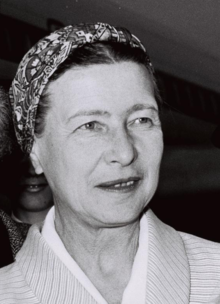
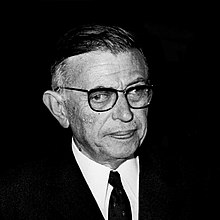
Via a Boston Review piece about a new biography of Simone de Beauvoir, which notes, inter alia the hypocrisy in The Second Sex behind the various abusiveness she shared and spread along with Jean-Paul Sartre, I saw a link to a Wikipedia piece from a description that, in the 1970s, the two of them, along with many other leading lights of French philosophy, as in Jacques Derrida, Michel Foucault, Roland Barthes, Jean-François Lyotard, Gilles Deleuze and others, including intellectuals outside of the world of philosophy, had signed a petition asking the French government to ...

 Wait for it, wait for it ....

Abolish all aged-based laws of sexual consent.

No, really. Here's the petition, in Le Monde, and in English, with a link to a French blog post about it, and a similar one, two years later, in Liberation. Those, along with Figaro and Le Matin, would be two of France's top four daily newspapers by most accounts.

And, per some of the links off the Wikipedia page?

Atlantic describes a 2011 statutory rape of an 11-year-old. Except that it's not. It's technically not rape in France unless force is used, even on an 11-year-old. In other words, France has no statutory rape law. French law did allow original lesser sexual charges, but until a judge explicitly instated a rape charge (Continental jurisprudence allowing a judge to do that), that was it. But, France, as of the time of that case, and the 2018 story, still had no formal age of consent. (Atlantic had the actual petition links.)

The story notes that this all started with France's version of the summer of protest and summer of love in 1968. From there, France had, well, had NAMBLA type organizations form.

Not all Frenchmen at that time or now agreed. Many were horrified.

So, Sartre et al weren't even protesting statutory rape laws, since France doesn't even have THAT! They were protesting something lesser. Rather than decrying that the "something lesser" was all that was on the books.

And, it gets worse!

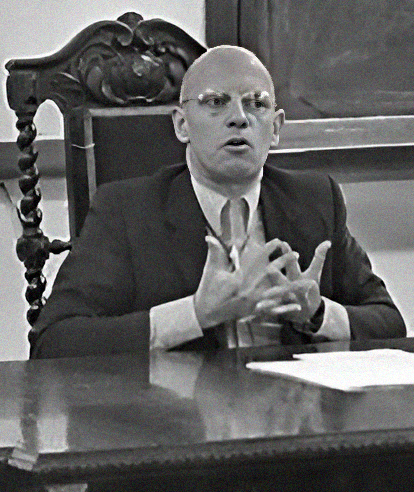
Also linked off Wiki is this interview with Foucault (at left) and others, about six months after the first petition in Le Monde.

One of the speakers says the push for a an age of consent, after some people were outraged by the petition to see that France didn't have one, is all about American puritan prudery crossing the ocean.

No, really. Guy Hocquenghem, one of the signers:

When someone says that child pornography is the most terrible of present scandals, one cannot but be struck by the disproportion between this -child pornography, which is not even prostitution - and everything that is happening in the world today- what the black population has to put up with in the United States, for instance.

What is there to say but what the fuck?

Well, there's more about why this is a what the fuck.

Yes, it's true that children understand something about what sexual organs are, etc. But, for Foucault to try to equalize a child's sexuality to an adult's is ridiculous. Part of what I see playing out is a continuing interest in Freudianism at this time among both the philosophers and psychologists who signed the petition. And, a veiled hint that an age of consent would be a societal version of Freudian repression. And, of course, from that, Hocquenghem says that the idea of a "pervert" is nothing but a social construct.

What's also "interesting" is that both Foucault and Hocquenghem died from AIDS. Foucault is identified as the first French public figure to do so. Whether either took any sexual precautions after the first AIDS alarms, I don't know. But, they had the opportunity. After all, Luc Montagnier is French, and he was first talking about it as a retrovirus back in 1983, and most of the basic issues had been worked out by 1985 or 1986.. It's also "interesting" that Hocquenghem started a sexually abusive (because it might fall under statutory rape age!) relationship with a high school philosophy teacher when he was 15.

Speaking of that, and per the interview, I'm actually surprised that none of the signees made a direct appeal to Athenian pederasty.

I would like to think that Camus, were he still alive at the time, would not only not have signed such a petition but would have called it out. But, of course, I don't know that.

And, no, this isn't "old Europe" in general. The Atlantic lists information on a number of European states that have explicit age of consent laws and what those ages are.

Thursday, April 16, 2020

The outrageous half-truths of Jacobin on Sartre

Jacobin, whose eclectic, editorially-unfocused (NOT a complement, editorial management) stable of contributors runs from Bernie Sanders DSAers to people stanning for the anniversary of the Revolution in November 2017, lauds "The Outrageous Optimism of Jean-Paul Sartre."

And, leads to my header.

The biggest half-truth is by omission. Even when Sartre did accept the truth about the USSR, after it crushed the 1956 Hungarian revolt, it was kind of grudging. And besides, he later shifted his worshipful devotion to Mao. That piece, by Jim Holt, is closer to the truth of who Sartre was.

The real issue is that Camus rejected violence after World War II, including rejecting the death penalty. Sartre never rejected the former, and given his praise for Mao and others, implicitly never rejected the latter. This was part of the reason for their split.

The Rebel somewhat disappointed me, but, nonetheless, Camus was light years ahead of Sartre here, even if his fallout with Sartre was not total and has sometimes been stereotyped.

Camus wasn't perfect on Algeria, but he was better than many Sartre-stanners portray him as being. Plus, he died in 1960, long before the civil war ended. And, his "federation" status might have worked. And, the idea that part of the backing of Algerian independence was an Egyptian version of colonialism? I don't think he was totally wrong there.

The real problem with Sartre? He was an absolutist. And, I think Heidegger did influence him on this. This is all part of what distinguishes Camus' absurdism from Sartre's existentialism. Per this very good CJR essay, Camus wasn't afraid of shades of gray and wasn't afraid to stand in the middle of them.

I'm too late to celebrate the 60th anniversary of Camus' death, vs. Sartre's 40th, but I can meditate on "The Plague" as a good substitute.

Beyond that, many of our best philosophers have been among the best writers, and Camus leads Sartre there, too.

Thursday, March 19, 2020

Radical freedom, road trip style


I saw the RV pictured above across the highway from my apartment complex a couple of weeks ago.

I'm not old by any means, but, the earliest version of Uncle Sam's finish line is less than a decade away. In the back of my mind, I still have hope for some mix of ongoing freelance and/or half-time or better contract work, while working in more travel and maybe some National Park Service volunteer work in between.

The idea being that I would have enough money saved up to junk the apartment life entirely for several years and snowbird and roam.

Details of the above beastie?

Yeah, the owner says it has new gaskets and just 53,000 miles on a vehicle that's $2,995.

OTOH, that's a 1980s RV, probably built on a Suburban body with an extended back end. It's got the gas-hog GM 454 engine, and the automatic tranny is probably just three-on-a-tree. (It was unlocked, and looking inside, in addition to most of the interior definitely looking 1983, I saw no overdrive button or lever, or any other indication it was beyond the normal 1980s automatic transmission.)

I would love something smaller, like the RVs you can get built on a full-sized van chassis. Two weeks after seeing that, I saw one of those on a Dodge body (not for sale, being used, with the owner younger than me) parked at the Wally behind me.

I presume that's running either their current 6.1 liter (366) or an older 5.7 liter (350) engine. Better gas mileage there. And shorter.

Ideally, I'd love something like that, with a hybrid drivetrain, and as much of the stove, fridge and other amenities powered off electricity as much as possible. Avoid the hassles of a newbie like me with propane tanks.

Then, instead of towing a car (or a Jeep), put a rack in back, where I could park a bike, an e-bike, or one of those three-wheel hybrid drive motorcycles or large scooters. That would take care of my travel needs while parked. Something that could easily and safely do 45mph, to get around on all city streets and within state or national parks, and relatively easily and safely do 55 to navigate non-freeway highways, maybe.

All still just thoughts at this time.

But yes, per Sartre, thoughts of personal radical freedom. I'm not using it exactly the way he does, but yes, in his spirit.

Of course, thoughts remain just thoughts until put into action.

That said, besides Sartre, reading three Chuck Bowden books — a Festschrift for him, if one will, by fellow Western (not novels, Western-iana) writers, the Charles Bowden Reader, and his Red Caddy set of essays on Ed Abbey — have made me cogitate on this more.

Radical freedom. It's just a pair of words for knowing I have nothing left to lose.

And, with the spread of coronavirus worries and half the country on, or threatening to be on, semi-lockdown, radical freedom is a siren song.

Of course, the empiricist part of the philosopher me says: It wouldn't be very radical freedom if you got stuck somewhere and ran out of supplies. Or maybe that's the philosophical (and psychological) pessimist part of me.

Friday, April 26, 2019

Accepting aging and not denying death:
Barbara Ehrenreich on medicine, selfhood, more

Natural Causes: An Epidemic of Wellness, the Certainty of Dying, and Killing Ourselves to Live LongerNatural Causes: An Epidemic of Wellness, the Certainty of Dying, and Killing Ourselves to Live Longer by Barbara Ehrenreich
My rating: 5 of 5 stars

There's plenty of punch in this slim volume, and it goes beyond what most reviews note. And, for this blog post, I have further expanded my original Goodreads review.

That alone, what is in the reviews, is notable enough. Doctors overexamine most Americans, whether out of profit motives, an overdoing of precautionary principles, the idea of doctor as superman or some combination of all of the above. For two biggies specific to men and women, Ehrenreich references mammograms for women and PSA tests for men. Colon cancer testing, she says, is probably also overdone.

And, then, she dives into issues related to this and beyond. First, our mix of individual genes, the fact that many cancers are hugely multigenic in nature beyond environmental factors and other things, means that outside of things like BRCA, a lot of genetic findings are probabilities, no more, and probabilities not much different from random chance.

So, most such tests aren't worth a whole lot. If they do find anything, "watchful waiting" is much better in most cases than surgical, radiative or chemotherapeutical undertakings. But, a doctor may not tell you that. For one or more of those three reasons above, or others.

Then we get to the real fun.

Your own body may exacerbate many cancers.

Ehrenreich looks at how macrophages can be "bad guys" as well as "good gals." They can "encourage" cancer cells in the area of tumors to continue reproducing rather than killing them. They supply cancer cells with chemical growth factors. They build new blood vessels for them. They help them enter blood vessels they couldn't on their own. This all is best documented with breast cancer, but also shown with lung, bone, gastric and other cancers, she says.

In addition, the spread of arthritis and other inflammation-generated diseases, are also assisted by macrophages.

So, from this, riffing on her previous book "Bright-Sided," Ehrenreich says New Agey ideas of visualizing your body, or "your body," attacking cancer is nonsense. The "your body" goes in scare quotes, because she also documents other ways in which macrophages can be free agents of sorts. She goes back to Russian zoologist Elie Metchenikoff, who first talked about this a century and more ago, but was roundly rejected. Now, his ideas are gaining acceptance. Some other immunological cells have lesser, but not insignificant, degrees of free agency, Ehrenreich says.

We're still not done, though.

Next comes philosophy.

If these cells have that much independence, what does this mean for the idea of a unitary "self"? And, if they're not conscious, but seem to have some independence, what word do we use for that?

Ehrenreich starts by referencing Jessica Riskin and her book "The Restless Clock." Riskin talks about "agency" as a purpose-based set of actions that is below the mental level (if we can even talk about mental levels of a single cell) of consciousness. Ehrenreich notes that we as a species are believed to have evolved highly sensitive agency detectors, but says that dismissing the idea of agency, especially non-conscious agency, from the non-human natural world altogether is a mistake. She says it's a greedy-reductionist view of biology, wanting to cut down to genes, not cells, and base biology on chemistry.

And, we're still not done.

Ehrenreich, paralleling somewhat Irvin Yalom, written up in The Atlantic two years ago about "How to Die," talks about "successful aging" next. That means accepting that aging will happen. Accepting that many blows of aging cannot be fully dodged, not even by rich anti-aging gurus. Accepting and embracing that aging has positive sides. With that, people can stop wasting money on gimmicks and brainwaves on stressing out. They can accept that aging is a normal evolutionary process, too. And, those macrophages that are quasi-free agents, along with other parts of "our" immune system? Just maybe their biggest job is to help kickstart the process of decomposition when each of us dies. (For insightful quotes from Yalom, go here.)

From here, back to philosophy.

Ehrenreich talks about the invention of the "self." In Europe, she says it probably started with the Renaissance and the rise of humanism, then took off in the Enlightenment. Rousseau, of course, majorly boosted the idea.

From there, we've gotten to the modern bombardment with selfhood, "branding" oneself on social media, selfie sticks for smartphone photos and more. (Ehrenreich politely doesn't call a lot of this "dreck," which it is.)

And, thus, it is harder for a modern Westerner, at least in the US, vaguely religious or "spiritual but not religious," to memento mori than it was a medieval Christian who was regularly reminded of that idea at Mass.

Ehrenreich's conclusion? Kill the self, or at least diminish the attachment to it. She mentions psychadelic drugs; on the other hand, many modern Americans who talk about using them seem to look at attaching more to a "self" afterward than before. But, there's potential there, along with long, distracted walks in nature and other things.

Don't rage against the dying of the light; accept that you don't control the sunset or the light switch.

Ehrenreich also refers to the perennial existential insight that while none of us can truly conceive of a world going on its merry way of existence after we're gone, at the same time, none of us can conceive of the world that was merrily going on before we were born, reincarnation claims aside.

But, the problem is ... we as individuals have existed. So, death, or post-death, anxiety hits us in a way that pre-birth trembling doesn't.

One thing that Ehrenreich does not really dive into is the differentiation between fear of death, which is largely existential in nature, and the fear of dying, or of specific types of dying, which is largely empirical in nature. Many of us have had a relative or friend of some sort, if not a loved one, die from some gruesome cancer or something else horrible.

But, with her notes on ixnaying overdone medical testing, Ehrenreich does, however, bring in an existential angle to fears of dying, too. Stop overdoing them.


Friday, April 05, 2019

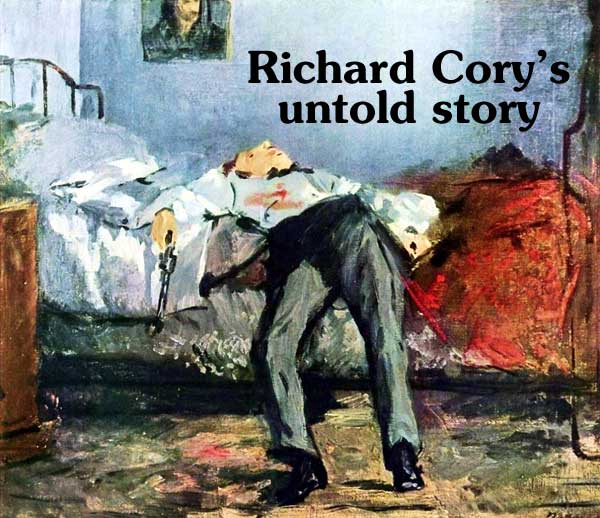
Richard Cory Redux


My homage, in more modern times, to the classical poem by Edward Arlington Robinson.

Go here for the original.

RICHARD CORY REDUX

Whenever Tommy Johnson went up town
Haughty in high brick homes glared down at him
No gentleman he, not from sole to crown,
Half starving, preternaturally thin.

Poor was he, poor he’d been, poor would remain,
Alone, fam’ly gone, left to his own wit.
Even we at life’s edge felt his pain,
And yet … to that he would never admit.

Then one weekend, six numbers matched his list,
The dream of each and all of us come true.
The state had millions to fulfill his bliss;
Dear old TJ would be a bit less blue.

No more Tommy Johnson went up town;
Twas Thomas now, whether you please or not.
Imperially robed from sole to crown,
Without a care, even without a thought.

And he was now so flashily displayed,
Somehow he seemed less human when he talked;
Duded like a crosstown pimp, all us said,
Yet too inept to swagger when he walked.

Rich? Yes, with all his wealth could buy, and yet,
Each new monthly dollar meant yet less taste
But without fear, without regret or fret;
Envious, we wished we were in his place.

Christmas neared, and he fancied he wished
Peace on earth to all, good will to men,
And from the fullness of his heart he fished
Dimes for Santa to briefly pause his bell-din.

So on we worked, and waited for the light,
Went without heat, wishing old Tommy dead;
Then our quondam friend, one cold winter night,
Went home and put a bullet through his head. 

— With a nod to Edwin Arlington Robinson


Sunday, May 29, 2016

Existentialism explained, and unexplained

I just got done reading "At the Existentialist Cafe," mentioned, if not recommended, by a friend on either Google Plus, Facebook or Twitter.

Well, I can tell you now, you probably don't need to read it.

At The Existentialist Café: Freedom, Being, and apricot cocktails with: Jean-Paul Sartre, Simone de Beauvoir, Albert Camus, Martin Heidegger, Edmund Husserl, Karl Jaspers, Maurice Merleau-Ponty and othersAt The Existentialist Café: Freedom, Being, and apricot cocktails with: Jean-Paul Sartre, Simone de Beauvoir, Albert Camus, Martin Heidegger, Edmund Husserl, Karl Jaspers, Maurice Merleau-Ponty and others by Sarah Bakewell
My rating: 3 of 5 stars

This book is overrated and mistitled and I'm going to explain why.

I wasn't sure exactly how to rate that book. This is another book that deserves a half-star rating, as in 3.5. Since so many others are overrating it, it thus gets the bump down to 3 stars. And, by the time I got done writing this, I wondered if even that were generous.

First, there's a typo/proofreading error on 11, that's tres funny, especially given that the book is primarily about Sartre. Instead of talking about him "exhorting" his readers, it actually mentions him "extorting his readers."

No radical freedom there!

There are one or two more serious errors of fact in the book, plus the fact that "glib" or whatever sometimes becomes disjointed.

A good example of this is when, in discussing Sartre's HUGE overwriting about Genet, she doesn't mention his amphetamine addiction. She only mentions it about 50 pages later, and then, it's never really called an addiction. But, that's part of a larger part — the book is a love affair with Sartre, papered over with the "Existentialist Cafe." It's a love affair with Sartre's cafe, then with Sartre and Beauvoir's. Camus (though I take his statement at face value that he was an absurdist, not an existentialist — something Bakewell never really explores), Levinas and Merleau-Ponty get short shrift. So, too, even in a popularizing account, do structuralists and deconstructionalist children or stepchildren of existentialism.

That points to a bigger problem. A David Edmonds of "Wittgenstein's Poker" or "Rousseau's Dog" fame would have focused on one or two fun issues (I've asked him to write a book about Koestler punching Camus), and written about 200 pages that we never expect to be a more serious history of Wittgenstein, Hume/Rousseau, etc.

However, Bakewell appears to fall between two stools in wanting to write something light, yet something serious, at the same time. And, to some degree, BOTH stools fall out from beneath her. If she wanted to be more serious, yet without giving a full analysis of existentialism, she could have analyzed why Sartre became an addict, or what was behind his existential dread (it was) of squishy, gooey things.

On to a few other issues.

On page 74, no, Germany's Social Democrats did NOT take power in Novemeber 1918 in "a kind of a coup." Instead, on Nov. 9, Prince Max of Baden, the Chancellor, announced that Wilhelm was abdicating as both German Kaiser and Prussian King. Max was forced to resign later the same day, when it became clear that only the Social Dems (to be precise, the majority Social Dems, not including the soon-to-be Communists) could hold the reigns of government and prevent an actual revolution. It's true that Friedrich Ebert demanded the chancellorship, but Max was likely recognizing already there was no alternative.

And, on page 75, in 1933, Hindenberg was head of state, not head of government, and therefore was not head of any coalition that gave power to Hitler. As president, he simply approved the coalition government that Hitler offered.

These are errors, especially the second, that shouldn't have been made. And, arguably, they may color how harsh Bakewell is, or is not, for Heidegger's early Nazism. I think they do.

Later, comes an error in biblical interpretation. On page 150, she says of Genesis 22, that Yahweh was "surprised" that Abraham went through with the offer of Isaac for sacrifice.

No, it doesn't, and in my read, it doesn't even hint that that is the mood of Yahweh. Ergo, she can't have a good grasp on either Kierkegaard's or Camus' writing about this episode. This probably ties with her giving short shrift to Camus.

On 152, she notes that Sartre attacked Camus for being too influenced by Hume. First, is this actually true, that Camus was more influenced by Hume? (The "too much," of course, is not true!) Second, why would Sartre feel that way? Bakewell never asks.

On 213, shockingly, she seems to misinterpret the end of "No Exit." She talks about the trio being "trapped" in hell — passive voice.

Not at all. The whole theme of the conclusion is that the trio have TRAPPED THEMSELVES! Yes, a demon placed them there, but they have the freedom to not only open the door, as they do, but leave — as they do not. Other parts of her interpretation of "Huis Clos" also seem incorrect.

Finally, on 257, and to no surprise to me, she misinterprets the Camus-Sartre split in a way most favorable to Sartre and in a way untrue to Camus and "The Rebel," in my opinion.

So, per some reviewers, this is an OK to good introduction **to Sartre and Beavoir.** To the whole of existentialism? No.


View all my reviews

Wednesday, January 21, 2015

Say "mu" to Camus on meaninglessness

Albert Camus famously or infamously said in "The Myth of Sisyphus" (summary and Wikipedia) that there is one ultimate issue in philosophy:
There is but one truly serious philosophical problem and that is suicide.
Of course, that relates to, and cornerstones, issues in his absurdist philosophy, and in the related existentialism of Jean-Paul Sartre and others.

Theists, especially Christian apologists, have used this as a cudgel, whacking secular existentialists over the head with the idea that they, or we, claim that life is "meaningless" and that there is therefore no recourse at end but suicide.

Well, a new essay at Massimo Pigliucci's Scientia Salon, by John G. Messerly, deals with this issue in part. And, it's stimulated me to yet further thought, reflected in part, and starting with, my second comment on the essay.

That said, let's unpack this issue a bit further. I'll then get to the second half of that second comment and go from there.

Camus, of course, said suicide was not the answer — revolt was. Which might be true. Revolt while accepting the modern absurdity of life.

Modern humanistic psychologists of a secularist mindset say that meaning is what we bring to the table.

But, beyond that, what if "meaningless(ness)" as traditionally defined in philosophy and psychology isn't exactly the issue?

And now, to that comment.
I think Camus was asking the wrong question. 
 Life is neither meaningful nor meaningless, if we take “meaningless” to be the opposite of “meaningful.”  
 If we instead, talk about “without meaning” or “meaning-less” (sic) we can hopefully understand this not as an opposition to “meaningful” but simply that the issue of “meaning” is, if not a category mistake, one of those issues about which we should be silent, or even more, per logical positivism, a question that is itself … without meaning!
 It’s true that, as part of our attempts to control our surroundings, we probably have “meaning seekers” as well as “pattern detectors” and “agency imputers” halfway hardwired into our brains. 
 But, per Hume’s is ≠ ought, that doesn’t mean that we have to follow them in falsely looking for agency — or falsely imputing meaning where it doesn’t exist, or falsely looking for it when it’s not part of the issue.
Let's go a bit further.

"Meaning" and "meaninglessness" also seems to be one of those polarities, like "free will" vs. "determinism," that's wrong in other ways.

First, it's presuming that a polarity should exist.

Second, it assumes that one should, in some degree at least, "reduce" to the other, rather than both be "unified" in a larger theory, just like general relativity and quantum theory will surely "unify" rather than having one reduce to the other.

Third, like the free will half of that first duality, a desire for meaning — or, a desire to frame ordering one's life around meaning, and trying to justify how to frame it without meaning — seems based in part on religion. I've said that this seems true to some degree of many secular defenders of classical free will, on religion and guilt connecting to free will.

Indeed, the Sparknotes summary, on the first link, puts this in is vs. ought terms, as far as how Camus treats Sisyphus:
As his starting point, Camus takes up the question of whether, on the one hand, we are free agents with souls and values, or if, on the other hand, we are just matter that moves about with mindless regularity. 
 Camus is interested in finding a third alternative. Can we acknowledge that life is meaningless without committing suicide? Do we have to at least hope that life has a meaning in order to live? Can we have values if we acknowledge that values are meaningless? Essentially, Camus is asking if the second of the two worldviews sketched above is livable.
But, just as I have repeatedly, most  notably here and in my own essay for Pigliucci, said that we should say “mu” to the traditional “free will versus determinism” polarity, I think we need to similarly “unask” Camus here.  (And Monty Python.)

So, per my pull quote from my comment at Massimo's, if life should not be viewed though a "meaning versus meaningless" filter, what should we then do?

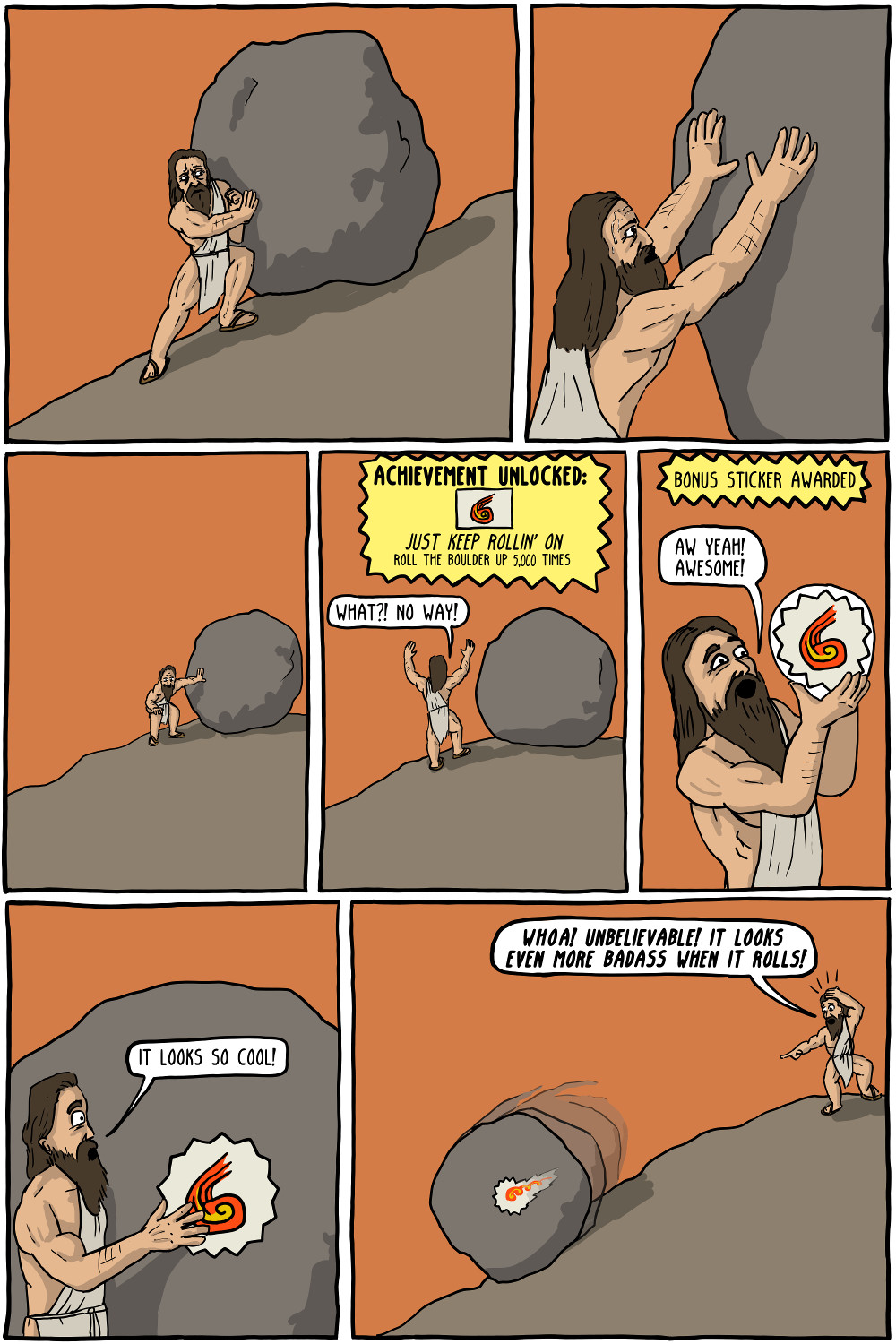
Well, the reference to Farmville, Candy Crush and other Facebook games aside, in this issue of Existentialist Comics, keeping an intelligent Sisyphus happy is probably harder than this. That's especially true for those like Camus and other professional and amateur philosophers who wrestle with these questions. We are "cursed" with intelligence, and speculative intelligence in general.

That said, where do we go from here, to find a better, more authentic contentment than Sisyphus?

To me, the original existentialism, or the Zen of the east from which I get my "mu" to Camus' question, is our starting point.

Recognizing that life simply "is," not in the scientific sense, but in a philosophical and a psychological sense, is the lodestar.

From there, finding contentment comes next. Contentment, to me, is both "deeper" psychologically and less ephemeral than "happiness." The likes of Daniel Kahnemann and other modern psychologists strongly agree.

And, it's not necessarily based on old ideas of how we "have to" find meaning, or create meaning, to be happy.

Second, per the essay that I linked that sparked these comments, as one other commenter noted, "progress" is usually defined in teleological terms. People often define meaning in the same way, which of course is another problem, and one recognized in part by existentialist and absurdist philosophers.

If your meaning is defined from achieving a goal, then you are doomed to frustration in never achieving it, or, like Sisyphus, having your "achievement clock" reset, or new layers added to it, or whatever.

And, what if you do achieve a goal of teleologically-based progress? What then? In the modern West, often, "emptiness," followed by chasing after some new goal.

"Revolt" might be one way of achieving this. But, I think it needs to be somewhat more comprehensive, maybe even somewhat more Cynical, as I discuss in calling for a neo-Cynicism, than Camus realized. The revolt has to include a revolt against teleology.

Even "authenticity" must be put under our Cynical microscope. Too often, "authenticity" is seen in a quasi-Platonic sense, as in "There's some ideal Me out there, and that's what I want to be."

Well, no there's not.

Each one of us is the result of massive contingency in a materialist universe. There's no way any ideal Me or You exists.

So, authenticity means rejecting the strictures of society that don't agree with deeper layers of our selves — before they become part of those deeper layers.

At the same time (heads up, Black Bloc!) it means questioning the idea of "revolt for revolt's sake" (sorry, any hyper-Camuseans) or any other "X for X's sake."

I'm not a process theologian, or anything close.

But, I will call myself a sort of "process psychologist."

As such, meaning is created, not found. And, it's created on an ongoing, not a static basis. It's part of a dialogue between a changing self, a current moment, and a current moment that is part of a larger stream of time.

And thus, meaning changes throughout life. Why wouldn't it?

Wednesday, December 26, 2012

Tough-talking thoughts on "The Ground of Being"

Or, to riff on a professor at my old conservative Lutheran seminary, "The Ground of Bullshit." (He claimed historical-critical theology was a bucket of warm shit.)

My thoughts, and ire, are piqued by three recent Christmas-faith columns in the New York Times, two of them previously blogged about in these pages.

In the first, Simon Critchley gives the usual crappy reading of Dostoyevsky's Grand Inquisitor that Dostoyevsky himself gave us. No surprise that Critchley works with continental philosophy, since it gave us the dreck behind "Ground of Being" in the first place; Critchley explicitly embraces the "death of god" idea. Anyway, I show how both he and Dostoyevsky are wrong here.

In the second, Britain's chief rabbi says, in essence, cognitive science and evolutionary psychology show the need for religion not only in past and present but in the future. I've already shown how wet he is.

The third, about which I had not blogged before, is here, as MoJo Dowd at the New York Times lets her column get hijacked by a liberal priest.

Here's the nut graf of that one:
I believe differently now than 30 years ago. First, I do not expect to have all the answers, nor do I believe that people are really looking for them. Second, I don’t look for the hand of God to stop evil. I don’t expect comfort to come from afar. I really do believe that God enters the world through us. And even though I still have the “Why?” questions, they are not so much “Why, God?” questions. We are human and mortal. We will suffer and die. But how we are with one another in that suffering and dying makes all the difference as to whether God’s presence is felt or not and whether we are comforted or not.
Really? I can flip that on its head, and say that how we are with one another in suffering and dying reaffirms the brotherhood of mankind while, quite possibly, once again showing that Christian attempts to explain God's theodicy flop on the floor like an 86-year-old newlywed Hugh Hefner not taking Viagra.

A bit more seriously, saying "I don't know why" ultimately leads to Yahweh's answer to Job: "I'm god; you're not. Therefore, I don't have to explain myself to you, so STFU."

Now, none of these used the phrase "The Ground of Being," made popular in mid-20th century US liberal Christian theology by Paul Tillich, but its vein of thought ran behind all three in some way.

As part of "process theology," if you will, it's an attempt to get an Eastern-type immanence imparted to the monotheistic god while yet avoiding pantheism, panentheism or similar.

But, it's still bullshit.

It's bullshit in two ways.

First, per physicist Wolfgang Pauli, the phrase is "not even wrong."

Second, per philosopher (including philosopher of language) Ludwig Wittgenstein, any discussion of any "Ground of Being" is nonsensical.

And, it's upon that angle that I shall concentrate.

First, capitalize Being all you want, process theologians, it's still not a personal noun. As an editor and writer, I can tell you it's a gerund. Yes, it's a noun, but a verbal noun of a status. It's not a concrete noun. Capitalize it all you want, you can't change that fact.

Look! Here's the ...

"Ground of Dying." (Process theology meets Kali in India.)
"Ground of Football-Loving." (Process theology comes to Texas.)
"Ground of Digesting." (Process theology meets food addict.)

Etc. ad nauseum.

Anyway, for anybody not a process theologian in denial, you get the drift. "Being" ain't a person, ergo ain't a personal divinity.

Well, a diehard process theologian might say, "What about 'Ground'?"

Nice try.

Yes, "ground," when lowercase, is a concrete noun. But, anybody advanced into Piaget's abstract thinking phrase knows that it, when capitalized and used like this, is metaphorical. (As is true in general with capitalized nouns from process theologians and New Agers.)

Beyond that, if you want to worship "Ground," process theologians, it's called "Gaia"; join the New Agers.

As for phrases that "transcend boundaries," per the Wikipedia entry on "Ground of Being" linked above ... so does "eternal male orgasm," or, to properly capitalize it, "Eternal Male Orgasm." But, even a triple-Hefner dose of Viagra doesn't make that one any more real than "Ground of Being."

Basically, religious existentialism too often jumps off the verbiage cliff, and here is a clear example. And, it's more than that. Just as more conservative Christians basically postulate a "god of the gaps," well, "Ground of Being" has the same function for liberal-critical Christian theologians.

Again, nice try. It sounds more intellectual. But, it's no more real, and it's no more intellectually substantive, than the ideas of your conservative brethren.

Besides changing the third-word gerund, I could also change the first-word metaphorical noun.

We would have "Sky of Being," or "Ocean of Being," or "Bayou of Being," or "Iceberg of Being," etc. Again, silly. Or, if you want me to hew more closely to "Ground," we could have "Soccer Pitch of Being," from sports, or "Peat Moss of Being," or "Quicksand of Being."

Actually, in expressing how I feel about process theology in particular, and modern liberal-critical systematic Christian theology in general, "Quicksand of Being" sounds about right.

Your mileage may vary.

Update: Some Facebook dialogue helped me to see more of where I was really heading with this post, especially vis-a-vis Dowd's priest, who was writing in light of the Newtown mass shooting.

And, beyond criticizing the Ground of Faith, it's a warning shot related to that old Gnu Atheist word "accomodationism."

Sometimes, that's not a four-letter word, but potentially an actual problem for some secular humanists.

Let's take Dowd's priest or Chritchley. I could do interfaith fundraising for Newtown victims' families with them, or whatever. However, if I were asked to speak at a memorial service for Newtown victims with them, even if the service had no fundamentalists or conservative evangelicals, if they made comments like here, I would have to publicly respond.

No, I wouldn't use the word "bullshit" at an event like that. But I would "call them out," politely but firmly.

And the one person with whom I was in dialogue? I have the feeling he would not.

And so, "accomodationism" is not always a four-letter word.

And so, too, while I'm not a Gnu Atheist evangelical, and can readily mock their stupidities, Gnus aren't always wrong, either.

The theodicy of liberal Christians is, in its own way, just as anti-humanistic as that of conservative Christians. As is the reincarnationist theodicy of Hindus and the reincarnationist atheistic "theodicy" of Buddhists.

Secular humanists should never forget that.

Friday, December 21, 2012

Our Atomic Lives


OUR ATOMIC LIVES

Our atomic lives can never be fused.
No nuclear furnace of love
Whether erotic, companionate or both
Can fuse two hydrogen’s into one permanent helium.
Nor can the deepest Pythian friendship
Save perhaps in the rarest of cases
Keep two bonded lives from some fissile shock;
Alone we are doomed to be.

Alone we are doomed to be.
But is that really true?
No doom has been pronounced upon us.
Our aloneness simply is.

Beyond this, the real, awful aloneness,
Is not the aloneness from others, but from our own selves.
Alienation is always, finally, internal.
For both introvert and extravert.

Friday, November 30, 2012

Existentialist or absurdist? Understanding Camus


Albert Camus/From Wikipedia
Albert Camus consistently rejected the label of “existentialist” for himself, preferring that of “absurdist.”

I’ve always thought that, in part, there was a jealousy dynamic involved. He didn’t want to be under the “umbrella” of the same descriptive label as was Jean-Paul Sartre. This parallels why I see Igor Stravinsky not wanting to be called a “neoclassicist”; that label was already hung on Sergei Prokofiev; see here for more on that.

That said, it’s arguable that there are differences between Camus and Sartre, and that, as well, Camus knew his own writing better than anybody else, and should be allowed for his own labeling. (Exactly the same argument applies to Stravinsky vs. Prokofiev and, in fact, I have a similar blog post up.)

Fortunately, Wikipedia has a very good page on absurdism. The best part is that it offers a nice comparison chart of basic issues versus both secular existentialism (Sartre) and religious existentialism (Kierkegaard), as well as against nihilism.

I like absurdism because it sees more grays and fewer blacks-and-whites in life. But, it’s not nihilistic, which, well, sees all blacks!

Versus existentialism in general, absurdism says life may have meaning, not that it necessarily does. But, more “positively” than secular existentialism, it also says that the universe may have inherent meaning, but we can never know that.

That said, I’m not sure how much Camus believed that, and he wasn’t the only literary or philosophical absurdist, to be sure. Personally, I’d nuance that statement to say, “I don’t think the universe has inherent meaning, but I can’t prove it doesn’t.”

Also, versus both types of existentialism, absurdism says, don’t expect any guarantees, even on an individualized attempt to create personalized meaning out of life.

That, of course, was part of Camus’ “The Myth of Sisyphus.”

In turn, in that book, he first articulates the philosophy of revolting against the absurd, which finds its ultimate articulation in “The Rebel.”

Here is where Camus and Sartre parallel each other on the issue of “authenticity.”

For Sartre, it’s about being authentic by creating an authentic meaning for life. For Camus, it’s about the authenticity of one’s revolt.

And, as a result, Camus tells us that a life without hope is not necessarily a hopeless life.

And, along with Camus’ general terseness of writing, that’s part of why I admire him as an author in general and definitely hold him on a higher level than Sartre. A play like “No Exit” aside, Sartre simply doesn’t seem to have a visceral grasp of modern absurdity the way Camus does.

For additional thoughts on and interpretation of Camus, not necessarily agreeing with what I have written, see this site from Swarthmore. For some of Camus’ pithier insights, see this page of quotes.

And, go here for my thoughts on Camus' birth centennial.