Showing posts with label Buddhism. Show all posts

Thursday, August 07, 2025

Top blogging, second quarter of 2025

 We're actually more than a month into the third quarter, but I still like to do these little roundups and reviews.

With that said, not all pieces were posted in the second quarter of the year; these are just what was most popular (with a bit of shading into July.) 

No. 10? From 2020, "A Lutheran college myth bites the dust." This was from MY now-closed college, the claim that alum Paul Hill wrote "Lean on Me." 

No. 9? From June, sparked by journalism analyst Corey Hutchins on Substack, "Euphemism creep and language issues." 

No. 8 goes way back to 2007, "Contra Buddhism 1," one of my earliest pieces deconstructing Buddhism, and even more, deconstructing Westerners (and perhaps some heimat Buddhists) who claim Buddhism is not a religion. Hold on to that. 

No. 7, from June, a blogger also on Substack tried to claim they had refudiated (sic) Kurt Gödel's logical proof for the existence of god. In reality, they partially failed. (They then, after this post, argued with me about it, and I moved on, sensing the possibility of a Gish Gallop.) 

No. 6 is also from 2007 and related to No. 8. I had the easy "win" of noting that, if enlightenment is ineffable, how can you talk about it? 

No. 5 is one of my top all-time posts, about "The great ahistoricity of Acts." In it, while I talk about all of Acts; I move toward the approximate last one quarter, from Paul's arrest in the Temple after allegedly bringing a goy into the inner court, and on from that, as being even more ahistorical than what comes before it, then note that this certainly means Paul didn't get to Rome.

No. 4? From June, I said "The Big Think" was missing a fourth philosopher in its piece on philosophical issues with grief. 

No. 3 was also from June, about a new round of issues at the r/AcademicBiblical subreddit. This time, it wasn't so much stupid posters or Nazi mods still being Nazis; rather, it was actual academics full of wrongness, namely, John Meier and Dale Allison

No. 2? Back in 2012, a geologist claimed he had geological proof Jesus was crucified April 3, 33 CE. And, on it, I picked up a fundagelical commenter who eventually went away. 

No. 1? ALSO from 2007, and one of my top posts ever: "More proof the Buddha was no Buddha." 

(No. 1, No. 5 and No. 10 are in my top 10 posts of all time.) 

Saturday, April 26, 2025

Top blogging, first quarter of 2025

 A couple of weeks late, but better late than never, eh?

As is normal, and as with the monthly roundup on my main blog, these were the most read in the first three months of this year, without necessarily being written then. "Evergreen" items from the past will be so noted.

10th? My 2022 post on the great ahistoricity of Acts — and radical thoughts on Paul's demise — is trending in part because I posted it as a comment at Paul Davidson's "Is That in the Bible" site, and also because it's linked in No. 7 below.

In 9th? A recent post about putting Hindu-Buddhist theological carts before consciousness horses.

At 8 is an oldie from 2021 about the Lutheran Church-Missouri Synod shutting down its Concordia University in Portland because it was too doctrinally loose on some issues, and the shitload of fallout that caused — fallout that, AFAIK, has not been totally resolved. Teh Google shows no recent news, but does show LCMS insidiousness at work earlier this year on its university in Ann Arbor, Michigan.

At No. 7, from earlier this year, is my "semi-disappointing foul ball" critique of "God's Ghostwriters" by Candida Moss.

At No. 6, from just a month ago? A hard-hitting callout of LCMS president Matthew Harrison for godawful theology in sucking up to Trumpistan. Some of it is bad theology by Lutheran vs Reformed Protestantism lights, others is just bad theology period. I suspect it's only going to get worse over the next three years and nine months.

No. 5? From a year ago, my critique of new and weird claims about Morton Smith and Secret Mark. It may be trending because I posted it on Skeptophilia blogger Gordon Bonnet's page when he wrote a post about a month ago talking about "Mysterious Mark" or something and I thought fragments of a previously unknown gospel had been found until I started reading.

No. 4? From last month, the latest installation of the gift that keeps on giving, the latest wrongness at the r/AcademicBiblical subreddit.

No. 3? A claim that a so-called (and yes, that part is needed) Plague of Cyprian nearly collapsed the Roman Empire, the subject of an entire recent book, "The Fate of Rome," is pretty much wrong in many ways, and may be close to the old physics Not.Even.Wrong. world.

No. 2? My second takedown of "Matty" Harrison, Lutheran Church-Missouri Synod president, came after the Portland issue, in 2023. This was over his handling of the "Lutefash" issue within his denomination, including pastors, including, in an update, one involved with the "Steal the Vote" effort in Georgia 2020. As with No. 6, I expect this will only get worse over the next three years and nine months because Matthew Harrison is a big "trimmer" as well as a big politician. (If you think organized religion — and not just tribes within Christianity on that — isn't politicized, you need to think again.)

No. 1? I love not only kicking touters of Buddhism, like Robert Wright and his ilk that claims it's not a religion, but kicking ideas in Buddhism behind that.  "More proof that the Buddha was no Buddha" goes back to 2007.

And, with 2, 6, and 8, I decided Harrison needed his own tag.

Thursday, January 30, 2025

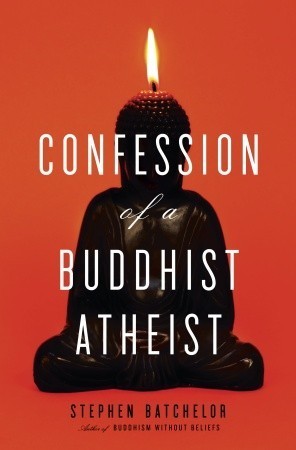
The Buddhist deceptions of Stephen Batchelor

Now I know why so many westerners tell such bullshit about Buddhism. Stephen Batchelor, in addition to his other lies, claims the Buddha rejected karma and reincarnation, per this review of his main book.

And? Wikipedia agrees.

Now, exactly what gets reincarnated, and how and why, the Buddha himself may not have detailed. I accept that it stems from him — and have accepted that for many years — that Buddhism rejects the idea of an individual soul. In that sense, then, Buddhist belief in reincarnation is even more offensive than the Vedic/Indian epic religion belief of reincarnation of a personal soul.

I don't believe that Hinduism is the right word for the majority Indian religious belief at the time of Siddhartha Gautama, but I also reject Batchelor and others who claim Hinduism didn't start until the start of the British Raj. Some people even claim — and I think, but am not sure, that that includes Batchelor — that Hinduism was "invented" for the British. Rather, I think Hinduism begins with the Guptas, when Buddhism either faded out or was chased out of India. And, I think that it was probably some deliberate chasing out, at least to some degree, along with a conscious effort to organize beliefs and ideas of the Axial Age epics of the Mahabharata and Ramayana into something coherent and cohesive. The ending of the compilation of the Ramayana in the 3rd century CE gives us a terminus ad quem for the dating of something like Hinduism. And, it dovetails, as that century is when the Gupta Empire started. And, Chandragupta II, circa 375-415, did much to elevate Hinduism.

I assume, but don't know, that Batchelor's "moves" here, and his motive, are ultimately to claim that Buddhism is not a religion, like Robert Wright. Well, Wright was wrong, and wrong. And thus, so is Batchelor. It believes in metaphysical principles and teaches people how to, individually and collectively, through both praxis and doctrine, to "better orient themselves" to these metaphysical principles, and thus fits my personal philosophy of religion-based definition of what a religion is.

I actually tackled this a bit a decade ago, and noted there, with a quote from someone else, that an Owen Flanagan was more intellectually honest than a Batchelor or Wright, in part by consciously admitting that they were creating a project to de-metaphysicalize the Buddha, rather than claiming to exegetically prove that he was an anti-metaphysician. And, here's that quote, again:

I don’t think it’s an accident that there are so many first generation Buddhists in America claiming it’s a philosophy and not a religion. Only if your parents aren’t Buddhists can you claim that Buddhism will do, unlike other religions, all that it promises. The first gen acolytes do all sorts of backbends to get around the obvious malarky of the dogma. Whether it’s the three card monty move of saying “there are many Buddhisms” so that any BS version of the doctrine you point out can be quickly pushed onto the wrong sect, or whether it’s the annoying “ineffable” dodge, or whether it’s the putting off until other lives the need for any sort of freaking evidence.
Owan Flannagan [sic] did his best to come up with a naturalized Buddhism, and I find it unsatisfactory. Nagarjuna is no more a logician than Democritus and Leucippus were Physicists, which, with Massimo’s blessing, they were not. Still I’m going to read the book for the history of logic.

There you are.

Here's Flanagan's primary book on that. And shock me, per one 1-star reviewer, that Sam Harris recommends the book. That's because he's done the Batchelor/Wright type BS peddling himself.

So, contra Flanagan's deliberate project and Batchelor's bullshit? Once again, as I said long ago on these pages?

Buddhism is still a religion.

And, karma is still as offensive as hell, whether it's a personal soul being reincarnated or not. Oh, and per claims that Buddhism teaches rebirth, not reincarnation? 

Per Spock: A difference that makes no difference IS no difference.

Thursday, January 16, 2025

Top blogging of 2024

 As usual, these are the most read pieces from last year, whether or not written in 2024. "Evergreen" ones will be noted by approximate date of publication.

At No. 10, a piece on a mishmash of problems at r/AcademicBiblical (which seems to continue to head downhill) and other biblical criticism subreddits.

At No. 9, since 2017, I have continued to say "Goodbye to 'History for Atheists'" and Tim O'Neill's Samuel Huntington-like Catholic Chistianism.

At No. 8, an exemplum of what's wrong with r/AB, "The Unbearable Lightness of Chris(sy) Hanson," who is independent, and arguably a researcher but most certainly not a scholar.

No. 7 goes to the world of aesthetics, which is part of philosophy, and specifically, to the world of classical music. That's my savage critiquing on how what could have been a good book about 20th century American classical music got butchered.

No. 6? Yes, until proven otherwise, Morton Smith is still the forger of Secret Mark.

No. 5? It's from five years ago, but trending because I posted it at the ex-Lutheran subreddit. The idea of "Gun Nuts in the Name of Luther" and its lies by omission on biblical interpretation will probably jump up more in Trump 2.0.

At No. 4, from early 2024? Contra philosophy of religion prof, it's not fundagelicals vs other Christians, and it's not even literal vs liberal religious believers in general. It's secularists vs everybody else on treating climate change as a climate crisis.

No. 3? Riffing on Rolling Stone et al, in 2023, I wrote about "Fascism in the Lutheran Church-Missouri Synod." I expect a resurgence in Trump 2.0.

No. 2 was also from 2023, and riffed on Paul Davidson of "Is That in the Bible," as well as, via him, my reading of Idan Dershowitz's then-new monograph on what Moses Wilhelm Shapira may actually have found. "Standing Josiah and Deuteronomy on their heads" tied together a number of threads in biblical criticism.

And at No. 1?

A very evergreen, 2007, "More proof the Buddha was no Buddha." (I have a new piece about Stephen Batchelor coming up in a week.) For more on my thoughts in general, click the Buddhism tag.

Saturday, April 13, 2024

Top blogging, first quarter of 2024

These are the most-viewed posts of mine within the past three months. That doesn't mean all of them are from the last three months. I'll indicate where not.

No. 10? More oopses at r/Academic Biblical, with the worst I documented being some nutter about "666."

No. 9? A two-paragraph brief from way back in 2007. "Patriots, gurus, scoundrels, martyrs" was, I think, the second post here to draw vigorous protests from "Addle Allone." I have one suspicion who that person is, but am not sold on it.

No. 8? Yes, Morton Smith is indeed the forger of Secret Mark. And, a 2023 book won't convince me otherwise.

No. 7? Some counterfactual/alt history about Caesar and the Ides of March.

No. 6? Trending from 2020 because I posted it at Reddit's r/classicalmusic, my saying at that time that I would take a pass on Fabio Luisi helming the Dallas Symphony Orchestra.

No. 5? From last year, about fascism in the Lutheran Church-Missouri Synod. (Since posting it, I have crossed swords on Twitter with the chief fascist nutter of the story, Corey Mahler. Unfortunately, I didn't screengrab and now I'm blocked. IIRC, it was him spouting false flag nuttery about the Crocus attack in Moscow.)

No. 4? I murdered Robert Sapolsky, figuratively speaking, over "Determined."

No. 3? From last fall, and getting new reading from posting at a biblical criticism group, obviously NOT the blocked-to-me r/academicbiblical, my piece on Josiah not being Josiah, proto-Deuteronomy and more.

No. 2? The second from 2007, "more proof the Buddha was no Buddha," and possibly the first piece of mine to draw that vigorous reaction from Addle Allone. Allone, maybe, but not alone in reacting to this. Oh, while we're there? Buddhism is still a religion.

No. 1? Andy Clark is all wet as a philosopher of consciousness.

Thursday, January 18, 2024

Top posts, last quarter of 2023

 I don't do a monthly roundup, unlike at my main blog. But, here is a roundup of the last quarter of 2023.

 Again, not all of these may have been written in 2023, but they were the most read the last quarter.

We'll start from the bottom.

No. 10? Bart Ehrman goes from JW to Marcionite, comparing his second most recent book to his most recent. 

No. 9? An extended book review. "A Canticle for Leibowitz" was VERY interesting, but a set of secong and third thoughts led me to call out various things related to the ethnicity of that person Leibowitz.

No. 8 was one of many posts about stupidities at Reddit's r/AcademicBiblical, as I called out a shitload of stupidity in people commenting on a post about the Woman Taken in Adultery pericope from John.

No. 7? "Say goodbye to History for Atheists" was written in 2017, but has been updated more than once since then.

No. 6 was also from last year, and also from r/AcademicBiblical. and was various commenting fails by "Smart Fool" at the same subreddit.  

No. 5? The myth that Paul Hill from St. John's College wrote "Lean on Me," blogged years ago, started trending, in part because I posted a piece where I had dropped this link onto a St. John's College Facebook group.

At No. 4,  from a year ago January, Lutheran Church-Missouri Synod President Matthew Harrison is either actually dealing with or else pretending to deal with Trumpian-aligned fascism in his denomination.

No. 3? Calling out Robert Sapolsky for being all wet on the hoary chestnut of "free will vs determinism," first for believing this dichotomy really exists and secondly for plumping for determinism.

No. 2 deserves a hat tip to Paul Davidson of "Is That in the Bible"? I riffed on a post of his, into standing both the kingship of Josiah and the development of Deuteronomy on their heads.

Drumroll ....

No. 1? As if a first round of proofs wasn't enough, "More proof the Buddha was no Buddha." Goes way back to 2007, but trended because I posted it to a subreddit in response to some Buddhist chuds. But, the comments long before that, like "Addie"? Claiming that the Buddha's teachings are ineffable sounds like Paul quoting Job in Romans. Nope on both.


Thursday, January 11, 2024

Top posts of 2023

 Again, not all of these may have been written in 2023, but they were the most read last year.

We'll start from the bottom.

At No. 10, from January 2023, me calling out a then-new moderator at Reddit's r/AcademicBiblical site as a moderator Nazi, for various good reasons, which eventually got me comment-banned there, and led to me starting my own, currently restricted group. 

No. 9 was also from last year and was various commenting fails by "Smart Fool" at the same subreddit. (There will be more; when none of the mods has an academic biblical degree, even at the bachelor's level, you get problems.)

No. 8? The myth that Paul Hill from St. John's College wrote "Lean on Me," blogged years ago, started trending, in part because I posted a piece where I had dropped this link onto a St. John's College Facebook group.

No. 7, from way back in 2009, trending because I posted it to various biblical subreddits, including with the Nazi. "Paul, Passover, Jesus, Gnosticism" ties together several critical threads.

No. 6? As if a first round of proofs wasn't enough, "More proof the Buddha was no Buddha." Goes way back to 2007, but trended because I posted it to a subreddit in response to some Buddhist chuds. But, the comments long before that, like "Addie"? Claiming that the Buddha's teachings are ineffable sounds like Paul quoting Job in Romans. Nope on both.

No. 5? Back to this past year. Lutheran Church-Missouri Synod President Matthew Harrison is either actually dealing with or else pretending to deal with Trumpian-aligned fascism in his denomination.

No. 4? Way back in 2006, but trending because I posted it to r/classicalmusic. "Mahler: the anti-Beethoven" invites discussion.

No. 3? "Say goodbye to History for Atheists" was written in 2017, but has been updated more than once since then.

No. 2 goes back to the world of Reddit. I called out anally-retentive mods at r/religion and (of course) got banned.

Drumroll ....

No. 1 again goes to r/AcademicBiblical, as I called out a shitload of stupidity in people commenting on a post about the Woman Taken in Adultery pericope from John.

Thursday, October 06, 2022

The old 'We don't have a god in Buddhism, so karma isn't punishment' BS rises again

That was raised by the second of two people I blocked last week on the DebateReligion subreddit. The first was a "just asking questions about definitions" Hindu troll, one of a general subtype of social media trolls who always claims the burden of proof is totally and solely yours.

Anyway, Mr. Rootin Tootin or whatever his name is, apparently blocked me from replying to his second response to him. (I'm not genius-level yet on Reddit, so I don't know how you block commenting if you're not the OP, which I don't think he was, but I digress.) 

So, I updated my first sub-response with what would have been my sub-sub-sub-response, then blocked him. But, again, I digress.

His big claim was that because Buddhism has no deity, karma can't be considered punishment.

Bullshit. If you're reincarnated as something "worse," and there's a metaphysical law, which karma is, as to WHY you're reincarnated as something worse, it's punishment. It's not for your health.

Sidebar: How do Buddhists claim that there are reincarnations as something "worse" if everything here is illusion? Better yet: How do they claim that reincarnation is real, or the karma behind it is real, if everything here is illusion?

Now, I know that at this point, some Buddhist sage, like Jesus telling the young rich man that he's not far from the kingdom of god, is going to tell me I'm not far from enlightenment.

And, he or she would be right: I'm enlightened as to just how much petard-hoisting bullshit you spout.

Anyway, back to the Reddit nutter. He talked about "Lord Buddha" this and that. Sounds kind of deity-like to me, and of course that's an issue of note in taking a good critical comparative religion look at the varieties of Buddhism. (And, we haven't even talked about Pure Land and similar, which rejects reincarnation vs a one-off afterlife.)

Part two on Rootin Nutter? His talk about "Lord Buddha" and this life made it sound like we were currently living in a Buddhist version of reincarnation like the stereotypical Christian versions of heaven skewered by Mark Twain and others. That, in fact is part of why I blocked him. I didn't want to waste time even trying to wade through that much blather. I wish I had copied his nonsense before blocking him. Seriously, it came off as an (alleged) Buddhist version of something Twain caricatured in "Captain Stormfield's Visit to Heaven."

Part three on Rootin Tootin Nutter? Sounds like he (surely a guy) was awfully "attached" in the decidedly no-no in Buddhism sense to this current reincarnation.

This is likely to be the start of a miniseries, with separate posts addressing other problems with karma and reincarnation in both a theistic religion and a nontheistic one.

While you're here, though? Reincarnation has other problems, biological, metaphysical, logical and more, whether you're Hindu or Buddhist, or Jain, or New Ager or whatever.

Oh, Buddhism was a religion when I first blogged about that, still is a religion, and still still is

And, karma is still as offensive as hell. Pun intended in a non-funny way by this secularist.

Thursday, September 29, 2022

Love yourself and probably start there: The Buddha vs Paul, Jesus and the Tanakh

I mentioned two weeks ago that I had a "secular spiritual experience" that, in part, involved the most famous logion from the Gospel of Thomas.

Shortly before I saw the standing dead ponderosa pine tree with sprout of whatever growing inside, I saw what I called a "namaste" rock, while hiking high on the east side of the San Juan Mountains. It reminded me of a similar rock at Middle Emerald Pool in Zion National Park, seen deliberately on a second visit. With both visits, I made "photo posters" in Photoshop of one of the better-known quotes of the Buddha, both shorter version and long version. Here's one of the photo posters, with longer version.


And, here's the new namaste rock from the most recent trip.


Finally, the short version of the quote, from the last visit I made to Zion:


First, note that I called it a "SECULAR spiritual experience." "Spiritual experience" by itself is too open to misinterpretation and I don't want to look like a pseudo-secularist, as I perceive Barbara Ehrenreich as being

Related to that? I invented a new word. I can't remember if it was at that moment, but it was before that hike ended. It's "humaste," a totally secular alternative to "namaste."

Now, to the meat of the header.

Jesus is, of course, asked the summary of the Torah, and he famously quoted two passages from the Torah, Deuteronomy 6:5, after the Shema in 6:4, and Leviticus 19:18 (Mark, here):

Love the Lord your God with all your heart and with all your soul and with all your mind and with all your strength.’ The second is this: ‘Love your neighbor as yourself.’ No other commandment is greater than these.”

The context beyond that?

Mark 12 just thrust it into a group of brief sayings that portray Jesus being religiously tested. Matthew 22 has it in the same context, but with the parable of the wedding banquet, Q material, leading off the chapter. Luke 10 totally reframes it. It occurs at an early part of Jesus' ministry, and has neither the wedding banquet nor any of the other Markan material. Instead, it's all "Gentile mission" stuff, as the chapter starts with the "mission of the 70" and ends with Jesus pivoting from his answers to a didactic story, similar to a pronouncement story, to explain who a "neighbor" is. You know that as "The Good Samaritan," and Samaritans are picked not to shame a Jewish audience, since Jesus never told such a story in reality, but as further justification for a Gentile mission and pivot.

Within the Tanakh, I already noted the context of the "first commandment of love." The second is the summation of a set of divarim which somewhat parallel the 10 famous ones in Exodus and Deuteronomy. The parallel is partial because the set in Leviticus focus entirely on interpersonal relationships, albeit with Yahweh hovering in the background, and have no human-divine commands or warnings.

Finally, of course, there's Paul's famous chapter on love, 1 Corinthians 13.

What's missing in all of those is what's front and center in the Buddha's words. (I'll assume he actually said them.)

The concept of self-love, and even more, the need for self-love and the need for people to be reminded of this.

Christians talk about how Jesus came to save a broken world.

If you accept the concept of "broken world" but reject ideas of "original sin," or of older Jewish ideas for sacrifice, the Buddha is juxtaposed in something like this as trying to heal and nurture a broken world. (This is setting aside the metaphysics that Buddhism as a religion incorporated from pre-Hindu Indian Epic religion, and setting aside the issue of how much the Buddha himself bought into that.)

And, contra Christians who talk about Jesus' love, and focusing on this world as well as the next? The Buddha focuses on this world first, even if he did buy Indian Epic metaphysics.

That's even more true on trumping Paul. Paul, the apostle of abnegation, writes an allegedly beautiful chapter, but it's all about abnegating (and at times blind) love, and arguably rejects self love in verse 5:

It is not rude, it is not self-seeking

The Buddha would beg to differ on the "not self-seeking." In fact, I think he'd actually, per Zen, say "mu" to Paul's whole angle, not just in the verse but the chapter.

As for the Leviticus 19 background, the Buddha probably would say, to riff on Robert Frost, that good self-love makes good neighboring.

As for Deuteronomy 6? It eventually gets to the "jealous god" that heads up the Jewish version of the Ten Divarim. Enough said there.

==

Footnote: I've said repeatedly that Buddhism is a religion. Backgrounding the parenthetical expression above, per my take on the Diamond Sutra, I think Siddhartha himself was indeed a metaphysician. Once again, Bob Wright is wrong.

==

Update: I should have thought about the old "If it sounds too good to be true, it is," and also how Buddhism, even more than Hinduism, is made amenable (note that first word) to New Ageism. Turns out, Gautama said neither half of the above quote.

Thursday, June 30, 2022

See you later, Siddhartha!

 If there really are "no Buddhas and no teachings," then why didn't Subhuti just leave after Chapter 8 of the Diamond Sutra? 

And no, Stephen Batchelor, Robert Wright, Thich Nhat Hanh and others, that's not facetious. Wright's wrong for other reasons and in other ways.

Of course, we'd only have one-third of a Diamond Sutra at that point.

That said, the claim that, in terms of metaphysical entities like souls, neither existence nor non-existence "exist," and ditto for returning and non-returning, aka reincarnation or not, as well, is itself a metaphysical stance.

And, since learning this metaphysical stance is aided by meeting in congregations, sorry again, Bob Wright, but yes, Buddhism is a religion. That's contra claims otherwise.

As for "if you meet the Buddha on the road, kill him," since there are no Buddhas, there's nobody to kill. If you meet an alleged Buddha on the road, don't kill him either literally or metaphorically. Move on. Besides, the alleged actual Buddha couldn't formulate essential dogma correctly. And he, and his disciples, undercut their claims of ineffability.

THAT's detachment.

And, I'll continue to prefer a non-metaphysical philosophical existentialism instead. Camus (my starting point, not Sartre, Dostoyevsky or Kierkegaard) never rejected the idea of "this, not that"; that is, he never rejected human nature, including its nature of distinguishing A from B.

Once you accept that, and that parts of life actually are suffering (and not per the Buddha's phrase getting that dogma wrong, above), you can address the "ultimate question," and when you recognize your human body exists, and some semi-unified something-like-a-self exists with it, decide that life's suffering is still worth it.

Thursday, September 23, 2021

Sobriety for BuJews

 For those who don't know, the "BuJew" is a portmanteau, a mash-up of Buddhism and Judaism for Jews who normally have a Reform Judaism background, want something more "substantial" than that, but want something that's "spiritual, not religious," and so glom on to Buddhism.

The problem?

Buddhism IS a religion, first of all, something I eventually reiterated. Your counterarguments aren't accepted, either. Please don't reference the likes of Stephen Batchelor or Robert Wright, either. I've read both long ago and crushed Wright here, something also eventually reiterated. Also, beyond its being metaphysical, it's questionable as to whether it teaches everything that some claim. Take universal love.

So, sobriety recovery?

Refuge Recovery would certainly appear to be BuJew. Founded by Noah Levine, son of poet Stephen Levine

I guess Noah's a true "western Buddhist" guru in another way. Allegations of sexual misconduct, that seem to be credible.

And, going by birth family surname? I wouldn't be totally surprised if Pema Chodron is also a BuJew.

Thursday, August 27, 2020

Meet Massimo Pigliucci

This is from a few weeks ago, but he wrote about it now being 30 years in the US for him.

A few thoughts I pull from that, having long followed him, and been stimulated by discussions philosophical and beyond on various websites and locations of his.

I've always thought of myself as a bit Europeanish, and his take on generalizations in temperament confirm that, in that I too have a sort of (muddled) optimism for the short term, but more worries about the longer term. I told him on Twitter that, per Yenta the Matchmaker's "oy we muddle," that Judaism (in Europe! I don't know about America) reflects similar ideas, or so it seems.

Many fellow Americans halfway confound me in this way, in fact. So does the attitude of "joining" as described first by de Tocqueville, even as Americans at the same time exulted about, and worked to further develop, "rugged individualism."

Back to other thoughts about Pigliucci.

One main point is his "seeking."

Raised Catholic, but apparently not too much more than a "C and E Catholic" (think about the top two religious days), he eventually moved to secular humanism. But, he wanted something "structured," so after moving more into philosophy, became what I'll call a Neo-Stoic. It's "neo" in the sense that surely for Massimo, and I think that for most devotees, it's been denatured of things like the Logos as a literal metaphysical entity.

I will confess that, 30 years ago, within Christianity, I had an eye for Stoicism. Today, things like behavioral psychology have shown me that human nature is far more irrational than Stoicism would have us believe. Quantum mechanics has shown the same about the universe lacking anything close to a quasi-logical structure, too. We've talked about this. I'm not the only one with a different take than him. But the talks have always been friendly.

It's also interesting to find that he was looking at Buddhism, too. I've noted strongly and repeatedly in these pages that Buddhism is, indeed, a religion. To make it not one takes a lot more denaturing than does Stoicism, and it's then arguable that what you have isn't Buddhism anymore. To be honest, Massimo, that one surprised me to the point of being semi-stunned.

Now, something that would call itself (neo) Stoicism could "denature" itself as much as what some people call (wrongly) Buddhism, by tossing out not only an actual Logos, but the idea of an ordered universe in general and a semi-rational humanity in particular. That said, I would no more call that Stoicism, even with a "neo," than I would call what Robert Wright, Stephen Batchelor and BuJews peddle Buddhism. You're really more in the vicinity of a personal psychology adapted from cognitive behavioral therapy or rational emotive therapy. Why not just call it such? (I could accept RET as a psychologically based "structure," but CBT comes off as ... too Stoic-like, especially without an "E"!)

Massimo did note back, via Twitter, that others than Wright (and Batchelor) for that matter, have made denaturing Buddhism a project. True. But, I think he may recall that I've carefully used adjectives, for sayings like "Buddhistic" or "Buddicizing" humanism or whatever. I haven't been fully accurate on parallels elsewhere, but Christian humanists don't claim to be peddling a truly non-religious philosophy of life, either. So, in that sense, I haven't been INaccurate on language either.

Finally, one small side note: A fair amount of people who believe in elements of pseudoscience aren't necessarily religious, or at least not driven primarily by religious considerations. Antivaxxerism comes immediately to mind.

In any case, the amateur semi-philosopher has appreciated the stimulations the professional has provided both inside and outside the realm of philosophy.

Thursday, April 09, 2020

Orthodoxy "versus" orthopraxis

In a post two weeks ago, I noted that the idea of Christianity being all about orthodoxy and Judaism being all about orthopraxis — right doctrine on the one hand, right action on the other — was more stereotype than reality.

Going beyond that, I'd like to say that the division between orthodoxy and orthopraxis in religions in general is more a permeable membrane, and one permeable in both directions, than a wall.

Doing the right thing is usually based on a belief.

Take Communion or the Eucharist.

Catholicism traditionally reserving the cup only for the priests was a practice. But it was based on a doctrine that included ordination as a sacrament. But that sacrament developed — along with other things, such as a single clergy — out of a practice of separating the priesthood from the laity. (Single priesthood also developed from Rome as a way of trying to prevent land in a bishopric from being heritable and thus strengthening regions at the expense of Rome.)

In Judaism, I noted in that previous post, in pre-rabbinic Judaism, Qumran's use of a solar calendar was a praxis issue. But it eventually led to separation from the Jerusalem priesthood, and eventual condemnation of it on both praxis and doctrinal grounds.

Move to Buddhism, outside the Middle Eastern-Western monotheism orbit entirely. Mahayana and Theravada Buddhists may not excommunicate each other, but practices in the two that differ from each other differ in part on whether someone who is an arhat should stay around and help fellow humans or not. And, yes, and yes Buddhists, that's a doctrine. 

Within Muslims, the succession to Muhammad, or within Shia, the split between Sevenrs and Twelvers? Dogma. Per Spinoza's excommunication, defining who Yawheh is or is not, to then wonder who can say the Shema or not? Dogma. Or, if you're a Karaite vs Rabbinic Jews, the status of the Talmud? Dogma.

Thursday, January 16, 2020

Schopenhauer, Camus, detachment,
maturity and midlife crises

A very interesting piece here, and one I largely agree with.

Kieran Setiya talks about how studying ideas of Arthur Schopenhauer can avert midlife crises.

The Buddhist influences on Schopenhauer shine through in the ideas from "Will and Representation" that represent this piece. And while Buddhism and Stoicism have some parallels, and some overlap, this is an area of difference. (Not to mention that the metaphysics behind the the two — metaphysics and a focus on them that make Buddhism a religion — are also different.)

Stop focusing on goals, Schopenhauer says. When you realize the goal, the goal itself is completed, and the pursuit is gone.

This is not just some academic philosophical or religious exercise.

Classic heavy metal rock band Deep Purple knew that in the song "Knocking at Your Back Door" (think about the title in a ZZ Top way) in chasing women, when they said:


"It's not the kill, it's the thrill of the chase."

That said, I think Schopenhauer (and Prince Gautama) go wrong where they say that "wanting what you don't have is suffering."

Animals with less complexity of thought and less complexity of emotions can (and do) still have wants beyond the basics of food, or per Deep Purple and Darwinian sexual selection, beyond the basics or non-basics of sex. But, they arguably don't have a level of consciousness to "suffer," at least not to suffer emotional pain.

A cow, per the old cliché, might see that the grass IS greener on the other side of a fence it can never cross (and might be lusting for freedom of choice rather than greener grass as better food). That doesn't mean that it "suffers" from being stuck in its own pasture. (A Buddhist might disagree; a Jain might disagree even more. That's why I'm neither one, and it's why I say both are religions.)

Setiya tries to spin Schopenhauer and I think fails. Activities that do not aim for completion are not ones with goals, even as he tries to split telic and atelic activity. But he then tells us not to abandon worthwhile goals, undermining himself. Nope; the worthiness of the goal may partially condition the failure to attain it or the emptiness after doing so. It doesn't wipe it out, though. So, in addition to failed hair-splitting, Setiya is wrong there.

So, is there something better, but on a broadly similar idea, that the world of philosophy can offer us? And preferably without the baggage of Buddhist metaphysics?

Why, yes!

I think Camus is better here. Accepting these wants, accepting that we might not get them, accepting that maybe we won't detach from them, and accepting the absurdity of all that is better.

To put it another way, which moves from Camus to neo-Cynicism, we must not imagine Schopenhauer or Sisyphus happy; rather, we should imagine Sisyphus raging against the machine, per Camus' call for authenticity in revolt.

That then said, to riff on another theme of Camus, he picked the wrong person from Greek myth. Sisyphus wasn't a rebel; Prometheus was.

I riffed on that when I said we should say "Mu" to Camus on meaninglessness.

Thursday, September 26, 2019

More problems for reincarnationists

Stimulated by reading a book Michael Shermer wrote last year, I've identified two more explanatory problems for the people who tout reincarnation.

I'm talking primarily about those who tout traditional religion-based reincarnation, whether the personal soul version of much of Hinduism and Jainism, or the impersonal life force version of Buddhism.

I'm not talking about the New Ager distortionists who believe all their past lives were as the king, queen, or mighty warrior, because they're wrong even within the world of reincarnation.

Anyway, the actual reincarnation world of Hindus, Jains and Buddhists says you may come back not as the  king or queen, but as the peasant shoveling shit out of the king's stables, or, much more importantly for this, a dung beetle in that shit in the stable.

We have, a la ideas explored by and generated from Thomas Nagel's famous, or infamous, "What Is It Like to be a Bat," (text here) a mind-mapping problem. This is more a problem for the personal soul type of reincarnation; obviously, an impersonal life force doesn't have human personal soul characteristics. Whether early Buddhists thought of this as a way to explain, or explain away, this issue, I don't know.

Anyway, Nagel argued that we can't understand bat consciousness because of its subjectivity and its different sensory basis, and went from there.

Well, except for Hindus and Jains, many people, whether of professional biological bent or not, would have difficulty extending consciousness at all to a beetle. Plus, the difference between its sensory interactions with the world and ours is orders of magnitude different from the human-bat difference.

So, if karma is an iron law of rewards and punishments, beyond the well known difficulties with people (if we're all being reincarnated) not remembering past lives, how can it even be a punishment to be reincarnated as a beetle? How can the "beetle-self" feel punished? Since as far as we know, beetles don't have emotions, period, along with not having consciousness, how can they feel anything, as in feeling as emotional affect and not sensory input?

This has a flip side. If, especially if you're a Jain who takes consciousness of some sort down to what most of us would call inanimate objects, what if a, say, an ameba is being rewarded by getting promoted UP to being a beetle for being an incredible ethical and altruistic ameba?

Does that sound as silly to you reading it as it did to me, typing it?

That leads to what I see as the even larger problem. (Yep, the above is the lesser problem.) And this one hits the Buddhist types as well.

While Charles Darwin wasn't around 2,500 or more years ago, nonetheless, these ideas of reincarnation and the karma behind them seem based on a "progress" misunderstanding of evolution, and of biology in general.

Who says it's "worse"being a beetle than a shoveler of the king's shit or even the king? I suppose a "good Buddhist" might use this as a wedge to claim that the whole idea of karma is itself maybe maya, but in that case, he or she is already lighting the fuse on their own petard. From that, they're making themselves even more irrelevant to the discussion.

So, we move forward. Given that the planet would soon be run over with shit, if we had no dung beetles, whereas the world might be quite good had we no more Homo sapiens, if I were to engage a progress-based version of zoology, I'd argue the dung beetle is superior. (And, we haven't even talked about the myth of cockroaches surviving nuclear war.)

That's bad enough. Let's take it inside the human world.

Here, of course, the claim is that being the shoveler of the king's shit is worse than being the king.

Says who? Per the French Revolution, we could stand to get rid of yet more kings. Per the labor theory of value, the shoveler of the king's shit is more important whether the king is alive or shat mat.

In other words, karma and reincarnation, taken as a unit, are ultimately part of the classism of the Hindu caste system. And, as I see it, here, Buddhism talking about only an impersonal life force being reincarnated is still a Social Darwinist failure too. It still based karmic reincarnation cycles on the idea that some humans are, by group sociological observations, superior to others.

On the third hand, the British Raj intensified and codified the caste system, as part of the old divida et impera.

Friday, September 29, 2017

Robert Wright writes about religion again (Buddhism), fails again

So, Robert Wright has a new book.

Like his older “Evolution of God,” it applies ev psych to religion, in this case one specific religion.

I won’t bother to read, as I one-starred that previous book for both that reason and the fact that Wright uses his old one-trick pony of “non-zero,” as in applying non-zero sum game theory to religious evolution.

That said, one can derive anthropological-based insights from the best of ev psych, and THEN apply THAT to the study of religious origin and development. Scott Atran and Pascal Boyer, among others, have done it quite well. And Robert Wright can't hold a candle to either.

Besides, I don’t need to review it for another reason.

Adam Gopnik, in a long piece at The New Yorker, has already done the favor both with him, and his somewhat older quasi-paralleling British secularizer of Buddhism, Stephen Batchelor. It's so good I re-read the whole thing.

I agree with Gopnik a LOT on both of them. That said, while still not planning to read the book (I’ve read previous Batchelor, too) I did click link to the Amazon page for Batchelor's one book.

I wanted to look at the one- and two-star reactions.

Funny, most of the people who accuse him of "pillaging" Buddhism for secularist ends most likely do their own pillaging for New Agey ends.

And, this also ignores that the history of all religions is full of pillaging. Today's Hinduism, whether Vedanta or many other branches, isn't the Brahmanism of 2,000 years ago. Today's Judaism isn't the proto-Rabbinic Judaism of 2,000 years ago or the Israelitism of 2,500 years ago and more. Today's "fundamentalist" Christianity isn't that of the pre-Nicene age.

To run Churchill through Marx: "Religion is written by the victors."

That said, my personal, philosophy-of-religion definition of religion remains a basic two-item one.

First: A belief in metaphysical matters that are of ultimate concern to human life. Note that this allows atheistic versions of Buddhism to be — rightly — defined as religion. Note that this also rightly, versus many Gnu Atheists — uses the word "atheist(ic)" as what it is, not a synonym for "irreligious."

Second: A set of praxis and/or dogma that is developed to rightly "align" believers with these matters of metaphysical concern. Note that this allows for both what are called "orthodoxy" religions and "orthopraxy" religions.

So, Buddhism — if not stripped of ALL metaphysics, is a religion. Certainly, it originally developed as one. Brahmanism of circa 500 BCE believed in some form of reincarnation and karma. Most versions of Buddhism today, setting aside things like Pure Land Buddhism that believe in a one-off afterlife, not reincarnations in a cycle. And, though not really having a dogma, Buddhism does indeed have a praxis. (Note to meditating New Agey Westerners — most Buddhism in its homeland still has plenty of other praxis for the laypeople, most of whom don't have the time or the inclination for meditation.)

This, then, gets to my earlier comment.

Wright isn't offering up Buddhism. He's offering up "Buddhist secularism." Per good linguistics, the noun is controlling, the adjective is modifying.

In a discussion with David Hoelscher on a Facebook page, I say the same. Ditto for what we should call “Jewish secularism” rather than “secular Judaism.”

That said, what about “secular humanism”? Shouldn’t it really be called “Christian secularism,” at least in some cases? I’m thinking primarily of non-Wiccan/pagan Unitarian churches and similar.

Shows that “cultural Christianism,” per Samuel Huntington, Rodney Stark and others, still dominates American culture, that we don’t do that.

One doesn't have to be a Gnu Atheist to critique — critique to the point of heavily criticize — Wright.

And, that all said, regular readers of this blog know that I am in general unfriendly toward attempts to pass Buddhism off as something it is not. Above all, that's when it's done by — speaking of "secular Judaism" — so-called BuJews.

Monday, September 25, 2017

Why neither Buddhism nor Robert Wright is true

Why Buddhism is True: The Science and Philosophy of EnlightenmentWhy Buddhism is True: The Science and Philosophy of Enlightenment by Robert Wright
My rating: 1 of 5 stars

Wrong from the title on

Ignore the blurbs, it’s still a bad book

There are several reasons for that.

First, IMO, Wright is overrated. I rated “The Evolution of God” as a one-star. This one had a chance to get lucky, even though it was starting minus 1 star due to the title alone. That title, and ding, along with puffery from too many others, though, cost it that chance to do better.

Now, within specific reasons it’s a bad book.

First, ev psych isn’t nearly as true as Wright claims. And, as I said in the review of “The Evolution of God” if you want to apply something like that to religion, try the evolutionary anthropology of Scott Atran or Pascal Boyer.

Second, the Stephen Batchelor denatured, demetaphyticized “Buddhism” that Wright presents isn’t Buddhism. (Wright even backhandedly, and out of the side of his mouth, admits this in the first chapter.

Third — or, if it is, then Unitarianism is just as much Christianity as is what Wright et al call “Buddhism.” And, it’s not.

Fourth — If Unitarianism WERE that, yet, nobody writes a book called “Christianity is true” unless they’re a fundamentalist.

That alone should show what’s wrong with the book.

But BuJews like Sam Harris on one hand, and BuGoys like Wright et al on the other, find millions of people who can still be conned this way.

Fifth, it is possible, indeed, that Buddhist secularism has special mediation insights derived from its religious roots. It’s also possible Christianist secularism does, too. It’s also possible neo-Stoicism does, and derived from its original philosophical roots. Maybe self-hypnosis does, derived from original empirical results followed by trial-and-error fine tuning. Or that modern science does, and influenced by a Buddhist-derived general idea of mediation, but NOT by anything specific.

(From what I know, there is indeed at least some degree of truth to all of the above. That’s from reading a new bio of Rorschach, on precursors to modern science; from some experience with self-hypnosis; from a philosopher friend who teaches neo-Stoicism counseling; and more. And, much of these things started happening before Batchelor, or precursors, started popularizing Buddhist-derived meditation ideas in the west.)

Sixth, note my adjectives two paragraphs above. Non-metaphysicians within Unitarianism would practice Christianist secularism, not Christianity. (Not all Unitarians are non-metaphysical.)

Wright seems to make the assumption that only Buddhism, among world religions, has unique insights that can be secularly distilled. Tosh. I haven’t even mentioned Taoist secularism. (Confucianism? I agree with many philosophers of religion that it’s a philosophy, not a religion.)

(Sidebar update: Buddhism IS a religion.

Religion is about:

Metaphysical matters of ultimate concern, within a social group setting; and 

How one orients oneself within that group to a better relationship to these metaphysical matters of ultimate concern.)

None of this is to say that meditation is bad. I think it can be good, indeed, for reasons in the book and beyond. So, don’t feel discouraged if the meditation Wright derives from Buddhist secularism doesn’t float your boat.

Seventh, Wright ignores the irony of people — selves — reporting on the idea that there is no self. This is part of a larger issue that certain Buddhist principles should be ineffable. Wright also ignores this connection to karma, vis-à-vis what is, and is not, reincarnated, and why the whole idea of karma is senseless at best and repulsive at worst if there is no “self” yet we have punishing karmic reincarnations based on actions of past selves.

Of course, he ignores it in part by presenting Buddhist secularism as “true,” and as true without having to look at its religious and metaphysical background.

In fairness, he does note that issues related to this are raised by “maverick” Buddhists.

Eighth, Wright, like other BuJews and BuGoys ignores that real, actual Buddhism has its own version of fundamentalism, violence against other religions, etc. Take the 969 Movement, leading the attack against Muslim Rohingya in Burma.

And, no, please no “no true Scotsman” claims that this is modern, and just one small offshoot. Before Buddhism in its Indian homeland went over the mountain to China and then was pushed out of India by a new, reformed Hinduism (Vedism or Brahamnism or similar are better terms for the main religion of India at the time of Siddhartha Gautama), Buddhists are documented as persecuting Jains.

Beyond Buddhism, he gets things wrong elsewhere. That includes muddling emotions and instincts, which he does so baldly and badly.

Finally, the title.

Often, it may be an editor at a publishing house that chooses a title. In this case, I highly doubt it; I’m sure that’s Wright’s baby. It is provocative and smug as well as wrong.

==

If Wright were just offering up a book called “Buddhist-based meditation tools and ideas,” he might get another star. But, he earned the low rating.


View all my reviews


Saturday, August 16, 2014

#Buddhism is still a religion, folks

I've written a little bit about this before here. Specifically, I've talked about its metaphysical aspects and their religious overtones, in a way that shows what I think is a comfortable Western non-Buddhist's familiarity with it. I've discussed briefly the paradox involved at the core of making claims about ineffability. Related to that, I've written about how some of the Buddha's own observations lead to logical snares.

But, with a new post by Massimo Pigliucci bringing out all the first-generation converts who claim "Buddhism is just a philosophy" or even "Buddhism is just a psychology," I thought I'd jump into this in a bit more depth here. (Many of the same types of apparent first-generation converts to "secular Buddhism" as made statements on those blog posts above.)

First, for those trying to claim otherwise, or hold up Stephen Batchelor or the likes of him as having a direct illuminative pipeline back to 2,500 years ago? Wrong!

The idea of "Buddhism is just a philosophy" (along with similar claims about Hinduism) was cooked up by Victorian-era Europeans and Americans, in some degree of cahoots with "Westernizing" Indians.

The reality is that Buddhism deals with two matters of "ultimate concern," even "ultimate metaphysical concern," namely karma and reincarnation.

Second, a sociology of religion observation, and a snarky one, too.

I think that most of the "just a philosophy" claimants come from one of two previous backgrounds. They're either old Reform Jews who like being able to paste meditation and Zen-type inscrutable phrases that sound like updated, Easternized versions of comments by medieval rabbis, all from folks in saffron robes with a hipster angle, on top of their denatured Reform Judaism, or else they're liberal Unitarian Christians or post-Unitarian New Agers who wish they had been born as Reform Jews, etc.

And, yes, that's a snarky comment. But, isn't snark itself an updated word for the psychology in which Zen masters often presented their observations?

Yes.

And therefore, it's the best style of answer available to give to the "just a philosophy" folks. 

Third, in line with Massimo and contra his Buddhist friend who inspired his post, even if you trot out modal logic, multivalent logic or similar post-Aristotelean thought, Buddhism, if you try to sell it as a philosophy, is more illogical than anything that's come out of the West.

If you don't like that? Mu!

Yes, I know what the word means. I've used it here to "unask the question" or "unask the issue" of "free will versus determinism" to many people, including Massimo. That comes from my primary blog, where I've written with a bit more depth.

Today, though, I use it in Zen-snark mode to "unanswer the protests" by first-generation Buddhist converts. And, per one commenter on Massimo's post, and my observations above, that's exactly who you are. Aaron Shure observes:
The joke from the late ’60’s about the old Jewish lady who travels to the Buddhist monastery asking to speak the the Lama: after a long journey on donkey, finally talking her way into the inner sanctuary, she approaches the Lama, smacks him with her purse, and says, “Sheldon, come home.” Graham needs to Kimmen heim.

I don’t think it’s an accident that there are so many first generation Buddhists in America claiming it’s a philosophy and not a religion. Only if your parents aren’t Buddhists can you claim that Buddhism will do, unlike other religions, all that it promises. The first gen acolytes do all sorts of backbends to get around the obvious malarky of the dogma. Whether it’s the three card monty move of saying “there are many Buddhisms” so that any BS version of the doctrine you point out can be quickly pushed onto the wrong sect, or whether it’s the annoying “ineffable” dodge, or whether it’s the putting off until other lives the need for any sort of freaking evidence. 

Owan Flannagan did his best to come up with a naturalized Buddhism, and I find it unsatisfactory. Nagarjuna is no more a logician than Democritus and Leucippus were Physicists, which, with Massimo’s blessing, they were not. Still I’m going to read the book for the history of logic.
I agree with the joke. I also agree that Flanagan (correct) does a better job than Batchelor, at least in some ways, in trying to intellectually craft the idea of secular Buddhism, Buddhism is just a philosophy, etc. At least Flanagan, in the subtitle of his latest book, by saying "Buddhism Naturalized," seems to admit this is a conscious effort on his part. However, whether that's due to combatting what he sees as misinterpretations, or whether he's rewriting what he sees as the normal, historically-rooted understanding of Buddhism, I don't know.

And, also, I found this quote from him:
What they make of the hocus pocus about karma and rebirth is another matter.
In light of that quote, how many Buddhist arhats, etc., would accept him as a legitimate expostulator of Buddhism? I know it's primarily directed at Americans (many of them commenting on Massimo's blog?) who largely equate meditation with Buddhism, and putting thoughts into their heads, but what does he think of Buddhism's core doctrines — yes, doctrines — himself?

Anyway, folks, per Aaron and myself, I can make the same claim about Judaism. If I make the right readings of scriptures I choose versus ones I neglect and other things, hell, I can make the same claim about Christianity.

Which, after all, is what many Unitarians essentially do.

And, "back in the day"? First-generation Christian apologist Justin Martyr tried to sell Roman emperor Antoninus Pius and members of the Senate on the idea that Christianity was just a philosophy, after all!

So, to the degree anyone claims Buddhism is "just a philosophy," it's true, but not unique, and it is essentially trivial.

Back to the philosophy angle. If, as did someone on Massimo's blog, you make claims that because David Hume came up with observations about human psychology that parallel those of the Buddha, this is "proof" that either  Buddhism is just a philosophy, or worse, that metaphysical doctrines and all, Buddhism is still just a philosophy, you just kneecapped yourself in my court.

And, if prose for philosophical statements doesn't totally float your boat, well, this short poem of mine, and this other one, point out some of Buddhism's conundrums in verse.

Sunday, January 06, 2013

Why Peter Singer and the Buddha are wrong about universal love

In an installment of "The Stone," one of the ongoing guest column series at the New York Times, Stephen Asma explains why we can't show equal, disinterested love to all humans, let alone all sentient beings.

It's all about human finitude, in two ways.

First, our level of emotional outreach is simply finite, even if we can perform a detached utilitarian calculus to help non-kin just as much as kin.

Second, we're not omniscient. Contra the classic utilitarian calculus, we don't know which of our actions truly will provide the greatest good to the greatest number of people. Asma could have referenced the pseudo-Chinese proverbial story, with its recurring chorus line of "could be good, could be bad," as part of this.

Asma focuses on Singer and other modern ethical philosophers. But, his argument applies to Buddhism as well

And, I can go even better than Asma there. Buddhism's philosophy and theology actually seems to promote universal detachment, or universal indifference, not universal love. I can then reverse-argue that to modern utilitarianism, saying that, once utilitarians realize their calculus simply doesn't work, should accept that universal indifference is the best they can do.

Sunday, March 20, 2011

Karma — as offensive as hell

This extended CNN blog, with broadly multifaith comments on "why suffering" in the wake of the Fukushima nuclear worries, following the Japanese tsunami and eaerthquake, makes the case well for me.

Is it any worse for a fundamentalist Christian to say:
1. God is inscrutable;
2. Original sin brought on this disaster for you;
3. It's God's prerogative to damn some people to hell.

Or a hardcore Buddhist to say:
1. Karma is inscrutable;
2. Your past life that you can't even remember brought on this disaster for you;
3. It's a cyclical universe's "prerogative" to damn some people to recurring rounds of bad karma.

I know of people who are skeptics, and atheists, even, in the sense of not believing in a western monotheist divinity, that still believe in the metaphysics of karma. Well, sorry, but, karma's as offensive as the heaven-hell of western monotheism. (The Buddhist version is more offensive than the Hindu version because it claims that not even a person or personality, but just a "life force" is reincarnated and the "self" [nonexistent as it allegedly is] is STILL punished in a new life.)

Beyond that, both western and eastern religion offer the same pablum when confronted with the problem of evil.

And, a "shout out" to "it's not a religion" Buddhist Sam Harris — what say you now?

And, speaking of that, I give a kudo to Chris Hitchens, the one "name" New Atheist to look at eastern religions just as toughly as those of the west.