Showing posts with label Luther (Martin). Show all posts

Saturday, October 14, 2023

Top blogging for the third quarter of 2023

As with my main blog, where I do a monthly top 10, not all of these are from the last three months. I'll note there they are not. And most, in fact, are not.

No 10 is from 2021, about Lutheran Church-Missouri Synod President Matt Harrison's underhanded closure of Concordia University Portland.

No. 9 is from recently, though: it's about a high-grift tour of the US of the fraudulent, bogus, bullshit "James Ossuary." Actually, the tour is only here in Tex-ass right now.

No. 8? My 2019 review of Lyndal Roper's Luther bio. (It is near Reformation Day, where conservative Lutherans turn into pumpkins if they see a shadow of Luther legend refuted.)

Speaking of? At No. 7, my 2017 roundup of Luther legend.

If an underhanded closure of a university wasn't enough, at No. 6 Matty Harrison earlier this year had to worry about one of his ministers being among Fani Willis' Dirty 19.

At No. 5? I take down "The Smart Fool," one of the overly self-inflated commenters at the r/AcademicBiblical subreddit.

At No. 4? An oldie but a goodie from 2020, getting new traction because I posted it for Democratic tribalists on r/politics. That's about St. Anthony of Fauci's various Platonic noble, then more ignoble, lies about COVID.

No. 3? Even older, but, it's never too late to keep kicking and saying good-bye to Tim O'Neill, the papal apologist of History for Atheists.

No. 2? From this quarter, more wrongness at r/AcademicBiblical, namely "The Woman Taken in Adultery" pericope of John 7:53-8:11.

Drumroll .....

And No. 1? Anal-retentive backdoor liars at r/religion.

Saturday, June 24, 2023

Fascism in the Lutheran Church-Missouri Synod? Yes; The Cross and the Swastika

Rick, I am SHOCKED there's gambling in the house of Matthew Harrison (pictured at right), and the people even more wingnut than him). And, sadly, in another sense, I didn't think of the addendum to the original headline, punning on a 50-year-old book that might be remembered by a few, until after the original post.

Vermont Digger has the details on a former distillery owner there who appears to be the owner of a podcast that pushes Lutheran fascism. 

Actually, a Rolling Stone article to which it links has the real details, about a Corey Mahler who co-hosts a podcast with who seems to be Ryan Woodie Dumperth, the Vermont guy, as well as an overview of LCMS President Matthew Harrison's attempts to douse? control? the flames without getting burned himself. (Harrison was just elected to another three-year term to run the denomination, at about 1.8 million, the main one in the conservative wing of Lutheranism, last month.) Update: Yet more in general, and Mahler in specific, here.

A report on Mahler and others from outside the LCMS notes that young alt right are reportedly attracted to Lutheranism because of Martin Luther's own antisemitism. And, that is real, though not unique to Luther in his day, but not just a late-life issue, and sis and others I know, please don't try to explain it away. Martin Luther was antisemitic, not just anti-Judaism after he discovered he couldn't use Jews to do theological judo on the pope.

And, not-quite full-on Nazis in the LCMS didn't want to believe Mahler was who he is until Machaira Action's report forced the issue.

Update, March 22, 2024: Mahler's also some sort of conspiracy theorist. I ran into him on Twitter over a nutter idea he was proposing and ...

He later blocked me.  And, he later yet deleted that tweet.

In detail, here are Part 1 and Part 2 of their report. Punning on Scandinavians and an alleged food delicacy, they call this movement "Lutefash."

That said, per the Rolling Stone piece, Matty Harrison's "excommunication warning," per this blog, appears to have become excommunication action. But, what about Dumperth? What about the other cockroaches that will operate more subtly, perhaps with the cooperation of willing pastors here and there?

Per comments at this "Occidental Dissent" site, there's probably a few parish pastors among the commenters, and others in the Wisconsin Synod, about one-fifth the size of the Missouri Synod, and both even more hardcore traditionalist on theology and further right politically than Missouri. One commenter references a YouTube by Rev. David Ramirez, a LCMS pastor from St. Paul's, Union Grove, Wisconsin. (I guess Hispanic counts as "White" in this world?)

Bethany Lutheran Church, Springdale, Arkansas, and Rev. Gregory L. Jackson another to watch, per this blog by either him or it. Here's Jackson's Goodreads authorial page. Interestingly, he's also a King James Version nutter. Dude took a deep dive in an empty pool, too. Went to the former Lutheran Church of America's Augustana in Rock Island. Then an STM at Yale. Then Notre Dame. Then that deep dive in the empty pool.

As for how this all happened? My sister notes that Matty played with fire by entangling church and state years back. He's been the LCMS president since 2010, and as in the previous presidential election, fended off far-right challengers. He's semi far-right himself, as I see today's Missouri Synod, which is like today's GOP, and just as it's laughable to hear a Republican (like Will Hurd just announced for president) called a "moderate," the same holds true whenever applied to Harrison. He's won on the first ballot every time since his first election, but he's never broken 55 percent. Tim Klinkenberg, a seminary classmate of mine, was the apparent semi-right challenger in 2019. The Wiki link has links to all election results in its footnotes.

It should also be noted that German-Americans broke harder for Trump than any other white ethnic group, apparently driven in fair part by their liking in 2016 his claims to breaking with the neoconservatives within the GOP and having a more isolationist stance in his "America First," and the LCMS' roots are primarily in German-Americans. The LCA, part of which eventually became the ELCA of today, had its roots in older German-Americans from 200-plus years ago who lost more their Germanness, but even more in Scandinavian Lutherans of the Upper Midwest. The ALC half of the ELCA merger had a mix of German-Americans of about the same migration date as LCMS Lutherans, but with a Scandinavian contingent at least half that of the LCA as leavening.

As for how this all plays out? Harrison is enough of a political chameleon to largely stay above the fray, despite the Lutefash pinpricks. To the degree he thinks its too much heavy lifting, he'll ignore the underground network of pastors and congregations, of which I've only scratched the surface. (For the unfamiliar, the LCMS is almost, but not quite, as "congregational" in its church polity as the Southern Baptist Convention. It has all sorts of "underground networks," as I'm sure the SBC does as well. I have family-related info on that as well.)

Beyond that, Harrison has big financial fish to fry, namely the Hot Chalk lawsuit and others (perhaps consolidated into one, I would think, on the student lawsuits) over the LCMS' abrupt closure a couple of years ago of Concordia University Portland. Harrison's mixing of secular politics and church governance was a factor in how the pooch was screwed in its closing, too. So, too, was his eye on the dollar signs CUP was generating with Hot Chalk, and of course, the LCMS, like many conservative wings of mainline Protestant denominations, has a "golden calf" problem as it and others lose members.

Add this to Matty's political chameleon behavior, too. The Boy Scouts of America recently voted to accept gay Scouts, but not leaders. So, Harrison is going down the Bill Clinton route of 30 years ago and saying it's "don't ask don't tell" on gay Scouts at troops affiliated with LCMS congregations, and beyond that, in a legal memorandum of understanding, individual congregations still have the right to boot Scout troops. And, contra Rev. Bart Day, no, sexuality was always an issue in the BSA, until it decided to do its split-the-difference bullshit, presumably on grounds that gay Scoutmasters would be "groomers." (This ignores the BSA's long history of tolerating sexual abuse by Scoutmasters, of course.) I have no idea of what this Trail Life USA alternative to the BSA is, and wonder what happened to the old Lutheran Rangers. As for the Lutefash? Teh gay was sometimes OK in the early days of the German swastika boys, but after the Night of the Long Knives it went pretty much deep underground.

==

Update, Dec. 18, 2023: Matty's got new, and related, troubles since then. Like a pastor arrested as one of Fani Willis' "Dirty 19" Georgia election fraudsters. Said pastor, the Reeevvvvvv Stephen Lee, has gone on to likely violate LCMS doctrine about interfaith participation by appearing at a non-Lutheran church service to promote his part in the Trumpian cause.

Thursday, December 22, 2022

Martin Luther did not invent the Christmas tree

 Not as it's known in German lore that spread from there to elsewhere in Europe, then the US.

Try 275 years or so later.

It's also not just that part of German-based Christmas myth that's wrong.

The piece also notes that, contra anything you might think have come from Hudson Valley Dutch and Washington Irving, that Santa Claus didn't take off until the Civil War, courtesy Thomas Nast.

This piece says that an "Adam tree," decorated with ornaments we would not tie to Christmas and without candles, came into being for a winter celebration in Germany of them about the time of Luther. More here on that, which notes that they were celebrated as SAINT Adam and Eve in the Catholicism of Luther's time. I know they're not considered Lutheran saints today and am unaware of them being Catholic ones. And, per History, the use of evergreen boughs as decorations goes back to Saturnalia. (Ancient Egypt used fresh palm rushes at a festival for Ra, so Sukkoth needs to move aside as well.)

And, American-German worshipers of British monarch? It was NOT Prince Albert who popularized the tree in the UK. Think earlier.

Thursday, September 16, 2021

No, Luther wouldn't have agreed with Calvin on the Eucharist

Even though that new-to-me argument is making some rounds in recent years.

Many post-Zwinglian Calvinist Reformed argue that Luther actually accept Calvin's spiritual presence, while noting Zwingli believed the same, but involved in direct disputations with Luther, focused on the "no bodily presence." See here, near the end.

Yes, Melanchthon did, but ... IMO, Luther more ignored Calvin in silence than anything. He was focused on intra-Lutheran issues post-1530 more than anything else. And, this is itself a claim from silence.

Sure, Luther accepted Calvin's "spiritual presence" — as far as it went. But, that wasn't far enough. 

He explicitly condemned it for not going further. In reality, Calvin stood with Zwingli and against Luther on "local presence" vs "illocal presence," and on rejecting Luther and Rome on what's technically called "oral manducation" or similar. See here. Let us not forget that, while it was Zwingli's idea, Calvin also never explicitly rejected "finitum infinit non capax est," an idea that appalled Luther. Let us not forget that running until Barth or beyond, the Reformed have held to this.

Indeed, until writing this post, I'd never heard of claims that Calvin and Luther agreed on the Eucharist. Tosh!

That said, as noted most in my Roper Luther bio review, Luther was wrong and Karlstadt was right on this issue.

Tuesday, May 25, 2021

Martin Luther vs. Charles V

Last month, I noted that Martin Luther almost certainly did not say "Here I stand, I can do no other," at the end of the Diet of Worms, but likely ended with his "it's unsafe and unwise to go against conscience."

One of the links in that post notes that Charles V could just as well have said "to go against conscience is neither right nor safe." Good pious Catholic, he felt he had no choice but to eventually act against Luther. And, so he did on today's date 500 years ago, officially declaring Luther an imperial outlaw. 

That said, there appears to have been connivance between him and Duke Frederick. The bann was never officially promulgated inside Electoral Saxony. And Charles may have suspected early on that Luther's "kidnapping" was indeed just a ruse.

Charles remained a "good Catholic." BUT, after the Schmalkaldic War, he did NOT have Luther's grave desecrated. He also remained a good, dedicated Holy Roman Emperor wanting to keep the Empire unified without a degree of coercion that might crack it apart.

Since he likely knew nothing but royal schoolbook Latin, and in everyday languages, his knowledge of German trailed that of Flemish and Spanish, how much Luther's speech — and Luther's broader ideas — were translated for him is a big deal. Because, with translation would have come interpretation. If we're being charitable.

Could the two of them, with a pair of mutually accepted translators, or the two bringing their own sets of translators — plenty of German-Flemish/French dual speakers would have been available — gotten past Catholic hierarchical filters?

Possibly.

Even had Charles not been any more "sold" on Lutheranism, he might have had further degrees of toleration. After all, he waited five full weeks after Luther's speech, despite Eck being at Worms to lead the charge against Luther, before making his declaration.

But, likely?

Some part of me wants to think of Isaiah's "Come, let us reason together."

But, the facts of history point to Charles bringing the Inquisition to his native Netherlands in the early 1520s, where he could understand Calvinist and Lutheran claims without translation, at least in the Flemish regions. It points to him living out the last year-plus of his life in a monastery after abdicating his imperial and royal crowns. It points to him invoking his family tree when responding to Luther at Worms.

Facts of secular history also point to Charles having no qualms about maintaining the legend that his mother, Joanna, was "mad" so he could have control of the Spanish realms.

On the third hand, Charles, per the war issue, did not officially send a copy of the post-Worms Imperial bann to Elector Frederick, therefore it never had the force of law inside of Electoral Saxony. This, in turn, is why Luther went halfway to Augsburg in 1530. He went to the southern border of Electoral Saxon land.

Saturday, May 08, 2021

May Crowning: The Catholic Juggernaut of sorts

 Showing that there's nothing new under the sun of religious practice?

Earlier this week, the local Catholic school had a procession Wednesday afternoon. It looked to be a purely religious event, what with seeing some girls wearing what looked like First Communion dresses. A statue of Mary was in a cart. We're in Texas, not on the border, and the statue was blue, so it couldn't be a Cinco de Mayo Black Madonna deal.

So, on Thursday I did a Google. I didn't think it was Corpus Christi; this good Lutheran knows that that's normally further after Easter (it's in June this year) and that this would have been a church, not school, processional, and I have not heard of the local church doing a Corpus Christi procession. (That said, since then, both churches in my news area have gotten new priests.)

Well, my Googling, or Duck Duck Go-ing, quickly led me to "What is May crowning for kids?" And here's a description from a Catholic church.

And, with the statue of Mary in what was essentially a large flower cart or a small Mormon handcart, and, knowing the Hindu roots of the English word "juggernaut," I was reminded of that. The article notes that, in fact, Franciscan missionaries of the thirteenth century were the first Westerners to record the event. That, in turn, is part of the larger Indian phenomenon of temple car.

Now, no Catholic throws themselves under the Mary cart, which unlike the temple cars for Jagannath, the namesake of the English word, aren't big enough to crush people. (That said, the idea that the faithful threw themselves under the cart wheels seems to be mainly if not entirely a European visitors' religious urban legend.) Well, maybe some Penitentes types do? I don't know. I'm thinking of the secret flagellationists, many of whom still carry a cross on Good Friday and a few of whom, in secret events, actually will be hung from one. (Side note: the veneration of Jagganath appears strongest in portions of Eastern India with the highest percentage of Dalits and Scheduled Classes for most of the country outside Kashmir. And, the fact that Kashmir is high on Scheduled Tribes is a further "interesting" item vis-a-vis the post-1947 history of Kashmir.)

For something less severe than that, maybe some Catholics throw written Lenten vows in the cart or something?

Finally, is there some explicit syncretism involved? May Crowning recognizes Mary as "queen of heaven," and Jagannath comes from two Sanskrit words meaning "lord of the universe." That said, Wiki says that before the rise of Hairy Fishnuts (thanks, Opus), aka Hare Krishnas, aka, International Society for Krishna Consciousness, Jagannath was little known in the west.

And, Wiki also has a piece about May festivals for Mary. It says the May crowning didn't start until the 1700s CE and its roots are unknown. For American Catholics, it's gotten tied to Mother's Day. Also per that, I blame John Paul II for its revival. Eastern European Catholic and Marian devotee.

To wrap up? Mary as "Queen of Heaven" comes from the official declaration of her as Theotokos at the First Council of Ephesus. And, THAT in turn is another sign that old Martin Luther himself didn't go far enough, vis-a-vis his Reformed counterparts, in rejecting Marianism.

Thursday, May 06, 2021

A third relatively new Luther bio is, overall to me, the least impressive

 As with Lyndal Roper and Heiko Oberman, this take on Heinz Schilling's "Martin Luther: Rebel in an Age of Upheaval" is an expansion of my Goodreads review, as with the other two. And with that, let's dig in.


Martin Luther: Rebel in an Age of UpheavalMartin Luther: Rebel in an Age of Upheaval by Heinz Schilling
My rating: 4 of 5 stars

This was kind of tough book to rate.

Schilling gets partway behind the 8-ball in the prologue, when he repeats as fact the “Here I stand” legend — and legend it is — from Worms. He states it again when the time comes to discuss Worms in more detail. I was ready to 4-star and no higher for that reason. At the same time, he clearly rejects stuff clearly considered legend, like the story of throwing the inkwell at the devil. Elsewhere, he tries to split the difference on Oct. 31, 1517, claiming that Luther or somebody had a copy of the 95 affixed somewhere, but not the door, at the Castle Church, while ignoring what Luther may have done in the days before that to speed their dissemination.

And, no for sure on "Here I stand," as I recently explained. Per the same piece, and in yet more depth, per this blog post, the nailing of the 95 Theses, IF it happened, was not done to the door of the Castle Church, but rather, some sort of "bulletin board" beside it. And, IF it happened, Luther had also mailed out copies of the Theses to people like Archbishop Albrecht of Mainz, so the nailing, IF it happened, was pretty much superfluous. But, it almost certainly didn't. Melanchthon, who wasn't at Wittenberg yet in 1517, was the first to write up this claim, and Luther never made it in his own life.

He is also behind that 8-ball, though not as egregiously, when in the first section, he seems to indicate a certain chunk of educated people besides Columbus weren’t sure the world was round. I’m sure he doesn’t directly claim that of the Portuguese court, but it was a bit verstimmeled here. In reality, after the Spanish rejected him the first time, the Portuguese rejected him because they knew his distance estimates were off. I’m not sure if Eratosthenes’ guesstimates of the Earth’s size had come back to light yet, but I have no doubt that by the 1480s, Portugal had sailed far enough south in nearly a straight line that they knew Ptolemy was off. (The book 1493 claims that Columbus accepted Muslim rulers' guesstimates on the length of a degree of latitude at a flat 60 miles, so came up with an estimate between that of Eratosthenes and Ptolemy.)

But, Schilling also has some very good stuff. His framing of two main, important issues, led me to be ready to given him the benefit of the doubt on the above and five-star him.

Here’s some lesser things I either learned or had refreshed for me that aren’t mentioned in Oberman and Roper.

He talks early on the number and variety of vernacular translations of the bible long before Luther. Schilling says many of them were lay driven, like with the Waldensians, which has issues for Luther’s “priesthood of all believers” not being quite in line with the Predigeramt, which then gave him room to smash down lay-led Anabaptists. (That said, Schilling does touch a bit on Luther backtracking from his true “priesthood of all believers.”)

Notes the family name of Luder and how Luther, pulling a humanism, Graecizied it to Luther based on Eleutherios. He had “tried on” Eleutherios as a new, humanist surname, but soon let it go again.

Luther the hypocrite? Twenty years after supporting bigamy for Philip of Hesse, Schilling notes he accused Spalatin of supporting incest by OKing a widowered pastor to marry his dead wife’s stepmom. (Apparently our Old Testament scholar hadn’t read up on levirate marriage and other things, nor did he recognize how Rome’s ever tighter rules on marriage had led to the incipience of something like the “nuclear family.” Nor did he ever wonder if Roman canon law on this issue shouldn't be challenged.)

He notes Charles did not officially send a copy of the post-Worms Imperial bann to Elector Frederick, therefore it never had the force of law inside of Electoral Saxony. (This was apparently some sort of handshake deal between the two.) This, in turn, is why Luther went halfway to Augsburg in 1530. He went to the southern border of Electoral Saxon land.

He's better than Oberman or Roper on Luther vis a vis the Reformed, though not by much, especially compared to Roper on the Sacrament. Still no depth, nor whether Luther ever had an answer for Karlstadt on Greek grammar. (Oberman ignores this issue entirely; Roper and Schilling both never answer whether Luther ever tried to call out Karlstadt.)

New to me (and again, never taught at my conservative German Lutheran seminary) Schilling does note that Europe-wide (it eventually extended beyond there), Lutherans and Reformed came to an agreement in 1973 in Leuenberg, Switzerland. (LCMS doesn't discuss this! Nor, seemingly, does the ELCA in detail. It led to a United Protestant Church in France and was 13 years in the making. It covered other doctrinal issues as well, and led to a fellowship of Lutheran, Reformed, and Prussian Union type churches in much of Europe, which also included … Waldensians! Besides the Eucharist, other areas of discussion and eventual agreement included Christology [remember the old “the finite is not capable of the infinite”?], predestination and justification. European, including British, Methodist churches joined in 1997. Interestingly, though it has spread to the New World, with America's UMC, among others, and even to Lutheranism in Argentina, no Lutheran body in either Canada or the US has signed on to the Leuenberg agreement.)

Schilling doesn't father-figure psychoanalyze Luther, unlike Roper does at times (but not all the time by any means). He simply portrays him as obstinent, and increasingly so with age, and not just due to torments of aging. Says this was the case after Worms onward.

That said, per the subtitle of “Rebel in a Time of Upheaval,” Schilling nailed Luther’s psychology quite well. Per a Sherman T. Potter comment on a M*A*S*H episode, he was just a stubborn Missouri mule and got more that way the older he got, especially from the Peasants’ Revolt on. It’s why he addressed Zwingli and other Reformed at Marburg and elsewhere with as much vituperation as he addressed at popes.

That said, Schilling doesn’t extrapolate this to its conclusion.

Luther essentially as an individual acted just like he said the popes and councils he deplored acted: As though being infallible.

Spoiling for a fight with Erasmus yet biding his time?

Schilling is definitely good on Lutheranism emerging as a territorial church vis-a-vis the various Calivinisms that sought, rather, to take over the state, or the Separatist types who sought to be separate. This relates to one of two main issues he gets better than Roper or Oberman, or maybe somewhat to both.

Schilling, as a professor of early modern history, rather than one of theology, is good at Luther’s Sitz im Leben, the actual transition to early modernity. At times, he contrasts the Luther of the 100th, 200th, 300th, 400th and 500th birthdays, at least as celebrated in Germany states in the first three cases, united Germany in the fourth and East and West Germany in the fifth, vs. the reality of Luther’s stance on economics and other things. He ties some of this to the development of Lutheranism vs. Calvinism.

The other item that he was good on, and stressed a lot in the second half of the book, was Luther’s doctrine of the two kingdoms.

Well, at first. He was great about talking about Luther on the two kingdoms on paper, but NOT as this played out, or mis-played out, in reality.

In other words, there’s a WHOPPER of a misfire on Luther’s doctrine of the two kingdoms vs Luther’s reality, namely in his comments about Jews and Turks. Luther’s comments about the Jews are well-known, including his willingness to invoke the power of the state against them. And, that’s highly contradictory to his professed doctrine. Read more about Luther on the Jews here.

And, a lesser failure, IMO, of claiming Luther showed his two-kingdoms theology by leaving war against the Turks in the secular hand. If Luther had not peddled every Christian PR line about Muslims, would he necessarily have called for the Imperial state to wage war against the Ottomans primarily because they were Muslim, not because they were a threat to the Empire? After all, Francis I of France made an alliance with them.

Schilling then claims that Luther’s focus re the Jews was only a religious anti-Judaism but later admits Luther talked about Jewish blood at the end of his life. Related: Jewish occupational stereotypes, if not about “blood,” are about culture and not religion.

Schilling tries to defend himself here as writing a historical presentation, not a critical history. To me, it comes off as an apologia, in its theological and related use, as in a 1531 Lutheran foundational work, rather than a historical presentation.

So, five bottom lines:

1. This is a more uneven four-star than Roper for sure and maybe than Oberman.

2. Had Schilling not peddled the two-kingdom issues so hard, I'd been kinder. But he left himself open.

3. Of the three, Roper is best. She’s arguably a 4.5 star, but still leaves enough off the table to not get the bump. The two gents don’t cross 4.0 stars.

4. The back of my mind wonders if Schilling is a member of the “free” Lutheran Church in Germany.

5. None of the biographies does a great job (other than the Jewish polemics issue) of dealing with post-Augsburg Luther, tho overall, Schilling is the best, mainly at talking about how Luther got more stubborn, egotistical, and convinced of his own terminal rightness.


View all my reviews

On the big picture? Contra what I said at the end of Oberman, I hadn't scratched my Luther bio itch enough. NOW I have. 

Of "giants" from the past? Bainton, were I to re-read it for review purposes today, would probably get a 3.5. Maybe a bump up to four. Erickson's "Young Man Luther" would be a flat three, if that. And, I have no desire to re-read either one.

Sunday, April 18, 2021

"Here I stand: I can do no other"; real? More likely, some nonsense of Luther legend

Yes, Lutheran, skeptical Lutheran, critical religious scholar and general skeptic kiddos, we're at THAT DATE.

It's the 500th anniversary of Luther's defiance at the Diet of Worms, at the end of which he almost certainly did NOT say what is imputed to him, that is, "here I stand, I can do no other," but rather, just ended. More here. (I tackled the even bigger Luther legend, that he nailed 95 Theses to the door [or even to the side on a bulletin board] of the Wittenberg Castle Church, in this blog post.)

Update, March 22, 2024: American Lutheran fascist, or "Lutefash," Corey Mahler, on his Twitter bio, believes this Luther urban legend. (Oh, he's also blocked me there for calling him out on other bullshit.)

WHY the pietistic ending was added at first seemed to me to be a puzzler itself. Luther's actual ending, "to go against conscience is neither right nor safe," is plenty powerful.

But, I have a guess.

Some later Lutheran, familiar with Brother Martin's "sola fide," and the core theme of his book, "On the Bondage of the Will," may have thought his actual ending was too humanistic. That's also because Luther said elsewhere that "my conscience is captive to god," but ... didn't want Karlstadt, Muentzer, et al, claiming that THEIR conscience had insights his didn't.

This should also be a note to fundamentalist Lutherans who are biblical literalists and reject historical-critical methodology, and specifically in the development of traditions about Jesus and claims of what he said. This is exactly how they develop.

And, speaking of, if you're Lutheran and think his German Bible was the first? Far from it. Now, it DOES appear to be the first translation from the Greek and the Hebrew (how much Luther translated direct from the Hebrew rather than cribbing off the Septuagint, a la Jerome, "King James" and others is still debatable) of any German bible, of which at least 18 complete versions in German existed before Luther wrote. Also, Meister Eckhart wrote his theology in German, and Johannes Tauler preached and wrote in German. See here.

Back to what Luther did and didn't say. Sadly, not just one but two of the three new-ish Luther bios I've recently read reports the legend as truth. (They're the two European-authored ones, both with authors with Lutheran connections, interestingly, even though many Lutherans elsewhere have led the charge against Luther legend.)

In addition, one of the links above notes that Charles V could just as well have said "to go against conscience is neither right nor safe." Good pious Catholic, he felt he had no choice but to eventually act against Luther. BUT, after the Schmalkaldic War, he did NOT have Luther's grave desecrated. He also remained a good, dedicated Holy Roman Emperor wanting to keep the Empire unified without a degree of coercion that might crack it apart.

Since he surely knew nothing but schoolbook/court Latin, and in everyday languages, his knowledge of German trailed that of Flemish and Spanish, how much Luther's speech — and Luther's broader ideas — were translated for him is a big deal. Because, with translation would have come interpretation.

On the other hand, he brought the Inquisition to the Netherlands. On the third hand, those were family lands, not imperial lands in a confederation.

In short, Charles V knew his pragmatic imperial politics. Sadly, a descendant of his brother didn't, 97 years later, contributing to the start of the Thirty Years War.

NOTE: This is part of an ongoing series of posts on the 500th anniversary of the Lutheran Reformation, Lutheran portion of the 16th Century Reformation, or whatever we should call it. Click the Reformation tag below for more. For both Reformation and non-Reformation takes on issues in Lutheranism, click that tag.

Thursday, April 08, 2021

Martin Luther and witchcraft

It's well known, and well accepted outside of certain pockets of fundamentalist Lutheranism in the US, that Martin Luther had some connection, even if indirect, to the rise of Hitler-era German anti-Semitism.

Less known? His part in promulgating deepening belief in the reality of witchcraft in Germany, where the Empire became the greatest site in Europe (Scotland a close second) in witchcraft executions in the century or so after his death.

That Aeon story notes Luther's belief in the "drache," derived from the Greek and Latin "draco," but NOT the dragon of Revelation. Rather, in German and German-influenced lands to the east and northeast, it was a sort of household spirit. A "familiar," to use a witchcraft term, which Aeon surprisingly was not.

This, of course, was a Luther who believed in an active devil, once infamously throwing an inkwell at Satan. (That's actually a legend, but that's not the point; what is, is that it's a good illustrative point.)

Aeon's piece looks at the economic incentive to make accusations of witchcraft.  (And is not alone. More below.)

But, it ignores some others.

The century after Luther of course culminated with the Thirty Years War.

And, the Counter-Reformation, given first real legs by the Council of Trent, picked up steam in the 20 or so years before 1618, and arguably was one indirect cause of the Thirty Years War.

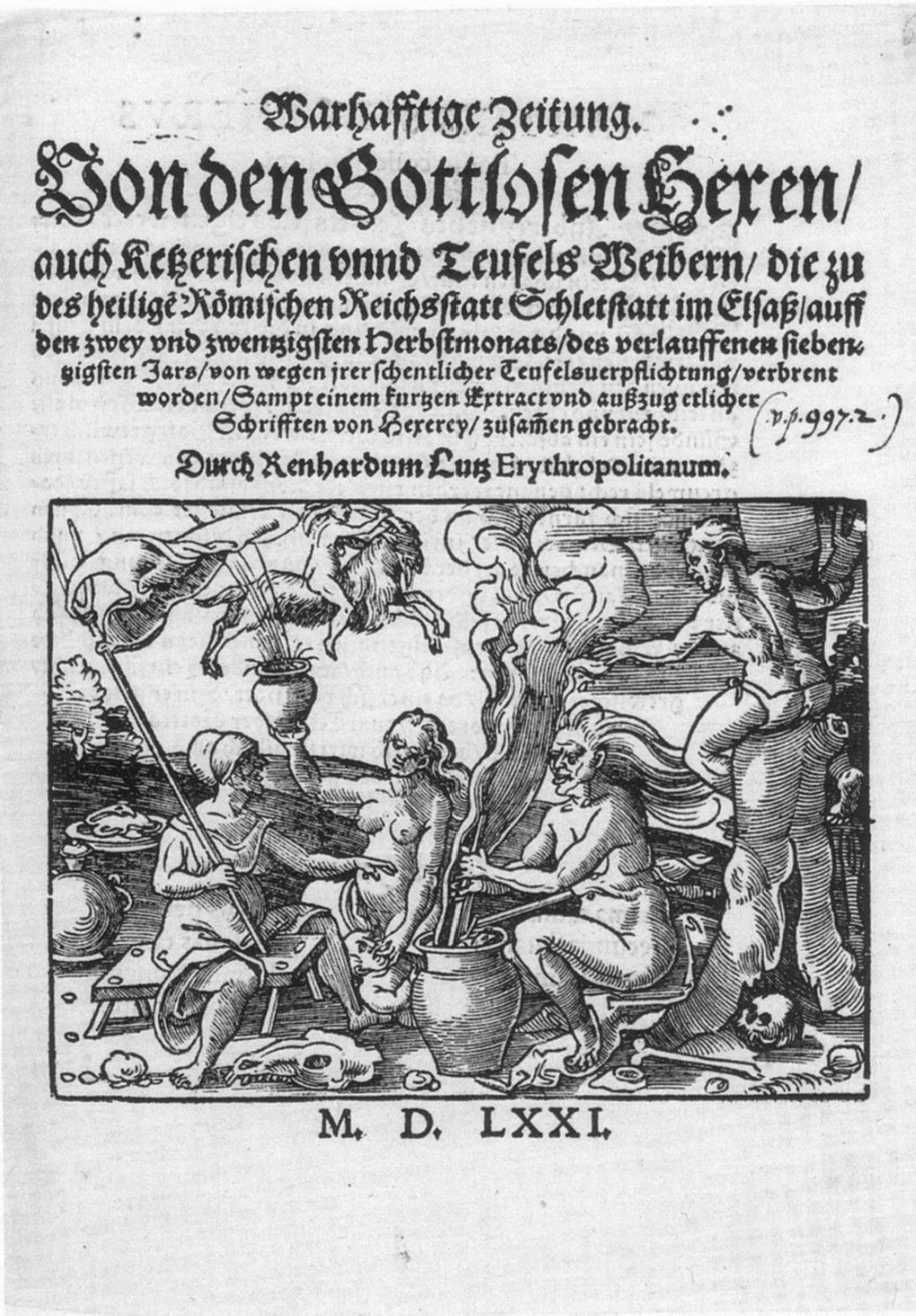
Witchcraft charges were usually at women, yes. But, in some cases, the women might have powerful husbands, sons or fathers. It was also a useful political weapon. As Aeon notes, an epicenter of witchcraft charges was in Bavaria. Note the map at right. Few people, though, know the Reformation, esp. its Lutheran branch, had a strong foothold there for a few decades, until determined Counter-Reformation activity spilled over from Hapsburg Austrian lands.

The economic dislocations of the war then intensified all aspects of Counter-Reformation, including witchcraft charges.

That third link, the "not alone," notes in Quartz what Aeon does not, that the economic nature of the charges was an angle that was leveraged in the name of religious warfare. It adds one other element, that an increasingly unified designation of what constituted actions of witchcraft arose in Switzerland before it became independent of the Empire. It adds the second element that what we know as Germany led Europe in religious tussles from the time the Albigensians were snuffed out in France.

Sunday, January 03, 2021

Luther excommunicated


A little over six months after issuing his Exsurge, Domine bull against Luther, Pope Leo X took the final step 500 years ago today and excommunicated Luther. At least he got the perverse pleasure of Leo issuing a second bull just to announce the excommunication. The photo above is from National Geographic's piece, with a modern re-enactment of Luther's famous, or infamous, burning of Exsurge in December 1520.

That's part of what made Luther's trip to the Diet of Worms a few months later dicey. Charles V (whether "Great" or not) could revoke the imperial safe-conduct at any time, and claim (or even gin up) papal pressure. Luther, having been called a Hussite plenty of times in the past, was aware of just what happened to Jan Hus.

Although Lutherans trail several other Protestant groups in the US, globally, the different wings of Lutheranism are behind only the Anglican Communion, as NG notes.

Thursday, December 10, 2020

Luther sees a gored ox and roasts it

Or rather, roasts a bull. Or burns it.


It was a little over four months after Pope Leo X issued his Exsurge, Domine bull against Luther. Luther had already heard about it, but per OUP, first assumed it was a trick. Then he learned it was real. The photo above is from National Geographic's piece, with a modern re-enactment of Luther's famous, or infamous, burning of Exsurge in December 1520.

Luther got together students of his in Wittenberg, and fellow faculty, among those in full support, and they started burning books of canon law and other items. The bull was added at the end, by Luther himself. He told Staupitz he undertook the action with fear and trembling.

But, contra many conservative Lutherans sanctifying Luther, he did it with some impudence as well.

However, Leo, via writing a blank check to John Eck, brought this on himself. The Reformation might well have played itself out anyway; Zwingli and others were up in arms against Rome's avarice and venality, as well as some of its doctrines, as much as Luther. But, a more nuanced bull by Leo might have delayed that day. Might have delayed that day until after Luther's death, leading to Pope Adrian VI in his brief reign, with all his Hapsburg connections, taking more control of the situation. That said, with the actual situation, Adrian reaffirmed Leo calling Luther a heretic. He did try for ecclesiastical reform, but this primarily on governance and morals; theological issues remained verboten for questioning, whether by individual clerics or by councils operating outside papal authority.

That said, that's alternative history. In reality, the bull arguably was THE breaking point. Luther was already thinking of the Papacy as Antichrist. (He's wrong theologically, per my piece about Antichrist vs the Beast vs the man of lawlessness. And, no, we can't give a professor of New Testament any wiggle room; if he's such a bible scholar, he never should have conflated the three.)

But, Leo's bull, and Eck's actions, only confirmed this stance for Luther.

Thursday, April 30, 2020

An "authentic" Luther but a very patchy one

In a previous blog post, I did an extended version of my Goodreads review of Lyndal Roper's Luther bio while saying I was looking for something better.

And, I thought I had eventually found it.

And ... I sort of did. And, this is a longer take on it than I've offered before.

Luther: Man Between God and the DevilLuther: Man Between God and the Devil by Heiko A. Oberman
My rating: 4 of 5 stars

How I missed this when it came out, I don’t know. It’s a shame to it that my conservative Lutheran college didn’t discuss this in any religion classes I took there. Given that it was still just six years old when I entered my conservative Lutheran seminary, it’s even more a discredit to Concordia Seminary to not have this book discussed in any classes there.

I know that Oberman was likely Dutch Reformed, not Lutheran, but, he clearly takes Luther at face value, including his man being like a mule ridden by either god or devil, and takes seriously what Luther intended by that.

And, he’s got the theological chops to know Luther’s history.

Even without him making connections, I now see that his reading Hutton’s edition of Valla exposing the Donation of Constantine as a forgery may well have upped not “just” Luther’s general antipathy to the papacy, but his seeing it as Antichrist. In turn, that meant to him that the end times were here.

I need to digress there for a moment. The “antichrist,” or actually “antichrists” of I John are not the same as I Thessalonians’ “man of lawlessness,” but the term has become ascribed to that being. Rather, writing at least 40 years after Paul, and maybe 60, the author of I John seems to be referring to a king-sized “alligator” in a church or something like that, not a quasi-metaphysical entity. Digression done.

(If you want to continue the digression, I've addressed the difference between both these two critters and Revelation's "beast" and its "mark" in this longish blogpost. That said, to smash Luther in the mouth, anybody looking at the "plain sense of Scripture" in either his German or my English needs no Greek to tell these are different entities, as long as one takes the three books as is, rather than crammed through a meatgrinder called "THE theology of the New Testament." Paging Dr. Luther for a self-inflicted slip and fall.)

At the same time, Oberman’s book falls short in some ways, and to again go beyond Goodreads, is directly anticipated by that parenthetical paragraph above.

Here’s one. If Luther wasn’t nearly as literalistic about “sola Scriptura” as the Scofield reference bible, then on what grounds was he right and the Schwärmerei wrong? On what basis were the Reformed wrong (and Karlstadt) and him right on the Eucharist, since Karlstadt had proven him wrong on the “this is” per Greek grammar?

None other than Luther being a cantankerous stubborn mule. That said, Oberman leaves it that way. He doesn't try to defend Luther being right, he simply, to me, indicates he believes Luther WAS right and that's that.

For that matter, since Master Melanchthon was the professor of Greek at Wittenberg, why didn’t HE challenge Luther like Karlstasdt did? (Roper could have done some psychoanalysis with THAT in her book.)

Also, Oberman reports Luther myth as fact even as religious historians and theological scholars were challenging it by the time he wrote this book. I talk specifically of the nailing of the 95 Theses and the “here I stand” at Worms as fact, when almost certainly neither are.

(I've tackled all of this in MUCH depth. And, will add more as needed as the Luther 500th celebration wends its way toward Worms.)

Does it matter? In the second case, it’s more something of pietistic hagiography. But, Oberman cuts through that on other things.

On the Theses? Yes it matters. Goes to motive, or similar. If they were never nailed to a door, how did they become public so quickly, and what hand did Luther have in that?

(The answer is — his hand was surely fairly large on getting them made public. Exactly what he hoped to achieve with that, I'm not sure.)

Otherwise, the book is spot on about aspects of Luther’s life Oberman covers. He is indeed an existentialist, but not Kierkegaard, let alone Sartre. He does have one foot in the medieval world and literalistic beliefs not even Kierkegaard did.

BUT … per the above, Oberman covers very little about Luther’s interactions with others. Much less than Roper on Karlstadt or the Reformed. Nothing on the Peasants Revolts or Muntzer et al. And, given that the Peasant's Revolt led to the permanent loss of Anabaptist types, to the cuius regio, ejus religio of the Thirty Years War, and to tie this back to Hitlerian Germany, a German sort of caesaropapism that led to the established Evangelical state church rolling over and playing dead for Hitler, this is another major oversight by Oberman.

So, five stars for what he covers. Three stars for what he doesn’t and for repeating Luther legend. We’re at a disappointing four stars. And, yes, disappointing. I'm almost ready to move my review down to three, after these additions.


View all my reviews

Thursday, January 02, 2020

Top blogging of 2019

 It was a very interesting year here by what readers liked.

A mix of debunking, takes on things Luther, pseudoscience debunking, philosophical hot takes and my poetry made up the 10 posts most read by readers this last year. More than half of the posts were pre-2019, but that's fine. Good stuff ages well.

No. 1? A decade-old blog post that I'd originally forgotten to put a header on and that eventually took off. (Spammers, maybe?) It was about "libertarian pseudoskeptic pseudoscience" and looked at some of the worst in pseudoskepticism, and sometimes pseudoscience, by leading libertarian lights in the Skeptics™ world like Brian Dunning and Michael Shermer.

No. 2? My take on a recent revelation that  early research on which Benjamin Libet based his "brain delay" studies, "undermines his research angle but also reinforces his philosophical scrivening." I chided some not to throw out the baby with the bath water; in other words, Libet ain't dead yet.

No. 3? My rewrite and update on Edward Arlington Robinson's classic "Richard Cory."

No. 4? A throwaway post, at least on the surface, from a decade ago. I encouraged intellectual types to be themselves in making small talk.

No. 5? An update to a 2017 blog post, where I further call out the cultural Catholicism lies of alleged atheist Tim O'Neill and his History for Atheists blog. (I found out, in the process of the update, that I'm far from alone.)

No. 6? Gun Nuts for Luther? Headquartered here in Tex-ass? My brother a member of their Facebook group? Whoda thunk? Here's the details.

No. 7? More Luther, this time my extended review of Lyndal Roper's 2017 biography. A solid 4-star work, but at the end of the year, with books newish and older, I still hadn't found a total 5-star tome.

No. 8? My uncle died just over a year ago. Rather than attend the funeral and be laden with religion and religious-based guilt-tripping, I wrote a poem about all that.

No. 9? Also from late 2018? I smacked around Andrew Sullivan for his latest (at that time) stupidities, and attached one of my most delightful Photoshoppings.

No. 10? Daring to touch the third rail of American foreign policy discussions, and based in part on my review of Yuval Noah Harari's "Homo Deus," I dared ask "Who's a Jew vis-a-vis Zionist claims?"

Finally, it was the most productive year blogging here since 2012. It's given me a diversion from my main blog. And, as 2019 readers can see, for the next two years, expect more Lutheran Reformation 500th anniversary posts.

Friday, December 06, 2019

The real Luther — in bits and pieces

Luther: Man Between God and the Devil I came to this book on a circuitous route. I had first read Eric Metaxas’ wholly wrong, politically driven bio of Luther, which tried to make him into a modern conservative evangelical. I rejected it as a former Lutheran AND a current secularist who knew it was wrong theologically and a leftist who knew it was wrong politically. Many conservative and liberal Lutherans did likewise.

Shortly after, I read a dual bio of Luther and Erasmus, reviewed here, which had some interesting tidbits but nothing huge.

Then, someone on Goodreads, asking in comment to my Metaxas review what I would recommend, and after I mentioned that book as an alternative, asked if I had read Lyndal Roper. I said I had not and I got it via interlibrary loan.

It was interesting and very good, but … not quite over thetop. Although not Erik Erickson’s “Young Man Luther,” and not Freudian (I think) in the basis for the psychoanalyzing, Roper does a lot of that. As a professor, she has some chops — but it’s a professor of history.

(Also, looking now at her bibliography, from what I know, I’d disagree that witch burning was concentrated in German-speaking Imperial lands.)

So, I continued to look. And via a string of Net searches, came across the reviews to Oberman.

What follows is the review itself.

Luther: Man Between God and the Devil by Heiko A. Oberman

My rating: 4 of 5 stars


How I missed this when it came out, I don’t know. It’s a shame to it that my conservative Lutheran college didn’t discuss this in any religion classes I took there. Given that it was still just six years old when I entered my conservative Lutheran seminary, it’s even more a discredit to Concordia Seminary to not have this book discussed in any classes there.

I know that Oberman was likely Dutch Reformed, not Lutheran, but, he clearly takes Luther at face value, including his man being like a mule ridden by either god or devil, and takes seriously what Luther intended by that.

And, he’s got the theological chops to know Luther’s history.

Even without him making connections, I now see that his reading Hutton’s edition of Valla exposing the Donation of Constantine as a forgery may well have upped not “just” Luther’s general antipathy to the papacy, but his seeing it as Antichrist. In turn, that meant to him that the end times were here.

I need to digress there for a moment. The “anticrhist,” or actually “antichrists” of I John are not the same as I Thessalonians’ “man of lawlessness,” but the term has become ascribed to that being. Rather, writing at least 40 years after Paul, and maybe 60, the author of I John seems to be referring to a king-sized “alligator” in a church or something like that, not a quasi-metaphysical entity. Digression done.

At the same time, Oberman’s book falls short in some ways.

Here’s one. If Luther wasn’t nearly as literalistic about “sola Scriptura” as the Scofield reference bible, then on what grounds was he right and the Schwärmerei wrong? On what basis were the Reformed (and Karlstadt) wrong and him right on the Eucharist, since Karlstadt had proven him wrong on the “this is” per Greek grammar?

None other than Luther being a cantankerous stubborn mule.

For that matter, since Master Melanchthon was the professor of Greek at Wittenberg, why didn’t HE challenge Luther like Karlstadt did? (Roper could have done some psychoanalysis with THAT in her book.)

Also, Oberman reports Luther myth as fact even as religious historians and theological scholars were challenging it by the time he wrote this book. I talk specifically of the nailing of the 95 Theses and the “here I stand” at Worms as fact, when almost certainly neither are.

Does it matter? In the second case, it’s more something of pietistic hagiography. But, Oberman cuts through that on other things.

On the Theses? Yes it matters. Goes to motive, or similar. If they were never nailed to a door, how did they become public so quickly, and what hand did Luther have in that, especially since his concerns about indulgences had been building a few years?

Otherwise, the book is spot on about aspects of Luther’s life Oberman covers. He is indeed an existentialist, but not Kierkegaard, let alone Sartre. He does have one foot in the medieval world and literalistic beliefs not even Kierkegaard did.

BUT … per the above, Oberman covers very little about Luther’s interactions with others. Much less than Roper on Karlstadt or the Reformed. Nothing on the Peasants Revolts or Muntzer et al.

So, five stars for what he covers. Three stars for what he doesn’t and for repeating Luther legend. We’re at a disappointing four stars, and yes, disappointing.

To get that fifth star?
1. A more complete explanation of Luther vis-a-vis the peasants, and within a larger framework of Luther's understanding of the post-1521 non-Catholic state.
2. Half a dozen pages, minimum, on the Marburg Colloquy, set within another half dozen pages on Luther vs the Reformed.
3. More on Luther's table talk.
4. Ideally, a bit on Luther's apparent glory-hogging at times, per Roper.

And with that, I have scratched my Luther bios itch more than enough.


View all my reviews

Friday, October 11, 2019

Praying to the Sacred Heart of Jesus

This, like the ritual of the Mass itself, the alleged moment of transubstantiation, is another of those Catholic rituals I simply can't accept, and don't get, as both a secularist AND an ex-Lutheran.

And, no, any Catholics, do NOT tell me these are prayers to Jesus. They are prayers to his sacred heart. And they're as literal, even literalistic, as Ken Ham or other Protestant fundamentalist beliefs and belief statements.

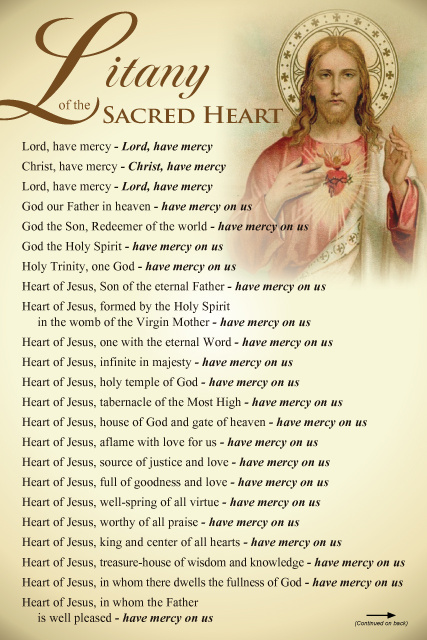
The image at left, along with many others like it on the Net, makes that clear, as do the countless prayers, novenas and other words of devotion that can also be found online.

I've elsewhere said that pre-Columbian Contact Aztecs who ripped beating hearts from still living sacrificial victims show that many New World First Peoples were NOT Rousellian noble savages. At the same time, as with Puebloan "versus" monastic flagellation (yes, Puebloans did it pre-contact), it seems like there was openness to cross-pollination.

The Sacred Heart devotion, like indulgences and other nonsense, started in the late Middle Ages, even though the first Feast of the Sacred Heart did not get celebrated until 1670. It arises out of older meditational devotion to the wounds of Christ.

That itself, per the Aztecs above, is itself blood-drenched and bloodthirsty enough. Per devotion to all five wounds, it comes off like Roman augury, that the wounds of Jesus might not just be comforting, but with enough meditation, might even have revelatory messages.

And yet, Martin Luther himself did NOT condemn it, unlike many other Catholic things, including the veneration of relics, which kind of parallels this. As shown at left, the famous Luther Rose has a heart at the center, which cannot be but a less bloodthirsty version of the Sacred Heart, even if Luther said the heart in his rose was the heart of faith.

As with the best biblical interpretation of the Lord's Supper, I think Luther was wrong and the Reformed were right. And it's not just the Reformed. Orthodox accuse Catholics of Nestorianism with the Sacred Heart. Arguably they're right, too.

And, of course, because there's a Sacred Heart of Jesus, as Mariology grew, especially the Immaculate Conception, there's an Immaculate Heart of Mary. And, with qualifications, Marty would probably be OK with that, too. Other than rejecting her as redemptrix, Luther's Mariology was basically pretty Catholic his whole life.

Speaking of finding things online, per a previous post of mine about advertisements in Catholic church bulletins, it seems like Catholics don't miss a chance to make a buck when devotional dedication is the issue. Check out this page, which I was led to on Googling. And, I'm going to go further on this in a follow-up post. I mean, who could resist a prayer pillow case?

And, speaking of philosophy and beating hearts, the Aztecs practiced philosophy just as sophisticated as the Thomist system that the Spanish Inquisitors brought to the new world.

Wednesday, August 21, 2019

Luther vs Eck, 1519


I just got to thinking the other day that, with the 95 Theses (and legendary claims about them) two years ago, I probably "should" do some semi-regular blogging about 500th anniversary Luther events at least through the 1521 original date if not through 1530.

And I am reminded that his debate with Johann Eck, which really put him in the road map, happened in July 1519.

Wikipedia has a good basic overview of the Leipzig Debate. (Note: At one time, overall, in defense of critics, I would have rated Wiki a B-plus if not even an A-minus. Now, based in part on how many entries it lacks — and in the case of current affairs, seemingly refuses to add — it's a flat B.)

So, first, not quite a legend, but, close. Remember that Luther was not alone. Karlstadt actually went first, and was considered the heavier hitter. From a Lutheran POV, he was written out because of later bumbling and intransigence. But, given that much of that intransigence was actually simply being more "Reformed," why hasn't the Reformed tradition picked up on him at least a small bit more?

Eck did win one big point, that in essence is a ticking time bomb for Catholicism AND for any version of Protestantism that claims any sort of hierarchical power. If both popes AND councils can err, as Eck stated and Luther conceded, than how can any church claim any authority over any individual, or any individual's interpretation?

To put it another way, to Luther's own time and to pending future events, Luther vs. the Schwármer was hoist on his own petard by Johann Eck. Or Luther vs. Karlstadt, for that matter.

The bigger issue yet is that, other than calling on secular government to uphold his interpretation of the bible by military force, Luther never wrestled with that.

Eck? "Tradition" of the Holy Roman Church remained in place. This was also true, of course, in the Orthodox world. It remained true in the Church of England and, to a lesser degree, in the Wesleyan / Methodist world.

This same issue extends to the canon of Scripture. Luther claimed that Purgatory exists nowhere in the Bible. Praying for the dead, tis true is found only in 2 Maccabees, which Luther was soon enough to reject. That said Protestant grounds for rejecting deuterocanonical books are themselves unstable, as pre-Masoretic Texas Tanakhs didn't have Esther, among other things — as In addition, as Wiki notes, Hebrews clearly, and Paul seemingly, reference deuterocanonical works.

Here, as with his "epistle of straw" on James and his thinking that Revelation should also "come out," Luther was adopting an individualist stance, while expecting others to follow him. Had he looked at New Testament canons from some of the smaller churches in the Orthodox tradition, and their omitting it, he might have followed through on the impulse to declare Revelation non-canonical.

Of course, this reaches its acme in 19th century America. Short of proving fraud against Joseph Smith or Mary Baker Eddy (seemingly easy with the former, though), how can you say these aren't legitimate new revelations? It's like a "marketplace of ideas" for Christian religion, but Luther wanting a thumb on the scales.

However, baptisms for the dead — and without any condemnation of the practice — appears in 1 Corinthians. Yes, it's in the form of a rhetorical question, but Paul makes it look common — and acceptable. Luther, as was his wont elsewhere, seems to simply ignore this. (He later ignores that this might just undercut Lutheran and old Catholic ideas about baptism.)

And, in turn, this too sets a track for followers. Fundamentalists of today ignore the call to stone people to death for tattoos, to shun them or whatever for wearing wool-polyester blends on clothing and many other things. Luther himself and his catechisms of a decade later try to claim a separation in the Torah between moral, civil and ceremonial uses of the law.

In all of this, though Eric Metaxas is wrong in spades to make Luther into an anachronistic modern evangelical preacher, in some ways, contra horrified Lutherans, a thread is there.

Wednesday, April 18, 2018

A better bio of Luther than Metaxas

It's actually Michael Massing's new parallel biography of Luther and Erasmus.

Fatal Discord: Erasmus, Luther, and the Fight for the Western MindFatal Discord: Erasmus, Luther, and the Fight for the Western Mind by Michael Massing
My rating: 4 of 5 stars

There's not a lot of new stuff here for me, especially on the Luther side, but the dual biography concept, when done well, can stimulate some 'aha' and Massing generally does well.

The two biggies on differences are first, one of personality and temperament. Erasmus' irenic style never could have led a Reformation and Luther never could have calmed his down enough even to be the best of organizers of what a Reformation needed in terms of management.

As a result, Erasmus in general was more kindly disposed to human fraility and at least occasionally meeting people halfway. Had he been in Luther's shoes, he never would have treated Melanchthon as shoddily as Luther sometimes did.

As an aside, Massing also gives a good base-level explanation of how differences between Luther and Zwingli, in terms of how they developed their reformations differently, were sociological as much as theological.

I did learn a few tidbits, one of which I could have learned in Lutheran seminary, had it been taught there. And that is that Luther's polemics against the Jews weren't just a late-life, poor-health issue. They started with his lectures on the Psalms years before the 95 Theses. He later tamped them down, after the Reformation took off, in hopes of converting Jews. Until they didn't.

And, it was Karlstadt, not Zwingli, who first questioned the "Real Presence" in the Eucharist, and he did so on the basis of Greek grammer and not metaphoric speech common to Greek, German and English. Karlstadt pointed out that the "this" in "This is my body," can NOT refer backward to "bread" because it's a different gender in Greek. That, too was never mentioned in Lutheran seminary, probably because, although Luther railed against Karlstadt for this, he never refuted it — because, of course, he couldn't.

There is one notable error here that doesn't affect the flow, and a matter of framing that kind of does.

Given that the second big difference between Luther and Erasmus was on free will, and that BOTH had an Augustinian background, it would have been nice for Massing to include a little bit more about just how "minor" of a saint Augustine is seen as being in the East. He does talk a small bit about Orthodoxy's take on Augustine, but not a lot.

The outright error? Paul never claimed to be a Roman citizen, contra Massing. The unknown author of Acts claimed it for him.


View all my reviews

In case you're not a regular reader here, this is my review of Eric Metaxas' horrible take on Luther.

Sunday, October 29, 2017

A Luther bio not worth reading

Having recently done, and updated, a blog post about the 500th anniversary of the legend, and the reality, at the start of the Lutheran reformation, when I saw this new bio at my local library, I figured to give it a whirl.

I could tell it was a pop bio not an actual history. But, even by those standards, Eric Metaxas has written dreck.

Martin Luther: The Man Who Rediscovered God and Changed the WorldMartin Luther: The Man Who Rediscovered God and Changed the World by Eric Metaxas
My rating: 1 of 5 stars

Meh at best as a pop bio from a conservative evangelical POV; worse than that otherwise

Per the first half of my header, that's the only reason I rated this book with two stars rather than one. Even though Metaxas discusses Luther's differences with the Reformed on the Eucharist, and a lesser degree on other things, and even tries to take a look at both the philosophy and theology behind this (while failing as much as succeeding), Metaxas still tries to paint Luther as a modern American conservative Evangelical rather than as a German Evangelical, ie, Lutheran.

The epilogue, trying to pretend Luther was some sort of forerunner of modern Western democracy, only made this worse — and more laughable at the same time. Again, though, the fact that it's being tried, and will probably be tried by others from now through maybe 2030, with the 500th anniversary events, gets it that second star rather than 1.

That said, there's other errors, mainly errors of fact, though a few others of interpretation, like those above.

I actually was originally going to rate it three stars, despite the above, but two errors late in the book got it knocked down to two stars, and almost to one, in spite of me wanting to hold it up as an example.

OK, let's dive into those errors.

First, after debunking several Luther myths in the introduction, Metaxas perpetuates two BIGGIES himself.

In reality, the consensus of good historians is that Luther did NOT nail, paste, or otherwise affix a sheet or two of 95 Theses to the door of the Castle Church in Wittenberg on Oct. 31, 1517.

A similar consensus says that Luther did NOT say "Here I stand" at the Diet of Worms.

OK, next. Erasmus did NOT restore first-century Greek to his edition of the New Testament. Instead, his "textus receptus" was similar to that in the Orthodox world of this time. Erasmus didn't have Sinaiticus, Vaticanus or other older codices, nor did he have the treasure of modern papyri finds. Also, Erasmus had no detailed methodology of textual criticism.

Tonsuring? It's Christian martyrological legend that emperors inflicted it upon apostles or later generations of Christians. That said, per the likes of Candida Moss, the severity and broadness of Roman Imperial persecution of Christians has itself been mythologized. Finally, although in these cases it involves shaving the head entirely, not just in spots, tonsuring-like practices are known to other world religions.

The idea that Luther didn't have a "modern" idea of consciousness? Well, Metaxas sets up a straw man by claiming that what he calls the "modern" idea of consciousness is modern. Less than a century after Luther, Shakespeare has Polonius in Hamlet say "To thine own self be true." And, a full 2,000 years earlier, the oracle at Delphi said "Know thyself." And, from that, Socrates said, "The unexamined life is not worth living." Of course, Metaxas is here ultimately setting up a bank shot for how Luther was different from today, but yet, was a lead-in to Merika or something.

After Erasmus, Metaxas trips on his Greek New Testament again. While the verb synago is in the New Testament in various forms, including as a participle for gathering together for worship, including gathering for the Eucharist, the noun synaxis is not. It is used in post-NT writings, I believe beginning as early as the Didache, but the noun is not in the NT.

Now, the two biggies, which give the game up.

On page 391, Metaxas claims that Suleiman the Magnificent, as part of expanding the Ottoman Empire, was trying to expand sharia law.

Tosh and rot. The Turks, and their Central Asian Turkic cousins, have been known for their generally moderate interpretation of Islam. And the Ottoman Empire was known for its millet system, which gave a relatively high degree of freedom to its Christian — and Jewish —residents.

Given that Metaxas, if not a full blown right-winger, hangs out with a lot of conservative politicos and is a talking head for a major right-wing radio network, I can only consider this to be rank pandering.

Page 417 follows in its train.

Metaxas claims that Luther, in his anti-Jewish diatribes, was influenced by "Victory over the Godless Hebrews," which he claims contain things "which we now know to be untrue." Among this, he lists Jewish blasphemies against Jesus and Mary, and claims by Jews that Jesus did his miracles by kabbalistic magic.

Deleting the "kabbalistic," as it didn't exist 2,000 years ago, and actually, these things ARE true.

Metaxas is either ignorant of some things written in the Talmud, and even more in the Toledoth Yeshu, or he's heard about such things and refuses to investigate, or thirdly, he fully knows about them and covers them up.

In any case, I suspect political leanings not just of general conservativism, but specifically neoconservativism, are now in play.

And, with that, I decided that this book could be held up as an example of wrongness AND get one star instead of two as well.


View all my reviews

Wednesday, July 12, 2017

Luther legend shitstorm about to hit (extensively updated)


I blogged nearly three years ago about myth vs reality on Martin Luther, well in advance of the 500th anniversary of his allegedly doing something with some theses. Indeed, I started with that legend, for legend it is, that he nailed them to the door of the Wittenberg Castle Church.

And, I was already planning on starting a series of blog posts with the anniversary nearing vision.

Unfortunately, I didn’t think that a liberal American opinion magazine would be the spark for my memory, to get started.

But, it is.

The Nation uncritically repeats the legend about the 95 theses (It's unclear whether any of the books it reviews have this, or just itself) in a review of several new biographies about Luther and/or his times. I see that Elizabeth Breunig wrote the piece, so it's probably her, beyond any of the bios, especially given the way she words things.

The 95 Theses has been refuted here and here.

Luther also did not say, as best as we know, "Here I stand, I can do no more," at the Diet of Worms in 1521. The "Here I stand" legend is refuted at the first of the two links in the paragraph above and also here.
 
Update, March 22, 2024: American Lutheran fascist, or "Lutefash," Corey Mahler, on his Twitter bio, believes this Luther urban legend. (Oh, he's also blocked me there for calling him out on other bullshit.)

He wasn't the son of peasants, either. His father owned copper-smelting operations and relatives of his mother advanced him the money to buy in. One of his mother's brothers was a doctor. A more distant relative was mayor of Eisenach at one time.

Oh, and Luther himself apparently started the "son of peasants" myth. That said, Eric Metaxas, who refutes that in his new Luther bio, repeats a polished-up version of the 95 Theses myth, along with several others in a book that won't get more than 3 stars on my review.

(That said, the link has been updated to my Goodreads review of the book. It SUCKS. It got 1 star because he does far worse than that, including running Luther through an American evangelical sheep dip, including neoconservativism and Islamophobia.)

Beyond that, the largest Lutheran denomination in the US rejects or questions some Luther myths, including the 95 Theses and the Here I stand. However (shock me) the Lutheran Church-Missouri Synod, the main denomination of the fundamentalist wing of American Lutheranism (and, yes, you are fundamentalists) accepts the castle church door legend wholeheartedly, as it does again in this timeline at a spinoff Reformation anniversary.

What else can it do? If you're a literalistic church body on things like the inspiration of scripture itself, you probably have to double down and be literalistic on the Textus Receptus history of your founder.

It's clear that on the theses, they were only submitted to Luther's superior, Archbishop Albrecht of Mainz, under cover of an explanatory level. Most the myth-busters note that the doors of churches, in general, were not used as community bulletin boards or even ecclesiastical ones. Had Luther wanted to provoke discussion, he would have posted a copy somewhere within the university, instead.

Also, the second "here" that is linked above notes that Luther granted indulgences himself early in his ecclesiastical career. He just didn't sell them.

A good bio of Luther shows he was sincerely tormented with guilt over sinfulness. And, contra Erickson, this was not misplaced Freudian paternal-directed anger. At the same time, he was far from alone. His anger seems to have become more intense, and floated to the surface, as he realized more how much the medieval church had strayed from its, say, pre-400 or pre-500 roots or semi-roots.

(Of course, Luther didn't look at how much the post-Nicene church strayed from its pre-200 roots in erecting a theological edifice that probably would have astounded Jesus and his followers.)

His anger was mixed with a stubborn obstinacy that spilled beyond indulgences and related issues, not only to the authority of the papacy, but to the formation of a new tradition.

That said, the church of Luther's era was not only led by corrupt popes, it was also increasingly ossified. Indulgences had been a problem for 300 years or more by the time Luther drafted his theses, yet neither the Fourth Lateran Council nor the Council of Constance, among other church meetings, seriously and lastingly addressed the issue.

Combined with incipient proto-German nationalism, the abuse was ripe for the plucking.

Update: Since first writing this, I've read Michael Manning's dual bio of Luther and Erasmus. Worth a read.
 
Update 2: See also my reviews of the big bios by Heinz Schilling, Lyndal Roper and Heiko Oberman. All four-star, but none could summit the five-star mountain. Roper is overall the best, but Schilling in some ways is the broadest.

POST-1517

And, as noted in that original piece, Luther’s virulent anti-semitism is no legend at all.

Peasants' Revolt

lighter-hearted mythbusting site, from within the liberal wing of Lutheranism, itself gets a thing or two partially wrong. Luther perhaps may not have hated all peasants. But, citing the fact that his grandfather was a farmer is proof of nothing, in part because his father wasn't. Many acorns fall close to the tree, but to reverse the cliche, the dandelion seed head blows far away. It seems pretty clear that he DID hate "uppity" peasants, especially ones who might be trying to implement a 1500s version of social gospel, let alone liberation theology. Luther's "Admonition" to both peasants and lords was not as 50-50 as claimed. In any case, even for that day and age, arguably, The Twelve Articles of the Swabian Peasants are more irenic than, say, something written in conjunction with the Wat Tyler Revolt in England 150 years earlier. A further reading of them would indicate that the first article, wanting full congregational control over the ministry, might have been a stumbling block right there.

The real issue is that, when he wrote "On the Thieving, Murderous Hordes," and afterward, Luther (in my own debunking of another myth) refused to admit he was wrong. Appeals to people to prove him wrong were, by 1525 at the latest, nothing more than rhetorical tropes.

Given his father being a member of the ownership class, and his mother coming from a family background both richer and much more educated, and more politically connected, a few conclusions can be drawn.

Above all, that is that Luther was much closer to being a proto-capitalist than a proto-Marxist, despite East Germany's attempts to exploit Luther 450th anniversary events.

Meanwhile, as noted above, by 1525, that stubborn obstinacy at the core of Luther's character spilled elsewhere, with further major consequences.

Dealings with the Reformed

He shows this clearly in his dealings with non-Lutheran Reformed brethren, starting with, but by no means limited to, Ulrich Zwingli. Even a middleman like Martin Bucer came in for Luther's wrath. In general, he used the same language on Reformed leaders as he did on Catholics, even though their language in response was, and remained, much more irenic.

If there's a "fault," beyond irreconcilable doctrinal issues, that, in Germany and beyond, there wasn't a more united Protestantism (until the Prussian Union in much of Germany, and the rise of more liberal theology in general), the fault lies with Martin Luther more than any other single person.

As far as the keystone there, Luther's take on the "Real Presence" in the Eucharist, this was a literalistic vs more humanistic take on what the human nature of Jesus implied. (It's also not supported by the original Greek, the "Real Presence." Obviously, neither is the "real" body/blood behind Catholic transubstantiation. Interestingly, the Orthodox, with more connection to the original Greek, apparently simply ignore this problem.) That said, even in his post-Resurrection appearances, Jesus in a Pauline spiritual body, while shown appearing out of nowhere, is never shown as appearing in multiple ways at the same time.

On the other hand, neither Luther nor his Reformed brethren at the Marburg Colloquy appeared to wrestle with John 6 — only the Synoptics.

Speaking of, as Orthodoxy accepts John's timeline for the Passion, and more pertinently, rejects Augustinian ideas of original sin, a good bio of Luther, unlike Metaxas, will do at least a bit of putting Luther into the context of ALL Christianity, not just its western variants. Many Orthodox post-Nicaea theologians, or, per the real breaking point time, post-Carolingian ones, would have laughed, if nothing else, at Luther's turmoils. However, unlike a Cajetan telling Luther to just say "revoco" and follow Rome, Orthodox thinkers would  have laughed for other serious reasons.

Also, while Orthodoxy believes in penance as a sacrament, and in a quasi-purgatory, it has never had a practice of indulgences. Luther himself, other than noting the Eastern churches were free of Rome, made no real effort to learn about post-Nicene, and certainly not about post-Carolingian, Orthodoxy.

(Prayers for the dead, on which purgatory is partially based, have some tenuous New Testament basis. And more, below that, from early Christian tradition.) And, per Wiki (follow links) Philip Melanchthon accepted that prayers for the dead were part of Christian tradition in the Apology to the Augsburg Confession (XXIV 96). (That's of note given that Luther mailed out his 95 Theses copy on All Saints Eve.)

Transubstantiation, the Real Presence and the pre-Reformed

The Reformed theologians, along with Luther, agreed in rejecting transubstantiation. Whether the Reformed thought about it or not, beyond their actually expressed reasons, they had others for rejecting Luther's stance.

Basically, Luther was trying to walk a petard between two horns of a dilemma with his stance, although neither he nor the Reformed appear to have seen that.

The horns?

One was ex opere operato, in other worse, the very thing that Luther found lying behind transubstantiation when he rejected it. In this case, if it is faith itself that makes Jesus bodily present for a believer in the sacrament, well that too is ex opere operato. Luther might raise two objections — the biggie is that belief comes from the Holy Spirit.

That leads to another problem. In that case, going beyond Luther's single-predestination version of predestination, a human in this case becomes nothing more than an automaton, a playtoy for Jethro Tull's "Bungle in the Jungle." Luther would also reject that, but he'd have no grounds for that other than his own stubbornness, or else appeals to god's inscrutability. THAT, in turn, leads to the Psychological Problem of Evil, about which I've blogged beforemore than once.

The other horn? Scholasticism, and angels on heads of pins. If neither a state of faith nor a particular statement of faith at the time of the blessing and offering of the Eucharist makes Jesus bodily present, then exactly when and exactly how IS he? Does the reading of the Biblical words of the Institution, not as a priestly act, but simply the presence of the words, do it? In that case, the words of the bible are themselves close to becoming the fourth person of the Trinity. Islam, in some extremely "high" versions of theology of the nature of the Quran, ran into similar issues.

Infant baptism faces similar horns, unless one ditches Lutheran ideas and instead treats it merely as a sign of grace or entrance into a Christian covenant, paralleling circumcision.

Antichrist

Oh, and he was wrong about the papacy being the Antichrist. Antichrist, whether a person or spiritual stance, in 1 John, is not the same as the "man of lawlessness" in 2 Thessalonians. (That sets aside, of course, the issue of whether "the man of lawlessness" is the papacy. And, even on a literalist, even fundamentalist, reading of 2 Thessalonians, that's a hard stance to take.) 1 John mentions nothing about Antichrist being in a position of authority.

Critical theology, not mentioned much at the Wiki page, at least MY critical theology, says that, instead of Nero, the pseudo-Pauline author, like the Synoptic gospels, may have been envisioning the Jewish revolt, temple takeover and temple destruction, which also gives us a terminus a quo for the book.

Assuming the author wrote before Titus, in the name of Vespasian, finished the conquest, that would have us talking late-60s CE. I'd argue that it most likely refers to one or more of the Jewish leaders who took over the temple and started the revolt.

I've since dealt with both members of this duopoly, plus the "beast" of Revelation, in much more detail.

The Jews

Luther is well known for his violence-laden invective against Jews. That said, most people think it was confined to the latter years of his life, and his apologists use this, and his health issues then, as an excuse.

Not true. As Michael Massing notes in his great new "Fatal Discord," a parallel dual biography of Luther and Erasmus which is reviewed here, Luther was already expressing such thoughts in his pre-95 Theses lecture notes on the book of Psalms, right in the mix of the Reuchlin-Pfefferkorn controversy.

That said, he wasn't alone. His disputation opponent Johann Eck was a pretty virulant anti-Semite too.

Today

The "yes I'm right" stance of Luther himself, not only vis-a-vis things where he clearly was, but other issues, such as versus the Reformed on the Eucharist, versus many Reformed and other Lutherans on the issue of adiophora and more, seems to still run strong in much of the conservative wing of Lutheranism. (Let's not forget that Luther thought he was competent to condemn Copernicus' heliocentric theory of the solar system, and rushed to do so when his book was published.)

That's not a total surprise, though. Fundamentalist versions of Christian denominations, just like fundamentalist strains in other world religions, stay fundamentalist due to mindsets.

Outside of being the largest single fulcrum for the Reformation, and secondly, the anti-Semitic issue, Luther contributed little to the larger world. No German state had any New World colonies, for one thing. Many individual Lutheran emigrants to early America were Mennonite, not Lutheran.

NB: Expect one major update three-plus years from now, with a further look at the Diet of Worms.

Protestantism

Yes, Luther was, per Breunig, perhaps as much catalyst as creator. That's why not mentioning the likes of Wyclif or Hus as predecessors is also "interesting," even if the focus is on Luther. And, though her focus is on new books, and it's not technically a biography, Diarmaid MacCullough's massive "Reformation" deserved a tout.

And, is Protestantism a "love affair with god"? Maybe, but it also at times seems to be as much a "guilt trip from god" as stereotypical views of Catholicism or Judaism.

But, a liberal evangelical Protestant, or a liberal mainliner, whichever Breunig is, has their own PR.