Showing posts with label ethics. Show all posts

Thursday, August 29, 2024

'Catastrophe Ethics': In retrospect, wrong from the title

 I have been hitting a string of cropper and semi-cropper books in touted new philosophy books recently. (Sorry, Little Bobby Sapolsky and determinist fanbois, "Determined" is not a philosophy book, being Not.Even.Wrong, based on a category mistake and more.)

The latest? "Catastrophe Ethics." As usual, what follows is an expanded version of my Goodreads review.

Catastrophe Ethics: How to Choose Well in a World of Tough Choices

Catastrophe Ethics: How to Choose Well in a World of Tough Choices by Travis Rieder
My rating: 2 of 5 stars

This book became fairly disappointing fairly early, contra the hopes I had from the title. In fact, reading backward, in a sense, at the end of the book, I realized the title itself was highly problematic. Even more is it problematic with the expanded review. Let’s start there.

One BIG problem? Nuclear weaponry is never discussed. Given the nuttery of US-Chinese saber-rattling, even to a new US nuclear strategic plan:

(T)he Biden administration has approved a highly classified nuclear strategic plan—the Nuclear Employment Guidance—that seeks to prepare the United States for possible coordinated nuclear challenges from Russia, China, and North Korea

failure to discuss this issue is ridiculous. Even atomic energy gets only mention in passing under climate change. And, the dirtiness of cobalt mining for batteries is discussed later; that of uranium mining is not. Beyond nuclear issues, looking at the weapons side, militarism in general is not discussed, other than a passing reference to threats to Ukrainian power plants by Russia. (Dimona, and the possibility of an Iranian missile hitting it, are not. And, I wonder if further political mindset is behind that. See below.)

Nor, even though we are emerging from a global pandemic and the author is a bioethicist, are pandemic catastrophe ethics discussed in detail. Drug addiction problems are touched on, scatteringly, throughout the book; the war on drugs and related issues are not. I just thought of this at the last chapter of the book, but realized that itself would probably knock it down a star.

And, that relates directly to the book’s title. And, since this is a book of matters philosophical, we’re going to get into linguistic philosophy. What IS a “catastrophe” to Rieder? We’re never given a clear definition, let alone a justification that one would expect to accompany such a definition. Another “missing example”? He talks about consumption behind climate change but never thinks about possibly including current capitalism in general as a catastrophe. Related? The ethics of the developing world wanting to live like the developed world and how that might affect climate change aren't discussed.

Now, Rieder might argue back that the book isn't intended to be comprehensive. If so, theoretically, he still owes an explainer on why he chose the particular catastrophes he did as illustrative.  And, in actuality, we never get that.

His "puzzle," in his details, might be parsed and teased out differently if he used different, or more, disasters to background it.

Chapter 2? The big problem is scientific. Most scientists who are honest climate scientists and not neoliberals say that the degree of temperature change by 2100 will be at least 3C if not more. (Michael Mann is in Rieder’s bibliography but James Hansen is NOT. I have written about this in various ways, including some of the recent study in general and about Hansen vs Mann (and Katharine Hayhoe).) Indeed, per that first link, there's a good chance we hit 4C, and a non-negligible chance we hit 5C, by 2100. And, while I may be gone, if that's the case, there's good chance that Rieder himself, not his child, experiences 3C, and an outside chance of 3.5C, before he passes away.

 Second problem is this is the first, but by no means the last place where he takes individual actions out of collective context. The “joyguzzler” inspires others; the philosophical argument that it’s not problematic becomes weaponized. And, minor harm is not the same as zero harm. And, here, as in chapter 9, there’s a self-conflict over not discussing virtue ethics more here, let alone going beyond the West in a search for philosophical ethics. He finally gets to this, on virtue ethics, in Chapter 11, but that then means we have poor writing and editing; this isn’t a murder mystery where head-faking is not only acceptable but encouraged. It’s logical argumentation. There’s another problem behind that, even more the case in Chapter 12 than in Chapter 11.

Chapter 3’s thoughts on public health did not follow from Chapter 2 on climate change or Chapter 3 on meat. The three have different ethical angles. There is no public health equivalent of “big polluter them” nor an equivalent of big ag’s stranded/marginal costs on factory farming.

Chapter 4 gets us on the beam of good philosophizing. For a chapter.

Chapter 5 is hit and miss. Rieder kind of pulls punches on the second horn of the Euthyphro dilemma, the horn of ethics existing outside of god. So, by not philosophizing about how that, in and of itself, is as wrong as the first horn, the larger picture is a bit short, because the left hand is Kantianism, to put that in more modern terms — command theory without the divine. He also misstates why the post-Peloponnesian War Athens put Socrates on trial. In blunt modern terms, Socrates was a traitor.

Chapter 6 nails “the myth of tolerance.”

Chapter 7: Contra Rosalind Hursthouse, with Rieder missing this? Her definition of virtue ethics by identifying virtuous people is circular. Otherwise, he comes down correctly that trolley problems are as much ethical trick as ethical reality. (And, this is why the r/philosophy subreddit is nutters.)

Chapter 8. Problems with Singer? First is the assumption that happiness is the maximum good, or even, in more stark presentations of Singer, the only good. Second, what is happiness? And, is the hedonistic calculus for measuring that calibrated to the moment? A short term after the moment? A longer term after the moment? I mean, if momentary, then Huxley’s Fordist government passing out soma is the height of good ethics. Doesn’t delve into the “nowhen” issue that parallels the “nowhere,” as in utilitarians cannot have a view from either nowhere or nowhen.

Part III

Chapter 9 His attempt to differentiate between “statistical harm” and “actual harm” seems cavilling. We use insurance actuarial tables to talk about harms all the time and nobody bifurcates them this way. To make this VERY personal given Rieder’s past, insurance actuarial tables will talk about the “statistical harms” caused by driving a motor vehicle while stoned on opioids. To go beyond that to physics? Statistical mechanics is exactly that. Doesn’t make it any less real. And, perhaps with protesting, we as a society accept actuarial norms — until, to riff back to climate change, “we” get bent out of shape when we’re in rural California or the Florida coast and our homeowner’s insurance skyrockets, if it gets renewed at all. Next, he seems to ignore virtue ethics on this issue, looking only at consequentialist and deontological stances. This seems a HUGE fail, and, unlike friend Massimo Pigliucci, I’m not in general a touter of virtue ethics. It’s weirder yet because his farmer friends in Chapter 11 are walking, talking virtue ethicists. Also, Walter Kaufmann, or thoughts similar to “Without Guilt and Justice,” are missing on other angles of individual vs collective justice. See here for a few thoughts on that book.

Chapter 10: Sex is not gender. So says me. So said the late Frans de Waal. So says biologist and philosopher Massimo Pigliucci. Outside of evolutionary biologists, so say some political leftists. This is also, in this case, a linguistic philosophy issue. As a public policy issue, that doesn't mean that both transsexual and transgender persons don't have certain civil rights. Whether they are 100 percent the same in 100 percent of issues? Possibly not.

On duty, obligation and intimacy, his riff on Maggie Little misses another point. We seemingly evolved biologically to be in maximum group sizes of 150. In the modern world, which is “controlling” on my “sphere of intimacy” — biological or cultural evolution? And, his use of Little misses that ensoulment personhood will simply reject this framing a priori. That’s not to say it’s wrong. It is to say that it relies on presuppositions that some would say are not in evidence. Third, claiming Little’s POV on abortion is “complex” medically or ethically is a reach, and it’s also PR, trying to “sell” this precisely because of alleged complexity, as I see it.

Next: No, “reasons” are not a small-granular unit of moral measurement. They MAY be, when purely moral, and later you seem to go back to that, but? You just admitted that reasons often have no moral attachment. There may be plenty of aesthetic good to getting fresh coffee; there is ZERO moral good unless I have some weird disease requiring coffee ingestion.

I agree with him on rejecting duty and obligation on many cases, at least within INDIVIDUALIST ethics. That, too, as well as rejecting Rawlsian liberal versions of political ethics, is something I learned from Kaufmann’s “Without Guilt and Justice.” See more below.

And, by this point, I realized I was sorry I recommended this book to Massimo Pigliucci and that, while it might not fall below three stars, it was quite unlikely to rise above it.

Chapter 11: Uses a farming husband and wife, neo-traditionalist farmers, as a “hook” for turning us back to virtue ethics and an intro to the next part. Not bad, but not failing to talk about the hook in advance is bad non-fiction writing. Also, re the purity ethic in Chapter 12? Are there issues with neo-traditionalist farming that he doesn’t discuss? As in, it’s an “out”? As in, the modern world couldn’t exist with only neo-traditionalist farms? As in, where do all of their customers get their money to pay its higher prices? To put it more bluntly, does this, like planting trees as alleged carbon offsets, act as a sort of environmental penance that doesn’t really do anything? Also, given conversation earlier in this book, would he protest, even raise his hackles, at such thought?

PART IV — finally, after bad editing in Chapter 2 and failing to put a “hook” in either it or Chapter 8 to point forward to Chapter 11.

Chapter 12: Problems with the purity ethic and its similarity to utilitarianism are good. But, there’s a larger problem that Rieder misses, and that’s a problem with **Western** philosophy. Confucianism, for example, has no problem talking about things that would be best called, in the taxonomy of Western ethics, “corporate duty” and “corporate obligation.” Virtue ethics to battle climate change just doesn’t get there. It doesn’t get there on other things. By not looking beyond the Western tradition, in essence, Reider is hamstrung. Also, by looking at duty and obligation as an on/off switch, rather than in terms of degrees, he's further hamstrung. 

I have long thought that the three schools of ethics in Western philosophy fall short. And, this book sharpened that belief, in part because all three schools, while they talk about how an individual's actions affect others, still ultimately are about individualist ethics and nothing more. Virtue ethics is a good example. Aristotle focused on individual flourishing; Master Kung, on that of societal groups.

Let us not forget that the Western world did NOT “invent” philosophy. India’s Charvaka skeptics, for example, existed by or before the Greek pre-Socratics. The Ajnana started about the same time. Beyond the scope of my original review, I realize that, as I get older, this comes more and more forward in my mind. Unfortunately, even a decent-sized public library, while it might have books on the evolution of Hinduism and Buddhism, and maybe even Jainism, won't have books about Indian philosophy. The closest it will get is talking about Philostratus talking about Apollonius of Tyana visiting the "naked philosophers" of India.

Chapter 13: I think it’s too harsh to call Schopenhauer a cynic for his “antinatalist” views. Ditto on David Benatar, whom I’ve also read. Also, to riff on Schopenhauer and Benatar, there’s the question of whether one should stop with one child, whether one’s own progeny or adopted, or go on to a second once that bridge has been crossed, on the grounds that only children may be less happy. Or other things. At least Rieder eventually somewhat softens his view. The only good argument against antinatalism is a selfishly utilitarian one of that it minimizes the happiness of the currently living, especially in developed countries where social safety nets for senior citizens depend in part on youth paying in.

Chapter 14: Racism is horrible. It’s arguably not a catastrophe. See top of this review for more on that issue. And, per books like “Conspirituality,” there are plenty of people who can be environmentalist but racist. Look at the German Völkish movement for 20-30 years before Hitler. Given my note at top about actual or potential catastrophes with ethical issues that Rieder doesn’t discuss, this chapter was a cropper. I’m also NOT a fan of Kendi, among listed authors of Rieder.

Beyond that, as a good non-liberal leftist, talking about racism without talking about classism falls short. Related to that, beyond Western philosophy? The book in general is presented from a Western perspective. The exploitation of Congo over its cobalt is mentioned, but plenty of "developing" nations are exploited for plenty of resources not related to climate change. There's also, again, the issue of the ethics of developed nations saying, "do as we say, not as we did in the past," but offering insufficient help on that.

There’s other things not mentioned on the “participatory” issue. On political action, I assume Rieter is a good Democrat by some of his angles. I’ll venture that he even thinks third-party voters like me waste our votes on climate change. Or nuclear tensions in particular and militarism in general. He might concede this is personal purity ethics but would probably still reject it as good social participation.

View all my reviews

Saturday, November 06, 2021

Top blogging of July-September

Data is of early October. Not all posts were written in the past three months.

First was my hard-hitting modern religion piece on the Lutheran Church-Missouri Synod and its multiple ethical failures and looming massive legal problems over the closure of Concordia University-Portland.

Second was my long-ago, but still relevant, libertarian pseudoskepticism pseudoscience piece about Brian Dunning and Michael Shermer.

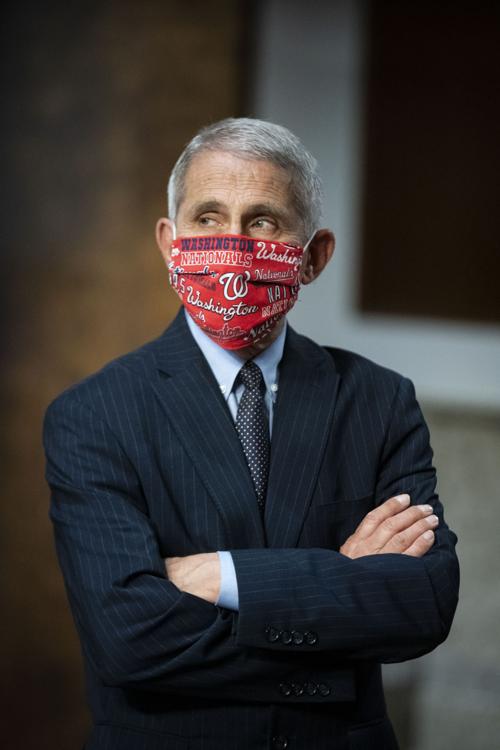
Third was my not nearly so long ago, but even more still relevant, piece about Saint Anthony of Fauci and his telling of Platonic noble lie(s). (It eventually became plural, then Not.Even.Platonic.Or.Noble, to riff on Wolfgang Pauli.)

Fourth is from about 15 months ago, but getting new eyeballs when I retweeted it about the dreck that is this year's Dallas Symphony Orchestra schedule. I said the DSO had stepped backward in hiring Fabio Luisi as music director.

Fifth? Almost as old as my Dunning-Shermer piece, but also about classical music: Stravinsky vs. Prokofiev and what constitutes neoclassicism.

Sixth, a recent piece, about how Harvey Whitehouse seemed promising on new studies on the origin of religion, until he went way wrong on both that and a definition of what religion is.

Seventh? My burning take on the often laughable, usually conceited Mark Carrier thinking early Christians believed Jesus was a space alien.

Eighth, and also recent, my philosophical take on an ambulance-chasing journalist's experience with PTSD after his own car crash, and a psychologist discussing the issue with bad takes on free will and control.

Ninth and also nearly a decade old, like No. 2 and No. 5? My take on reviews of books by Dan Dennett and Douglas Hofstadter.

Tenth and trending probably due to a tweet by my to blogging friend Tales of Whoa? My poem about the death of friend Leo Lincourt, "Sitting Shtetl for the Living."

Thursday, June 24, 2021

Does objective universal morality exist?

 Or to put it in terms of the level of individual moral statements, and in terms of an equivalent to epistemology and modern philosophical discussion of that, is there such a thing as justified true moral belief?

This Nautilus piece makes the case for moral realism. It's not bad, overall, but, despite its length, it's missing one important issue.

That is, if moral realism is correct, what is the scope of correctly holdable universal moral stances? 

Take familial sexual relations between consenting adults. Is there anything immoral about first-cousin relations? What about brother-sister, per both the pharaohs and the Inka (technically, the title of the king of the people to whom the name became extrapolated).

What about murder? It's arguable that there is a universal moral about that — but ONLY with a fair amount of heavy lifting on defining just what constitutes murder, versus, say manslaughter. And, while that definitional lifting plays out most, in the modern world, in courts of law, it plays out in everyday life, too.

Just war is another biggie.

That failing aside, to his credit, William Fitzpatrick also asks whether, IF justified true moral belief exists, at least in the ideal, whether we can meet it in the real.

I am currently reading Walter Sinnott-Armstrong's "Moral Skepticisms" and expect to have a much more in-depth piece on this in the future.

==

Note: Contra a commenter and guest poster at A Tippling Philosopher, moral relativism is NOT moral nihilism.

Saturday, June 12, 2021

Once more on Hume and slavery: ancient vs modern and Humean lies

In his attempts to make light of, ignore, explain away, or whatever, race-based modern (in his time) slavery, David Hume, in The Populousness of Ancient Nations, also hints at an old trope:

"But classical slavery was WORSE!"

That's not a direct quote, but it is the old trope to a T.

I touched on this in my original main post on Hume and racism and his infamous Note, but this needs to be looked at further, because it t'aint necessarily true. In fact, a closer look at this essay of Hume's shows both that claim and one other are basically lies.

First, was slavery of classical antiquity sometimes more brutal than that of 1700s Virginia and the Carolinas, or even than on the Caribbean plantations like the one (maybe more we don't know about?) whose sale Hume brokered. 

Yes, indeed.

Were punishments worse?

Yes.

Modern slaves weren't crucified after revolts, though they were usually put to death. 

But? Per Hobbes, life in general was nasty, brutish and short, moreso in 100 CE than in 1770. (On the other hand, the amount of crimes for which one could be executed in Humean Britain was no day at the beach. And, in the U.S., post-slavery Jim Crow lynchings were arguably as barbaric as crucifixion.

The greater amount of slave revolts might be support for Greco-Roman slavery being more brutal. Or, it might be support for the fact that ancient plantations having at least as many slaves as the Caribbean and more than the mainland British colonies, but like them on a mainland, not small Caribbean islands, made escape somewhat more tempting. Or, it might be support for the idea that guns let modern slaveowners have even greater control over their charges.

The reality is that, in many ways, ancient slavery was not as bad.

First, Rome, especially, made manumission fairly easy. Oppose that to the U.S. colonies and states, where state laws from the late 1700s up to the Civil War continued to further and further restrict owners' right to manumit their slaves.

Second, social mobility for freedmen was MUCH greater in ancient Rome than the modern European colonial lands. There's a couple of reasons for that. One, slavery being even more common meant less stigma attached. Slavery not being race-based in antiquity meant there was even less stigma attached.

Third, many slaves being literate, and in general, there being no government laws against them being educated, meant that, not only were they not burdened by stigmas, they were more in control of their own destinies once freed. (Now, this was not the case for all slaves, of course, but for many, it was.)

AND?

I have little doubt that David Hume the professional historian as well as student of ancient philosophy knew these things himself, and was being disingenuous if I'm polite and a liar if I'm not.

That said, Hume is disingenuous from the start about Europe of his day "abolishing slavery." Scottish miners, colliers in specific, were subjected to the functional equivalent of slavery in Hume's day. (It wasn't a legally heritable slave status,  In addition, many upper-crust Scots owned a black house slave or two at his time.

Wednesday, June 02, 2021

The trifecta: Private Platonic noble lies from Fauci

I blogged almost a year ago about Dr. Anthony Fauci's Platonic Noble Lie about mask-wearing.

I then followed that up, tackling Platonic Noble Lie No. 2 about herd immunity.

Turns out those were just the tip of an iceberg.

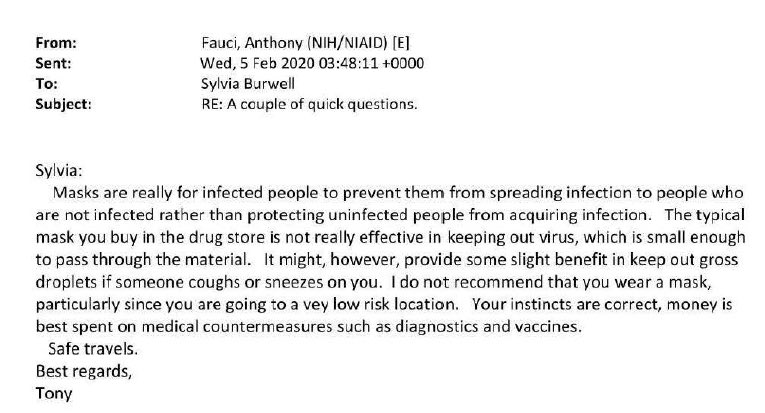
Fauci's now been busted, under emails obtained by BuzzFeed in an FOIA request, of having spread his original Noble Lie about masks privately already in late February of 2020.

Sadly, BuzzFeed engaged in its own tribalism by which emails it chose to focus on for its story, promoting Fauci hagiography rather than his lies about masks — or his hints that, just maybe, the virus DID come from a lab leak at the Wuhan Institute of Virology. And, maybe it did, if we can get past that being given a "gain in research" (I see what I did) by Trump Trainers who are engaging in their own twosiderism.

But, the goods are there:

If Fauci had any integrity, as well as political responsibility, he'd at least resign as Biden's special medical advisor at a minimum. At a maximum, he'd also step down from NIAID as well. And, BuzzFeed, if it had any sense of journalistic ethics, would do a second story. Somehow, I don't think either one would happen.

Fauci is long past his best-by date, and contra BuzzFeed, does appear to have partially relished his role of the last year.

If "BlueAnon" had integrity and moved beyond twosiderism, it would admit that Fauci has screwed the pooch before. Sadly, it won't. As noted above, with masks, it's not that he had different statements in public and in private, it's that he was WRONG, and demonstrably wrong at the time he spoke, in both public and in private. 

In other words, he was telling the Platonic Noble Lie behind the scenes, too. And, unless his friends are awfully tribalist, or believers that they're the Platonic philosopher-scientists (which some of them, like Fauci, may have self-anointed themselves as being), they should be pissed.

And, looking again, I see Jason Leopold was the primary reporter on this. He knows better.

Thursday, April 22, 2021

On a genealogy of morals, so to speak

A recent blog post by Massimo Pigliucci, which contained within it a Philosophical Salon piece about the dichotomy between Hobbes thinking humans essentially (in the philosophical sense!) evil vs. Rousseau thinking them essentially good, got me to thinking, especially when Massimo also had psted a Pysche piece about Wilfrid Sellars and "the myth of the given."

First, contra Hobbes, if we truly were “evil” we’d never have developed the level of cooperation to create civilizations in the first place! I’m not sure if Hobbes ever even entertained that idea, but I think it pretty well kneecaps him.

That said, I was further inspired, per the title of this piece, to riff on Nietzsche and thing of a “genealogy of morals,” or rather, whether such a thing can totally exist.

Can we make such a simplistic judgment, or one that looks to be a simplistic judgment, as well as a species-wide one, and also one that still has a whiff of the religious about it? I say no, and here’s why.

And, what I really mean on species-wide descriptors of “good” or “evil” is that …. Could that not be seen as a recursive moral form of self-reference, and thus subject to a equivalent of Gödel / Tarski issues? Good thought on a morals-focused Christian religious holiday, eh? (Massimo normally posts on Fridays, and this one fell on Good Friday.) In other words, since humans as a species, in part via and because of that cultural evolution, define what “good” and “evil” are, isn’t this a form of recursive moral self-reference?

And now, to go further.

Taking this a step further, are human definitions of morality, if self-recursive, a version of something kind of like a Euthyphro dilemma?

In other words, is something evil because a near-absolute version of humans decides it’s evil? Or does evil exist independent of human judgment?

The former version risks going beyond consequentialist theories of ethics into pure relativism. After all, torture was thought to be highly moral not too many centuries ago. And, in a further ethical quagmire, was usually supported in terms of “higher good.”

The second half of the dilemmic fork is somewhat different than in Plato’s original, at least the way I am setting things up. As a methodological naturalist, of course, I see no Platonic Ideas of “good” and “evil.” But, if moral value judgments are not part of cultural evolution, then what? Evolutionary psychology, which to date has proven itself to be sexist and other things? A better-developed version, under different title, of the evolutionary development of psychological and philosophical structures?

The reality is that, per a comment by Massimo, in we critters, biological and cultural evolution have intertwined, and both probably have some parallel to epigenetics as well. What that means is, contra Nietzsche, there IS NO “genealogy of morals,” in that sense, to be laid out. 

Speaking of, I have just received in the mail a copy of Walter Sinnott-Armstrong's "Moral Skepticisms" and am looking forward to it. 

And, to go beyond moral skepticism to moral existentialism, to me, it is often better to say that, rather than either good or evil, humans simply "are."

Saturday, February 06, 2021

Diverse types of diversity are lacking

 I had said here, at the start of the year, that I planned to do an occasional second weekly post that would likely run on Saturdays. Said posts will be about, to coin a phrase, personal applied or experiential philosophy. I've already posted one and now this, my second, which takes a personal philosophical and psychological view of employers' search for "diversity candidates."

Shortly before Christmas, I applied for an editorial writer position with a large regional seven-day daily newspaper. I easily met most the experience criteria (other than maybe a relative lack of video experience, but that, for an editorial page?), but it had one other stipulation: 

A hard push for diversity candidates.

I responded that I was a white male, but that I had two types of diversity that should be valued on an editorial page today.

Specifically, to quote from my cover letter:

I have to confess that I’m a white male, so I can’t delivery that kind of diversity.

Please note the boldface, though. Diversity goes beyond race and sex.

For example? I’m a third-party voter. I exited the “duopoly” at the start of this century on presidential voting. And, that’s a diversity directly relevant to your editorial page.

I’m also a secularist. That’s a diversity directly relevant to some First Amendment editorials.

And, there you are.

So, what diversity issues are important, not just for that position, but for a lot of professional level hirings.

The bigger picture, as a leftist, is that there's yet other diversities. A Black woman (let's say that's who Josh hired) might have come from a much richer family than I did — let's say, a family to help her get a master's in journalism (a degree about as overrated as an Ed.D.) from Columbia or something. So, income diversity is yet another diversity. (I grew up poor at times, as in, dear old dad could have applied for food stamps and gotten them. But, no small-town conservative Lutheran pastor worth his salt and self-image protection was going to do that.)

I have disagreed with leftists like Doug Henwood who claim that issue of race almost always reduce to issues of class. But I do think there's a fairly large Venn diagram overlap.

In addition, there's yet other diversities than secularism, income level and political alignment that might be appropriate, beyond race and sex, for various positions. I mean, if this newspaper, in Texas, had said Spanish-language ability, that would be understandable.

Age-based diversity is another one, of course. Assuming that only kids are "with it" on social media is part of ageism ... practiced by the managerial class at many media sites.

I'm not about to become a post-Bakke conservative. But, my ox has been gored. (The newspaper readvertised the position, and upped the title, presumably because they didn't get enough good diversity candidates, or more likely, since such candidates can write their own job tickets, they didn't get diversity candidates willing to take the original pay level.) 

But, until we move more firmly in terms of income being considered a diversity issue, at a minimum, my gored oxness will bellow louder.


Thursday, October 29, 2020

French pervert philosophers: Something new to me

Via a Boston Review piece about a new biography of Simone de Beauvoir, which notes, inter alia the hypocrisy in The Second Sex behind the various abusiveness she shared and spread along with Jean-Paul Sartre, I saw a link to a Wikipedia piece from a description that, in the 1970s, the two of them, along with many other leading lights of French philosophy, as in Jacques Derrida, Michel Foucault, Roland Barthes, Jean-François Lyotard, Gilles Deleuze and others, including intellectuals outside of the world of philosophy, had signed a petition asking the French government to ...

 Wait for it, wait for it ....

Abolish all aged-based laws of sexual consent.

No, really. Here's the petition, in Le Monde, and in English, with a link to a French blog post about it, and a similar one, two years later, in Liberation. Those, along with Figaro and Le Matin, would be two of France's top four daily newspapers by most accounts.

And, per some of the links off the Wikipedia page?

Atlantic describes a 2011 statutory rape of an 11-year-old. Except that it's not. It's technically not rape in France unless force is used, even on an 11-year-old. In other words, France has no statutory rape law. French law did allow original lesser sexual charges, but until a judge explicitly instated a rape charge (Continental jurisprudence allowing a judge to do that), that was it. But, France, as of the time of that case, and the 2018 story, still had no formal age of consent. (Atlantic had the actual petition links.)

The story notes that this all started with France's version of the summer of protest and summer of love in 1968. From there, France had, well, had NAMBLA type organizations form.

Not all Frenchmen at that time or now agreed. Many were horrified.

So, Sartre et al weren't even protesting statutory rape laws, since France doesn't even have THAT! They were protesting something lesser. Rather than decrying that the "something lesser" was all that was on the books.

And, it gets worse!

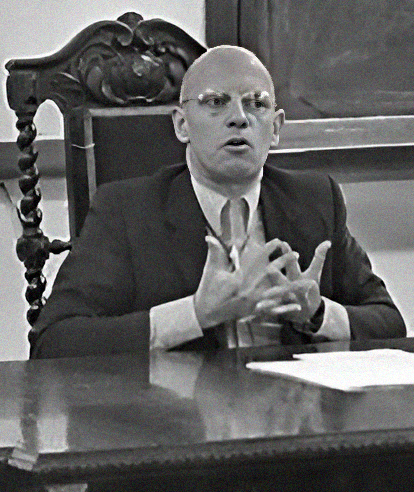
Also linked off Wiki is this interview with Foucault (at left) and others, about six months after the first petition in Le Monde.

One of the speakers says the push for a an age of consent, after some people were outraged by the petition to see that France didn't have one, is all about American puritan prudery crossing the ocean.

No, really. Guy Hocquenghem, one of the signers:

When someone says that child pornography is the most terrible of present scandals, one cannot but be struck by the disproportion between this -child pornography, which is not even prostitution - and everything that is happening in the world today- what the black population has to put up with in the United States, for instance.

What is there to say but what the fuck?

Well, there's more about why this is a what the fuck.

Yes, it's true that children understand something about what sexual organs are, etc. But, for Foucault to try to equalize a child's sexuality to an adult's is ridiculous. Part of what I see playing out is a continuing interest in Freudianism at this time among both the philosophers and psychologists who signed the petition. And, a veiled hint that an age of consent would be a societal version of Freudian repression. And, of course, from that, Hocquenghem says that the idea of a "pervert" is nothing but a social construct.

What's also "interesting" is that both Foucault and Hocquenghem died from AIDS. Foucault is identified as the first French public figure to do so. Whether either took any sexual precautions after the first AIDS alarms, I don't know. But, they had the opportunity. After all, Luc Montagnier is French, and he was first talking about it as a retrovirus back in 1983, and most of the basic issues had been worked out by 1985 or 1986.. It's also "interesting" that Hocquenghem started a sexually abusive (because it might fall under statutory rape age!) relationship with a high school philosophy teacher when he was 15.

Speaking of that, and per the interview, I'm actually surprised that none of the signees made a direct appeal to Athenian pederasty.

I would like to think that Camus, were he still alive at the time, would not only not have signed such a petition but would have called it out. But, of course, I don't know that.

And, no, this isn't "old Europe" in general. The Atlantic lists information on a number of European states that have explicit age of consent laws and what those ages are.

Thursday, August 13, 2020

Coronavirus, philosophy, the noble lie, and the
real problem with Dr. Fauci (and his defenders)

The noble lie, of course, begins with Plato in The Republic. Internet Encyclopedia of Philosophy's entry on The Republic has more depth.

Its most destructive recent version has been in Straussian economics, and more broadly, Straussian neoconservativism.

That said, its latest proponent was Dr. Anthony Fauci. Only, unlike Plato or Straus, his noble lie was not deployed in the service of political leadership. It was more noble yet, but like all noble lies, both a lie and a lie whose attempt at nobility eventually backfired.

You don't have to go to wingnut websites to find that Fauci did, in the early days of coronavirus, say that masks don't work. Snopes, which in its attempt to go beyond skepticism to political fact-checking, has largely put its oar in the waters of the Democratic half of America's two duopoly parties, calls his claim "outdated." And, this is nothing but high-grade hypocrisy from Snopes.

There's three real options. Either he said it (as he did) and it's "true"; he didn't say it, and it's "false"; or it can't be determined and it's "unknown." NOT "outdated."

And, we know he said it.

Sadly, Snopes isn't the only defender of Fauci. (And, these defenders often have their own political tribalisms; BlueMAGA is as tribalist as MAGA). Snopes certainly does, and that's why, when it went beyond true/not true factchecking at the start of the Trump era, I delisted it. As for more on what those defenders are getting wrong, even in the science world, see this update at bottom.

Meanwhile, there's worse. Only four weeks ago, Business Insider reported that Fauci STILL STOOD BY telling the "noble lie."

Here's what he said:

"I don't regret anything I said then because in the context of the time in which I said it, it was correct. We were told in our task force meetings that we have a serious problem with the lack of PPEs and masks for the health providers who are putting themselves in harm's way every day to take care of sick people," Fauci told O'Donnell.
NO, NO, NO.

This is just like Plato, or Straus ... or do I go Godwin's Law?

Doubling down on the original noble lie with a lie about it.

You tell the truth.

Like, maybe, saying something like this:
Dear America: We don't know how serious the novel coronavirus will be, but information from many places in the world shows this is indeed more serious than the flu. Unfortunately, we have a shortage of surgical masks at this time. Our national leaders are doing everything they can to address this. So, at this time, in weeks ahead, we are asking you to take an abundance of caution when venturing outdoors.
But Fauci's refusal to admit he was wrong makes the noble lie that "noble." When one doubles down on a lie like that, then it's really the "noble lie."

In addition? China was recommending masks even for people with low infection risk at the time Fauci said, "nahh."

Update, Aug. 23: There's also the fact that Zeynep Tufekci, on Twitter, was calling out Fauci et al AT THE TIME he made his original statements, per this NYT piece. Extracts from it are worth reading:
Public health officials seem to have had an ulterior motive when they told citizens that masks were useless: They were trying to stave off a run on protective gear that could have made it unavailable for the health care workers who needed it. Ms. Tufekci’s faith in human nature has led her to believe that the government should have trusted citizens enough to level with them, rather than jeopardize its credibility with recommendations it would later overturn. 
“They didn’t trust us to tell the truth on masks,” she said. “We think of society as this Hobbesian thing, as opposed to the reality where most people are very friendly, most people are prone to solidarity.”

There you go. As I note below, and did so in sending a link to this blog post in response to her Tweet, it's possible, even likely, that coronavirus denialists and conspiracy theorists would have found other things to fuel their bubble views. But, more fuel for the fire is never good. (And, in that sense, I'm less optimistic than she was in her original column for the NYT calling out Fauci et al.) And, a sidebar to her: Good luck at The Atlantic. If you really believe in Zapatista Solidarity, aren't you at the wrong spot?

And, saying that Fauci wasn't the only one saying "nahh"? Pointing to Surgeon General Jerome Adams and others? "Just following the herd" isn't THAT different at times from "just following orders."

In addition, a herd telling a noble lie makes it worse by amplification, which then can open the doors to fallacious appeals to authority. (As far as I know, Fauci, Adams and others have never had serious training in medical ethics, or larger sociological ethics, therefore, as opposed to actual medical science issues, an appeal to them on "no masks" would be fallacious.)

As for the damage?

It's quite likely coronavirus denialists and conspiracy theorists would have found other things to fuel their bubble views. But, more fuel for the fire is never good. And, Greg Ip says encouraging early mask wearing might have helped nuance lockdowns and other strategies more selectively, early in the "game." That said, per that WSJ link, we need to be careful about thinking that Sweden's numbers showed that herd immunity worked. Rather, Swedes may may have heard enough in the news about how bad things were in their country and started masking up, started having businesses require masks, etc. And, Ip's info from JP Morgan claiming Sweden's economy suffered less than its Nordic neighbors? Business Insider says that's simply untrue.

Sadly, this untruth is even percolating among people who should know better. "Orac" of his own nom de plume and now part of the gang at Science Based Medicine, made this claim, or at least left himself open to interpretation as making that claim, Nov. 16.

Anthony Fauci, Deborah Birx, and others tried to emphasize responses to the pandemic based on the best public health science. …Messaging on masks early in the pandemic was borderline disastrous, such as when the main message being promoted was that people probably shouldn’t wear masks routinely unless they were sick. … Unlike Fauci, however, Trump refused to change his mind when evidence had by June become pretty definitive.

Sadder yet, this is a 2020 installation of what Orac has done at least one year in the past — a blog post about scientists trying to communicate science messaging to the general public within the American political world.

And, sadder, sadder yet, Orac ignores the February message out of China.

We'd all at least had a shot of being better off, and certainly couldn't have been worse off, both on getting a clear masking message early on AND a clear seriousness message early on, if Fauci had just said: "Masks help prevent the spread of coronavirus. We aren't sure how much they help, but we know they help. Right now, they're most needed by our medical personnel, but any substitute for them is better than nothing," we'd all be well off. After all, Gizmodo ran its DIY masks piece April 6, and notes it was just a week after the CDC issued a masks call.

And, Tufecki's Tweet? MARCH FIRST.

=

Update: Fauci has since this time admitted engaging in a SECOND noble lie, this one over the percentage of Americans who need either vaccination or previous contraction of the disease to provide "herd immunity."

Let's also not forget that, even as other medical experts, and emerging sociological experts like Tufekci, said otherwise, Fauci in March 2020 also DID utter "just the flu" statements.

Was Fauci better than Trump? Yes. My left butt cheek is better than Trump. But, #BlueAnon / #BlueMAGA tribalism, including that of Snopes, can't hide the facts.

Update 2, June 1, 2021: Fauci's now been busted, under emails obtained by BuzzFeed in an FOIA request, of having spread his original Noble Lie about masks privately already in late February of 2020. Sadly, BuzzFeed engaged in its own tribalism by which emails it chose to focus on for its story, promoting Fauci hagiography rather than his lies about masks — or his hints that, just maybe, the virus DID come from a lab leak at the Wuhan Institute of Virology.

If Fauci had any integrity, as well as political responsibility, he'd at least resign as Biden's special medical advisor at a minimum. At a maximum, he'd also step down from NSAID as well. And, BuzzFeed, if it had any sense of journalistic ethics, would do a second story. Somehow, I don't think either one would happen.

Update 3, July 1, 2021: Jared Yates Sexton, reflecting on the death of Donald Rumsfeld, reminds us of the deadliness of the Platonic Noble Lie.

Thursday, July 09, 2020

Peter Singer disciple may be even more
outrageous than the master

I missed this piece from Nautilus just over a year ago, but it's a look at Oxford philosophy prof Julian Savulescu, a disciple of Australian philosopher Peter Singer.

First, he shoots himself in the ethics foot in one area. Call it either the demarcation problem, per old philosophy friend Massimo Pigliucci, or else call it the sorites paradox.

Among things he says many people get wrong, ethically (and he seems to be talking about his fellow professionals in the field, not just outsiders) is something like blood doping for bicyclists. He says he is OK with low-level doping.

That leads to two immediate questions:
1. What is "low level" vs "high level" doping? That's more a demarcation problem than sorites issue, but could be a bit of both. In fact, I see them as interrelated. How many micro-moles of extra oxygen, if I'm oxygen-loading, to reverse the sorites paradox, can I add before I move from low-level to high-level?
2. Why NOT on high-level doping? (He never says why not, in the interview.)

His talk about eugenics is overall more ethically reasonable. That includes the part that classism issues will arise with it until we move to a post-capitalist world. (I agree, and use the word post-capitalist rather than anti-capitalist, in part because of any Marxist implications it has.)

His part about lifespan extension, though, is a fail, especially since he talked about moving to a post-capitalist world on eugenics. Our planet is getting closer and closer to a "carrying capacity" problem. When we hit 9 billion in another 30 years or whatever, and 1 billion more than today of that number trying to have a halfway "Western" lifestyle, including air conditioning that exacerbates climate change in a negative feedback loop, we'll be in trouble. Working to extend the average human lifespan to 120 or more will just put all those problems on steroids, and Savulescu misses that entirely. He does mention resource depletion later, as a separate ethical issue, but doesn't make a direct connection.

Regular readers of my philosophy-related writing know I'm not a system-builder. But, I do think you have to have a systemic consideration, and not just an ad hoc consideration, of empirical facts on, or likely to be on, the table.

Savulescu fails to do that. And, it's not necessarily him alone. Utilitarianism in general at least runs that risk.

Thursday, February 27, 2020

Christianity-spouting presidential candidates versus philosophy and biblical interpretation

So, a lot of people, and not just her most ardent backers, applauded U.S. Democratic presidential candidate Elizabeth Warren for raising Matthew 25, namely, the phrase about "whatever you do to the least of these, you have done unto me.

Well ... it's not so nice, in two ways that I mention on Twitter and one way that I'll add to that.
So,.what is this dilemma?

Per the link (and you can find it at any basic philosophy website, too, as I slack on a vow to use Wikipedia less this year and stop rewarding its Zionist owner), it's pretty simple, and it comes from Plato. Whitehead wasn't right that all philosophy, or even all Western philosophy, is but footnotes to Plato, but most of pre-1900 Western philosophy mostly is. But I digress.

Plato had Socrates ponder to Euthyphro:
"Is the pious loved by the gods because it is pious or is it pious because it is loved by the gods?"
And it IS a dilemma.

In case you don't want to think it through, let me help.

Substitute the word "good," and it becomes yet more stark.

If something good is loved by the gods because it is good, then the idea of goodness stands outside of the gods. If something is good because it's loved by the gods, then divine decrees could be arbitary.

And, yes, Plato used "the gods" plural. But, many classical Greeks were some sort of henotheists, at a minimum. Besides, it actually applies in spades to the Greek-extracted omnipotent + omnibenevolent god of Christianity.

(I had a graduate student at Harvard Divinity, a deep drinker from the "Ground of Being" [use solemn voice] Paul Tillich idea of god claim it didn't, but he was simply wrong.)

So, that's the philosophy issue: Trying to ground human ethics on a divine pronouncement gets you in trouble.

And, per that Wiki link, it's not a false dilemma and the idea exists independently of Platonism.

Per the tag, I've obviously blogged about this before.

==

And now for the biblical interpretation side.

Click this link to read Matthew 25, especially the last part from which Warren extracts "the least of these," if you're not familiar.

Three originally independent chunks of text, with a loose unity, come together.

The Parable of the Wise and Foolish Virgins is about being prepared for the Last Judgement.

The Parable of the Ten Talents is about manifesting one's faith while living a life expecting the return of the king — "The Return of the King" — it's about expecting the Last Judgement and manifesting faith, not about expecting Aragorn. The parable talks of the "master," to be honest, not a "king," but I couldn't resist the joke.

It doesn't come off as much of a parable as the Virgins, but, the passage begins with "again," indicating that it too should be regarded as a kingdom parable.

The Sheep and Goats ends us.

I don't call it a parable at all, though many commentators do. There is no "again" connecting it, and there is no "the kingdom is like" introduction. "Pronouncement story" (extended) or something like that is a better descriptive.

Anyway ...

It's a story about that Last Judgment to which the two parables above point.

Yes, Jesus does say to the "sheep" just what Warren quotes.

He also sends the goats to an eternal hell. It says that quite explicitly at the end of the story.

So, my second tweet:
And, yes, all of that, including the Tertullian stuff, is quite true. Yes, it's a punishment based on good works, not Pauline faith, faith, faith. Still, it's an eternal punishment based on this-world temporal evil. Arguably, the Jehovah's Witnesses idea of annihilation is less painful.

But, this is the Golden Rule, right?

Yes, and ...

The Silver Rule, as it's often called, is better. It's more laissez-faire. It's less meddling.

And, it is?

"Do NOT do unto others what you do NOT want done unto yourself."

In other words, live and let live in an ethical sense.

So, all political candidates, above all, presidential ones? "Judge not (by what biblical passages you cite) lest ye be judged."

Saturday, August 24, 2019

Science and greed, Morozov and Horgan,
Brockman and Edge and ethical cold takes

The Edge Foundation is well known to science and philosophy fanbois and fangrrlz, including myself, with its big "annual question" that founder and proprietor John Brockman asks leading philosophers and scientists.

But, there's also a private version.

Evgeny Morozov calls it "an elaborate massage of the ego (and apparently much else) for the rich, the smart, and the powerful."

Turns out there's a horrible pun of sorts in that material in parentheses.

In the article, Morozov drops the reveal on just how much of a "FOJ" Brockman is. That would be as in "Friend of Jeffrey," with the Jeffrey being Jeffrey Epstein. And there's your horrible, and horribly true, in all likelihood, pun.

Brockman is also a heavy hitter in the book agency world for science authors. THAT now explains, I think, the Lawrence Krauss connection with Epstein.

Morozov explains:

Epstein participated in the Edge Foundation’s annual questions, and attended its “billionaires’ dinners.” Brockman may also be the reason why so many prominent academics—from Steven Pinker to Daniel Dennett—have found themselves answering awkward questions about their associations with Epstein; they are clients of Brockman. Marvin Minsky, the prominent MIT scientist who surfaced as one of Epstein’s island buddies? A client of Brockman’s. Joi Ito, the director of the elite research facility MIT Media Lab, who has recently acknowledged extensive ties to Epstein? Also, a client of Brockman’s.
So, Krauss, infamous for his own Epstein connections, was either an imperial playtoy at one of these dinners, a Brockman agency client, or both. (That "prominent academics" link makes clear Krauss was invited to one of the shindigs, if nothing else.)

So? Which is exactly where Morozov goes next:
Should we just write it off as natural collateral damage for someone with a network as extensive as Brockman’s?
And his answer to his rhetorical question is no:

In Brockman’s world, billionaires, scientists, artists, novelists, journalists, and musicians all blend together to produce enormous value — for each other and, of course, for Brockman. This mingling of clients doesn’t happen in other literary agencies, at least not to this extent. Nor does this happen at Brockman Inc., as all such interactions that we know of took place under the umbrella of the Edge Foundation, a sibling organization, with Brockman as its president. Would Brockman Inc. exist without the Edge Foundation? Possibly—and it did, at the outset. Would it be as powerful, trading on Brockman’s ability to rub shoulders with academics and billionaires alike? Probably not. Still, I can attest that Brockman’s authors face no pressure to get involved with Edge: I, for example, diligently responded to their annual questions between 2010 and 2013—and then stopped, as I was put off by Brockman’s insistence that people responding to the annual question should keep away from politics.
So ... Dennett, Pinker and many others, even if, unlike Krauss, they have never had anything besides their egos massaged, have been at least partial accomplices in having Brockman's ego massaged through silence. That's Morozov's take. 

He continues in that vein:
When the Epstein-Brockman connection first surfaced in the news, I wanted to give Brockman the benefit of the doubt. ... In the last few weeks, such a charitable interpretation has become very hard to sustain, especially as other details ... became public. John Brockman has not said a word publicly about his connection to Epstein since the latest scandal broke, preferring to maintain silence on the matter. That I have found quite infuriating.
Morozov then personalizes why he finds this infuriating. He said he got an email from Brockman in 2013, intended for somebody else. They had a back and forth and Morozov makes this observation, aided to some degree by hindsight, as he says that, years ago, he didn't know who Epstein was (born in Belarus, I have no doubt on that):
In that old email, it seems clear that Brockman was acting as Epstein’s PR man.
There you go. And, 2013 was after Epstein's original conviction, of course. He expands:
(N)ow that I’ve found that old email he sent me, I cannot believe that he knew absolutely nothing of Epstein’s wild sexual escapades—in fact, his email suggests he was trying to capitalize on them to recruit yet another useful idiot into Epstein’s network.

OK, that's that.

Morozov has decided to act.
I’m just one of the many authors in Brockman’s agency; my departure wouldn’t affect anything. I am also the last one to complain: His agency sold two of my books, and I have two more underway, also sold by them. 
Yet, I am ready to pull the plug on my association with Brockman’s agency—and would encourage other authors to consider doing the same—until and unless he clarifies the relationship between him, the Edge Foundation, and Epstein. If such an explanation is not forthcoming, many of us will have to decide whether we would like to be part of this odd intellectual club located on the dubious continuum between the seminar room and a sex-trafficking ring.
Sounds reasonable enough and straightforward enough.

So, after reading this, I Tweeted the link to two online friends of mine, philosopher and philosopher of science Massimo Pigliucci, and science journalism professor John Horgan.

Let's just say I found Horgan's response "interesting":
I don't think I'm at "infuriating," but beyond the scare-quoted, not reference-quoted, "interesting," I find his response more than "interesting." 

That said, the Slate piece that Morozov links in my first pull-quote points up more of the Epstein problem. He has almost exclusively courted male scientists with his grant funding. That, in turn, beyond its relationship to sexual procurement, is a clear promotion of sexism in science. That may not be on Brockman, but even it kind of is, even if he didn't know about Epstein's hideous sexual abuse. That said, people whom Brockman invited to participate on the public version of The Edge were almost all men, too.

Beyond that, I thought the "great question" on the public version of The Edge often bordered on pretentiousness. Many of them recycled themselves.

It seems that John Brockman's greatest sales job has been selling himself.

Also, as I've said elsewhere about movement skepticism and atheism, science, especially when carried out to scientism, is no guarantor of moral (or well-rounded intellectual) superiority.

Thursday, July 25, 2019

Can you get an "ought" from an "is"?

The traditional answer ever since the middle of the 1700s, per David Hume on the is ≠ ought problem, is a semi-clear to clear no.

But, Massimo Pigliucci says otherwise, using Philippa Foot's original claim as justification.

I remain unconvinced, and told Massimo so, including telling him that I thought she was practicing "discourse ethics."

At a minimum, the claim that it's "super easy, barely an inconvenience," as Philosophy Now says, is laughable.

Several things to unpack.

Per the top link, Hume himself, didn't always dodge this bullet. But, I would argue that, first, this might be a case of Emerson's foolish consistency. I would also argue, as the link notes, that Moore and others took similar stances.

Foot is a moral realist as part of being a virtue ethicist. I'm not a moral anti-realist, but I'm not planted in the moral realism camp. I'm really some kind of moral skeptic, but one who rejects moral error theory. I'm probably more a non-cognitivist, then a Pyrrhonic moral skeptic second. I think Hume, today, with his famous statement on the passions, might see himself as a non-cognitivist, calling moral statements emotional ones in many cases.

Or, like Massimo himself, as I blogged about a year ago (that's maybe a sound of a petard you hear, Massimo), I'm a moral naturalist, who, if you want to use other labels, is a moral non-realist, or a person who "mu's" moral realism. But, it's not totally the sound of a petard hoisting, not there.

And, I'm an eclecticist on schools of moral thought; I have some ideas that square more with utilitarianism, while not being fully planted there, either.

I think the criticisms of moral realism in the last paragraph of that Wiki link are cogent. Other than a few clear moral stances such as "do not murder," why are there multiple, not just two, but three, five or seven, different stances on many moral issues if moral facts exist? And, since Foot herself invented the trolley problem, and people's thoughts on this run a broad spectrum, and there's a different broad spectrum when one actually has them do this in a virtual reality machine, we're at least halfway into petard-hoisting right now.

Massimo seems to try to avoid the petard when he says he's a moral non-realist but not anti-realist. He then calls himself a moral naturalist.

The evolution of ethics along with human psychology is also of note. Plus, moral realism doesn't seem to leave room for cultural evolution. In fact, if we substitute "Mother Nature" for Kant's god, it risks running into a deontology brick wall. And, here, I think that includes Massimo. And the petard. That said, humans' ability to evolve culturally is itself ultimately a naturalistic artifact, so Massimo may be back off the petard, especially as he stresses the importance of cultural evolution elsewhere. But ... I don't really think that's in his moral naturalism stance.

I think, if Hume were alive today, he'd look at the behavioral economics of Amos Tversky, Daniel Kahneman, Dan Ariely, et al, and build on his empirical background to articulate a parallel theory of "behavioral ethics." Just as they challenged the idea that we are rational economic actors, I think he'd use similar modern behavioral studies to challenge the idea that we are rational moral actors, which virtue ethicisists essentially claim we are.

He, good philosopher that he was in many ways, wouldn't confine that within psychology, though.