Yes, this is the centennial of the piece that arguably, more than any other of the past 150 years, changed modern Western art music.
With this year being the 100th anniversary of the Rite of Spring, here's a great article, one scandalous when it appeared, by Stravinsky's eminence grise, Robert Craft, about what all went into its formation, including Stravinsky's connections with Diaghilev, Ravel, and others.
And go here for a YouTube search of works by the Lithuanian composer Mikalojus Ciurlionis, mentioned in the piece.
Craft also gives a good analysis of the creation of this masterwork itself.

Wednesday, August 28, 2013

Friday, August 23, 2013
A good Mahler 6 is about nonexistent, I think
While I've got his Mahler 6, Boulez's effort here is not one of his best. And, between used CD stores and YouTube, I've sampled at least three dozen different M6 recordings, or at least the opening movement.
And, more than any other symphony, getting the opening movement correct is key. Normally, I have a very good understanding within 2-3 minutes of just how good, or bad, a first movement in general, and likely a whole M6 in general, will be.
Too many conductors pay too much attention to the "Ma non troppo" and not enough to the "Allergo energico" notation of the first movement. Among those that do pay attention, half or more of them don't nuance the tempo enough (listening to Bernstein now, with just that problem). And, for a few who get the whole first movement more than halfway correct on "snappy but nuanced" on tempo, and on good volume, usually either get one or the other of the middle movements a bit wrong, or get the finale way wrong.
That said, in an M6, I prefer the Scherzo come before the Andante on the middle movements. And in this structure, especially, it's key not to dawdle the finale.
===
I had new hopes in listening to Zinman's M6, part of a new recording release of the full Mahler cycle. He's better than Boulez on this one, in some ways. However, he clocks the overall symphony at more than 80 minutes, meaning he's dragging somewhere. Ditto on the M2. (Note: Every Mahler symphony, except the 3rd with repeats included, should be a 1-CD affair. And righly so, without rushing.)
And, not, this isn't "just me" saying this, and even if it were, it's not because I'm cheap about buying CDs.
Reportedly, the composer himself, baton in hand, clocked the 7th at under 75 minutes at its premiere.
Due to this, primarily, a lot of modern conductors whom many classical aficionados tout as being great on Mahler are bleah or worse in my book.
Michael Tilson Thomas is so-so at best; semi-hit and more-often miss might be more accurate.
Simon Rattle is simply horrible. I heard him, and saw him, on PBS, not too long after he got the baton in Berlin, do either the 2 or the 6. It was awful.
Bernstein? Lenny was OK at times, godawful at others. I heard him earlier doing a Mahler 6 at Vienna. Certainly "allegro energico," but certainly also totally lacking in tempo nuance, per my plaint above. (Of course, Lenny's Beethoven Ninth after the fall of the Berlin Wall showed just how much he lacked nuance. The finale was the worst Beethoven train wreck I have ever heard.)
Giuseppi Sinopoli got touted for his alleged psychological insights in the early 1990s, when he started branching out into non-operating major conducting. His M6 got draggier with each movement; the finale sounded like a funeral march and I've never bought a CD of his stuff since.
Gustavo Dudamel knocked the socks off the Shostakovich 10, or at least the "Stalin's dead" movement. But his Mahler is almost somnambulent.
As I noted above, Boulez is generally good on Mahler tempos, including some degree of nuance, though he misses some of the late-Romantic side of Mahler. But, he's not always great, or even very good. His M2 just is wrong, and that's with having recorded it before officially jumping into the full Mahler cycle with Deutsche Gramophone, then again as part of that cycle, near the end. He blew it both times and didn't seem to have learned a lot in between.
==
And I take all the above back!
Kondrashin!
Slightly rushed opening, but overall, very good tempo. Andante before scherzo.
And, more than any other symphony, getting the opening movement correct is key. Normally, I have a very good understanding within 2-3 minutes of just how good, or bad, a first movement in general, and likely a whole M6 in general, will be.
Too many conductors pay too much attention to the "Ma non troppo" and not enough to the "Allergo energico" notation of the first movement. Among those that do pay attention, half or more of them don't nuance the tempo enough (listening to Bernstein now, with just that problem). And, for a few who get the whole first movement more than halfway correct on "snappy but nuanced" on tempo, and on good volume, usually either get one or the other of the middle movements a bit wrong, or get the finale way wrong.
That said, in an M6, I prefer the Scherzo come before the Andante on the middle movements. And in this structure, especially, it's key not to dawdle the finale.
===
I had new hopes in listening to Zinman's M6, part of a new recording release of the full Mahler cycle. He's better than Boulez on this one, in some ways. However, he clocks the overall symphony at more than 80 minutes, meaning he's dragging somewhere. Ditto on the M2. (Note: Every Mahler symphony, except the 3rd with repeats included, should be a 1-CD affair. And righly so, without rushing.)
And, not, this isn't "just me" saying this, and even if it were, it's not because I'm cheap about buying CDs.
Reportedly, the composer himself, baton in hand, clocked the 7th at under 75 minutes at its premiere.
Due to this, primarily, a lot of modern conductors whom many classical aficionados tout as being great on Mahler are bleah or worse in my book.
Michael Tilson Thomas is so-so at best; semi-hit and more-often miss might be more accurate.
Simon Rattle is simply horrible. I heard him, and saw him, on PBS, not too long after he got the baton in Berlin, do either the 2 or the 6. It was awful.
Bernstein? Lenny was OK at times, godawful at others. I heard him earlier doing a Mahler 6 at Vienna. Certainly "allegro energico," but certainly also totally lacking in tempo nuance, per my plaint above. (Of course, Lenny's Beethoven Ninth after the fall of the Berlin Wall showed just how much he lacked nuance. The finale was the worst Beethoven train wreck I have ever heard.)
Giuseppi Sinopoli got touted for his alleged psychological insights in the early 1990s, when he started branching out into non-operating major conducting. His M6 got draggier with each movement; the finale sounded like a funeral march and I've never bought a CD of his stuff since.
Gustavo Dudamel knocked the socks off the Shostakovich 10, or at least the "Stalin's dead" movement. But his Mahler is almost somnambulent.
As I noted above, Boulez is generally good on Mahler tempos, including some degree of nuance, though he misses some of the late-Romantic side of Mahler. But, he's not always great, or even very good. His M2 just is wrong, and that's with having recorded it before officially jumping into the full Mahler cycle with Deutsche Gramophone, then again as part of that cycle, near the end. He blew it both times and didn't seem to have learned a lot in between.
==
And I take all the above back!
Kondrashin!
Slightly rushed opening, but overall, very good tempo. Andante before scherzo.
Wednesday, August 14, 2013
An incredible Allegro from the Shostakovich 10th
I don't think I've ever heard the "hair on fire" (also known as the "Damn, I'm glad Stalin is dead") Allegro from Shostakovich's 10th Symphony conducted in anywhere near 4 minutes flat.
Until now. And this, by the Simon Bolivar Youth Symphony under Gustavo Dudamel (who I heard live in Dallas several years ago):
Man, that just bristles!
It's interesting in part because I am now listening to his Mahler 2, opening movement ... and it's slow. Not quite so slow as to be ponderous, but slow. Actually, as I listen further, I withdraw that. It at least hits the edges of ponderous later on.
He does have some good sonic work, but ... it's not fully to my taste. Mahler had a lot of tempo changes, but they were usually fairly subtle and nuanced. These are too heavy. So, not fully to my taste.
However, this is. Indeed.
(The Mahler slowness doesn't seem to be limited to the Second; I've sampled the First and Ninth, and same thing. His opening to the Ninth is pretty bad.)
Until now. And this, by the Simon Bolivar Youth Symphony under Gustavo Dudamel (who I heard live in Dallas several years ago):
Man, that just bristles!
It's interesting in part because I am now listening to his Mahler 2, opening movement ... and it's slow. Not quite so slow as to be ponderous, but slow. Actually, as I listen further, I withdraw that. It at least hits the edges of ponderous later on.
He does have some good sonic work, but ... it's not fully to my taste. Mahler had a lot of tempo changes, but they were usually fairly subtle and nuanced. These are too heavy. So, not fully to my taste.
However, this is. Indeed.
(The Mahler slowness doesn't seem to be limited to the Second; I've sampled the First and Ninth, and same thing. His opening to the Ninth is pretty bad.)
Friday, August 02, 2013
A 100-minute Mahler Ninth?
Boy, now I understand more of why I've never been a fan of Bernard Haitink.
And, no, that's not hyperbole. Browsing YouTube shows him turning in a performance clocked at 1:37:41.
As with most of Mahler, other than the Fourth without cuts, if its over 80 minutes, the length of a CD, it's too long.
Indeed, the maestro and disciple, Bruno Walter, comes it at 70 minutes on the Ninth.
And, no, that's not hyperbole. Browsing YouTube shows him turning in a performance clocked at 1:37:41.
As with most of Mahler, other than the Fourth without cuts, if its over 80 minutes, the length of a CD, it's too long.
Indeed, the maestro and disciple, Bruno Walter, comes it at 70 minutes on the Ninth.
Wednesday, July 31, 2013
#SciAm has a culturo-centric fail on music
A recent blog post at Scientific American talked about the "sad" feeling of minor keys vs. the "happy" feeling of major keys, and how the author wanted to do some more specific investigation of this issue.
Several historically or culturally relevant items were missing from the piece, though.
That includes, but is not limited to:
1. The major and minor scales of modern Western music (more on that below) did not become the only two regularly used scales until the Renaissance, and even then, not really so until the later part of the Renaissance.
2. They evolved from two of the several church modes of the medieval modal system, which in turn had involved from older classical Greek modal scales.
3. Even when the Western musical world focused on the major and minor scales, they didn't all sound the same until the adoption of even or mean tuning in the 1700s, pushed by people like Johann Sebastian Bach in his two volumes of the Well-Tempered Clavier.
Before then, instruments generally had to be tuned to sound best in one or two major or minor keys. Keys that were harmonically "distant" from them had certain intervals that basically sounded ... bad at least. Perfect fourths and fifths, in the most distant keys, might instead sound halfway like the infamous "devil's tritone," the augmented fourth or diminished fifth.
4. Since Debussy's work with whole-tone scales in the late 19th century, followed by Arnold Schoenberg's serialism, Western classical music has become more loosely connected to the major-minor system.
5. Much non-Western traditional music is based on non-12 tone scales. These include India's classical 22-tone scale, the pentatonic scale of stereotypical East Asian music and more.
6. Some modern Western music has also rejected 12-tone scales, not just the major/minor system within 12-tone scales. Harry Partch is known for his work with microtonal music.
Basically, the post (I'm not going to bother hunting up the link) came off sounding like someone halfway through grad school in science program but without a single class in music theory or history spouting forth personal ideas on happy/sad and major/minor, plus tapping into modern pop Western musical preconceptions.
Tuesday, June 25, 2013
Dan Dennett's intuition pumps are leaking
"Intuition Pumps" is the name of Dennett's latest book. I probably should put "latest" in scare quotes because, like about anything he's written in the last decade, there's probably little new in it.
That said, it looks like the most subtly snarky of the original Four Horsemen of Gnu Atheism* hasn't lost that touch!
His new book, Intuition Pumps, seems like it is more of the same. Emmy van Duerzen has a good take on it, even if a bit too existential for me.
That said, while her review is more in depth, it's less scathing than this one by Eric Banks.
* I say this legitimately, with a couple of specific issues in mind.
First is Dennett's invention of the word "brights" for secularists, especially fellow Gnus. That was followed by his denial that he was implying religious believers were "dims" or anything similar. Hey, philosophers lie all the time, as well as attacking one another. (See "Wittgenstein's Poker" for the latter.) But they're usually less bald-faced in the lie levels.
Second is his hurling of the charge of "greedy reductionism" against others, while using that, either consciously or unconsciously, as a defense mechanism while refusing to look in the mirror and admit the same applies to him.
There's another good takedown here. And a longer blog post by me about both his and Doug Hofstadter's new books is here.
That said, it looks like the most subtly snarky of the original Four Horsemen of Gnu Atheism* hasn't lost that touch!
His new book, Intuition Pumps, seems like it is more of the same. Emmy van Duerzen has a good take on it, even if a bit too existential for me.
That said, while her review is more in depth, it's less scathing than this one by Eric Banks.
* I say this legitimately, with a couple of specific issues in mind.
First is Dennett's invention of the word "brights" for secularists, especially fellow Gnus. That was followed by his denial that he was implying religious believers were "dims" or anything similar. Hey, philosophers lie all the time, as well as attacking one another. (See "Wittgenstein's Poker" for the latter.) But they're usually less bald-faced in the lie levels.
Second is his hurling of the charge of "greedy reductionism" against others, while using that, either consciously or unconsciously, as a defense mechanism while refusing to look in the mirror and admit the same applies to him.
There's another good takedown here. And a longer blog post by me about both his and Doug Hofstadter's new books is here.
Friday, May 03, 2013
Dan Dennett, Doug Hofstadter get a double-barreled takedown
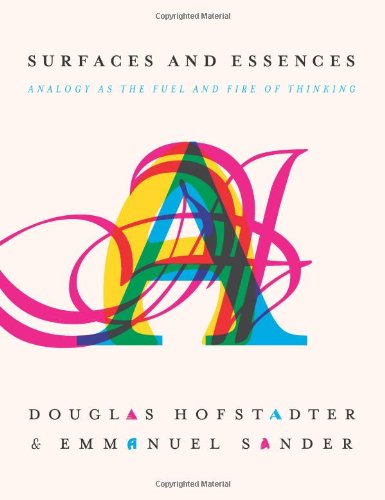
It appears "Uncle Dan" is being more snide than ever, including to the dead who can't speak back, like Steve Gould:
Intuition Pumps is valuable in providing an overview of a body of recent work in the philosophy of mind, but it suffers as well from Dennett’s penchant for cleverness—no more egregiously than in his soi-disant playfulness in mapping nasty flaws on his favorite intellectual targets, like Stephen Jay Gould. It grows tiresome and tacky: He returns to a long-ago pissing match with Gould to discuss rhetorical sleights of hand, and even coins a new word to describe the tendency to advance straw-man arguments and false dichotomies—“Goulding.”Can't believe Dennett has hit new levels of petty via-a-vis Steve Gould, for example, but he has. And, of course, he's pretty much been recycling old thoughts for more than a decade.
And, let me add that most of the time, re Gould, that Dennett was wrong, wrong, wrong.
Definitely on his claim that evolution is algorithmic. That statement's nowhere close to being provable, let alone proven. And I suspect it never will be. That statement is also an example of the greedy reductionism Dennett can see in others but never himself.
And, recycling? Hell, yes. Dennett hasn't had major new thoughts in 15 years.
Meanwhile, beyond "Goulding," his intuition pumps sometime involve an element of straw-manning, if we're going to coin phrases.
Finally, Dennett didn't invent the concept of Cartesian theater, as philosopher of science Steve Toulmin noted 15 years ago. (After all, he wasn't the only smart student Gilbert Ryle ever had.) More, though, he failed to carry out the idea that we lack a Cartesian theater-running self to the next logical conclusion — there's no Cartesian free willer, either. Imperfectly, a Daniel Wegner has carried that ball further down the field, as have others.
There's another good takedown here. Faustin Bargain is about right.
 Hofstadter gets off relatively lightly, but not unscathed.
The biggest criticism he gets is for taking the idea of analogies too far. For being too ... er, reductionistic with it! That said, it appears to be another book chock-full of his sense of word play in the service of analogies. But, with the reviewer, I think he's all wet if he really thinks analogical thinking is the core of human thinking. Ev psych is right when it points to pattern-detectors, agency-detectors, then discriminators, as being more core. And all of those are about concepts and categories first, analogies second.
Subscribe to:
Posts (Atom)