Tuesday, April 28, 2020

Of tragedy and Hume

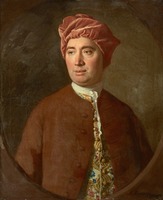
I didn't realize that David Hume wrote a treatise "On Tragedy." (As in, the tragedy of great plays and literature, and some music and plastic arts.) Walter Kaufmann referenced it in a quote cited in a new bio of him. It's from a Kaufmann work I hadn't read before.

Here's an abridged version. (The unabridged, linked off it, is about twice as long, and itself is less than, oh, 3,500 words?)

Hume reflects quasi-Aristotelian ideas in what makes good presentation of tragedy good. It needs nuance, counterbalance and framing, among other things.

He includes talk of the passions, which may be part of why good tragedy appealed to him. He then discusses what sets tragedy apart from if we saw a similar incident in real life. He says it's artistic eloquence, including but not limited to how it resolves the suffering and the issues behind it. In other words, he points to something similar to Aristotle's cathexis, though he doesn't use that language.

He also thinks that good tragedy, if based on real history, succeeds by having some distance from the historical time in question.

Hume also flips this on its head, as to why we weary of hypochondriachal and similar narratives in real life.

He also thinks it should not be too grotesque. Here, Kaufmann disagrees with him, referencing the Isenheim altarpiece approvingly.

Give it a read.

Thursday, April 23, 2020

The snoozefest and more at WRR

WRR, Dallas' classical radio station, has continued to go further and further downhill over the years. That's not just my opinion, it's that of former Dallas Morning News classical critic Scott Cantrell, who was let go, but retained on a freelancer basis, about half a dozen years ago, and due to the coronavirus, is surely not working at this time, and for further cost-cutting, may never be called back.

It's not just the mispronunciations by announcers, though there are still some of those.

It's the particular choices.

I heard recently an Egmont overture by some conductor that was so somnolent Baron Egmont would have died of boredom rather than Spanish execution had he heard it. (I got home before it was done, the conductor wasn't announced in advance, and I didn't stick around to hear who it was. Radio went off with car ignition.)

A day before that I heard Gustavo Dudamel's conducting of at least the funeral march from Eroica. Bland as well as slow. Beyond getting tempo and nuances wrong, the more and more I hear of him, the more and more I dislike him. More on that later.

Fifteen years ago, I remember hearing an absolute snoozer of the final movement of Beethoven's Ninth on WRR. It was such a train wreck I felt compelled to listen through and find out who.

Turns out it was Lenny's from Berlin after the Wall fell. I'd never heard it before, and never will again. But WRR loved it.

This happened again today, after this post went up! They were playing Shosty's Jazz Suite No. 1. I was driving for work and in and out of my vehicle, so I didn't hear the end as to who was conducting. But? Too slow. And, not that rhythmic. (That said, one could insert a joke about rhythm, jazz and the Soviet Union in here somewhere.)

At least they do occasionally let the 20th century in, besides the warhorses. I actually heard Schnittke on there a while back.

Thursday, April 16, 2020

The outrageous half-truths of Jacobin on Sartre

Jacobin, whose eclectic, editorially-unfocused (NOT a complement, editorial management) stable of contributors runs from Bernie Sanders DSAers to people stanning for the anniversary of the Revolution in November 2017, lauds "The Outrageous Optimism of Jean-Paul Sartre."

And, leads to my header.

The biggest half-truth is by omission. Even when Sartre did accept the truth about the USSR, after it crushed the 1956 Hungarian revolt, it was kind of grudging. And besides, he later shifted his worshipful devotion to Mao. That piece, by Jim Holt, is closer to the truth of who Sartre was.

The real issue is that Camus rejected violence after World War II, including rejecting the death penalty. Sartre never rejected the former, and given his praise for Mao and others, implicitly never rejected the latter. This was part of the reason for their split.

The Rebel somewhat disappointed me, but, nonetheless, Camus was light years ahead of Sartre here, even if his fallout with Sartre was not total and has sometimes been stereotyped.

Camus wasn't perfect on Algeria, but he was better than many Sartre-stanners portray him as being. Plus, he died in 1960, long before the civil war ended. And, his "federation" status might have worked. And, the idea that part of the backing of Algerian independence was an Egyptian version of colonialism? I don't think he was totally wrong there.

The real problem with Sartre? He was an absolutist. And, I think Heidegger did influence him on this. This is all part of what distinguishes Camus' absurdism from Sartre's existentialism. Per this very good CJR essay, Camus wasn't afraid of shades of gray and wasn't afraid to stand in the middle of them.

I'm too late to celebrate the 60th anniversary of Camus' death, vs. Sartre's 40th, but I can meditate on "The Plague" as a good substitute.

Beyond that, many of our best philosophers have been among the best writers, and Camus leads Sartre there, too.

Tuesday, April 14, 2020

Coronavirus, ethics and 'reopening America':
Philosophy is indeed a real-world discipline

The New York Times Magazine recently remotely convened five people to talk about the ethics of when and how to "reopen America" from the current coronavirus pandemic. While only one of the five, Peter Singer, is a professional philosopher, all five are using philosophical models for ethics.

There are three main schools of ethics.

The first is virtue ethics, which has seen a resurgence in the past 50 years. It stems from Aristotle, and its base idea is doing good for personal ethical development. I think in small part Aristotle may have developed it as a sort of humanist way around the Euthyphro dilemma articulated by his teacher, Plato. It says that there's a paradox or dilemma on ethical beliefs, and thus actions: do we hold something as good because a god or gods command it, or is something good because it's divinely commanded? The first leaves the door open for divine tyranny; the second for ethics being independent of divinities.

There is one issue, and that applies more directly to the second school. Virtue ethics is relativistic. (Many virtue ethicists will, I think, downplay this if they don't totally deny it. But, I stand by my guns.) Also, while one other ethics theory has problems the other direction, virtue ethics attempts to be normative, but, as shown by Aristotle's 11 principles, there's a lot of wiggle room outside of the social relativity factor.

Wiki uses utilitarianism for an umbrella over what it says are a family of consequentialist ethics. Both these words say something. The first — is the action useful? The second —what is the result? This is often summarized as "the greatest good for the greatest number" or similar.

This is an obviously relativistic school at the top level, and not just at lower levels. Per the "consequences," it also can be seen as "the ends justify the means." Rule utilitarians, per Wiki, try to minimize this by using some basic framing rules. And, people who focus on the word "consequentialist" usually stipulate that the issue of consequences is itself a norm.

Besides this, utilitarianism has one other problem, re the "greatest good for the greatest number." As I have said repeatedly in criticizing John Rawls' 20th-century political science liberal utilitarianism, we simply cannot achieve a "view from nowhere." Something that looks great for 330 million now (as in the coronavirus "lockdown") might be horrible for 50 million in just months. And it might be enough worse for them than the 330 million now to be worse overall. Something that looks great for them in three months (ending the lockdown quickly and with no controls) might look horrible again for 330 million in another three months.

Deontology is the third school. It was formulated by Immanual Kant, keyed by his "Categorical imperative," which tried to nail down a rule-based ethics apart from religious metaphysics.

It has huger problems than the other two, per that imperative.
1. Different people have different ideas for what should be a universal ethical law, especially once we get away from a hot-button item like murder. (Behind Kant's mindset, IMO, he's trying to create a secularist version of something that runs into Euthyphro. Biological evolution, contra this, isn't determinative for ethics any more than a god, re the first fork, and cultural evolution cannot develop ethical absolutes, re the second fork.)
2. The second bullet point comes off as a crude caricature of utilitarianism, where almost nobody talks about treating fellow humans only as means. (Bentham had not been published until after this, but utilitarian ideas were in the air of the Enlightenment.)
3. It assumes a level of human rationality which the post-Enlightenment real world has devastated. Sorry to friend Massimo and his love of Stoicism, but behavioral economics and psychology, as well as quantum mechanics at base-level physics showing this about the world as a whole, are a good indicator.

In reality, per Martha Nussbaum saying that virtue ethics doesn't clash with either of the other two schools, few professional philosophers, or other professional ethicists, are members of a single school. I would probably call myself about 45 percent virtue ethicist, 45 percent rule-utilitarian within utilitarianism, and 10 percent theoretical deontologist — that is, the idea that per the imperative nature of deontology, we should always seek to codify ethics better.

With that, let's dive in.

Peter Singer, the professional, is a deep-dyed utilitarian. He's well known, or notorious, for his articulation of animal rights issues. He has otherwise declared himself to be a hedonistic utilitarian, among the different schools of utilitarianism considered to exist today. (And that no more means debauchery than it did with Epicurus and Epicureanism.)

Rev. Joseph Barber II would exemplify liberal Protestantism's version of divine command deontology, with an admixture of virtue ethics.

Vanita Gupta, I would say, is about 60 percent virtue ethics and the other 40 percent, given her position, a secularized version of Barber's version of divine command deontology.

Zeke Emanuel is a rule-based utilitarian with some admixture of virtue ethics, as best as I can determine. Outside of medical schools run by religious organizations, this is, from what I grasp, the default position for academically-taught medical ethics.

Anne Case? Aside from jokes about economists and ethics, I would call her, per the piece and what I know about her and Angus Deaton, a preference utilitarianism.

Gupta and Barber both note that both the coronavirus and what we see in governmental response, especially at the federal level, are hammering minorities more. They don't argue for a quick reopening; they argue for more help for the poor.

Case says that some of this is a sort of comorbidity of ongoing "hollowing out" of American economic life, but she doesn't get prescriptive about that. She and Emanuel both note psychological factors of a longer shutdown.

Singer then reminds everybody that their discussion to this point has been focused on America, and to a lesser degree, other affluent countries. He then notes how the poor in India are being devastated by its sudden and brutal crackdown.

As a hedonistic utilitarian, he then talks explicitly about quality of life vs loss of life.

Barber then counters that, as a pastor, this utilitarian type counting offset is troubling in some ways.

Singer also, at least in the short confines of this discussion, doesn't discuss how to weight different hedonic issues within quality of life. And, of course, if he has such a sub-utilitarian calculus, another hedonic utilitarian will differ.

As for starting the reopening? All are OK with schools taking the lead in some way, if parents are OK.

They conclude by discussing long-term consequences. Emanuel thinks the US will ultimately have an "immunity passport." How discriminatory that would be without national health care, he doesn't touch. But, he is Rahm Emanuel's brother. His rule utilitarianism, even more than Case's preference utilitarianism, is in part capitalist driven.

Beyond that, there's some great discussion. I won't try to summarize it.

Friend Massimo Pigliucci noted a couple of weeks ago that deontology hits the wall hard at times like this. Issues such as medical triage are ultimately utilitarian.

That said, the other two main schools hit the wall themselves, albeit a lot less hard. The reality is that on tough issues like this, no single school of ethics controls the commanding heights. With utilitarianism, that's more obvious. Virtue ethics, though, has its own issues. A religious person praying for a dying secularist in the hospital, despite express desires otherwise, is one example. It's virtue developing for the person offering prayer, but a washout at best utilitarianly, and if I try to twist the Silver Rule into a secular deontology different from Kant's, a bad thing there. Wikipedia sadly (one of many shortcomings) doesn't have a separate entry on the Silver Rule.

Thursday, April 09, 2020

Orthodoxy "versus" orthopraxis

In a post two weeks ago, I noted that the idea of Christianity being all about orthodoxy and Judaism being all about orthopraxis — right doctrine on the one hand, right action on the other — was more stereotype than reality.

Going beyond that, I'd like to say that the division between orthodoxy and orthopraxis in religions in general is more a permeable membrane, and one permeable in both directions, than a wall.

Doing the right thing is usually based on a belief.

Take Communion or the Eucharist.

Catholicism traditionally reserving the cup only for the priests was a practice. But it was based on a doctrine that included ordination as a sacrament. But that sacrament developed — along with other things, such as a single clergy — out of a practice of separating the priesthood from the laity. (Single priesthood also developed from Rome as a way of trying to prevent land in a bishopric from being heritable and thus strengthening regions at the expense of Rome.)

In Judaism, I noted in that previous post, in pre-rabbinic Judaism, Qumran's use of a solar calendar was a praxis issue. But it eventually led to separation from the Jerusalem priesthood, and eventual condemnation of it on both praxis and doctrinal grounds.

Move to Buddhism, outside the Middle Eastern-Western monotheism orbit entirely. Mahayana and Theravada Buddhists may not excommunicate each other, but practices in the two that differ from each other differ in part on whether someone who is an arhat should stay around and help fellow humans or not. And, yes, and yes Buddhists, that's a doctrine. 

Within Muslims, the succession to Muhammad, or within Shia, the split between Sevenrs and Twelvers? Dogma. Per Spinoza's excommunication, defining who Yawheh is or is not, to then wonder who can say the Shema or not? Dogma. Or, if you're a Karaite vs Rabbinic Jews, the status of the Talmud? Dogma.

Tuesday, April 07, 2020

A Lutheran college myth bites the dust

As many R&B fans know, Rock and Roll Hall of Fame performer Bill Withers died recently.

His first hit was "Lean on Me."

I didn't know he had written it. Going to a conservative Lutheran college in Kansas in the 1980s, I heard that a 1970s alum, Paul Hill, had written it. And, I am far from alone, per the third comment on this answers website.

That then said, per multiple comments on this blog post, that apparently is not true. Nor, apparently, are other musical performance and songwriting claims Paul Hill made. That blog is by a Missouri Synod Lutheran parochial school teacher. I presume the majority of commenters are LCMS Lutherans and perhaps teachers themselves. Sounds like Hill did a bunch of legend-peddling. He appeared at that college once when I was there, and it was "common knowledge conventional wisdom" that he had indeed written it.

Guess that was just bullshit.

But, being a famous black Lutheran is like being a famous black Republican — you get all sorts of "passes."

Paul Hill doesn't have a Wiki page, but he does have this tribute MySpace site.

Tuesday, March 31, 2020

US Protestantism vs St Paul as a hotbed
of anti-government rebelliousness

I find it "interesting" to see the number of Protestant churches, largely non-denominational, independent churches in a generally Baptist, or more broadly, Anabaptist conservative evangelical background, rebelling against the government on coronavirus issues.

I'm not talking about general minimalizing of the severity of the virus or anything like that.

Rather, I'm talking about the ministers of such churches continuing to hold services, and in many cases, without multiple smaller-size services, in direct defiance of government proclamations.

It's halfway tempting to compare them to Paul's man of lawlessness in 2 Thessalonians:
2 Thessalonians 2:3-10 New International Version (NIV) 
3 Don’t let anyone deceive you in any way, for that day will not come until the rebellion occurs and the man of lawlessness[a] is revealed, the man doomed to destruction. 4 He will oppose and will exalt himself over everything that is called God or is worshiped, so that he sets himself up in God’s temple, proclaiming himself to be God.
5 Don’t you remember that when I was with you I used to tell you these things? 6 And now you know what is holding him back, so that he may be revealed at the proper time. 7 For the secret power of lawlessness is already at work; but the one who now holds it back will continue to do so till he is taken out of the way. 8 And then the lawless one will be revealed, whom the Lord Jesus will overthrow with the breath of his mouth and destroy by the splendor of his coming. 9 The coming of the lawless one will be in accordance with how Satan works. He will use all sorts of displays of power through signs and wonders that serve the lie, 10 and all the ways that wickedness deceives those who are perishing. They perish because they refused to love the truth and so be saved.
Actually, "Paul" should probably be in scare quotes; the majority of modern scholarship considers this pseudepigraphal, albeit with lack of consensus on when it actually was written.

Note that I said "halfway" tempting. I don't think this idea is all wet.

Certainly, the actual Paul, in one of his legitimate letters, would be highly concerned.

I am thinking of his famous "submit to the governing authorities in Romans 13.
13 Let everyone be subject to the governing authorities, for there is no authority except that which God has established. The authorities that exist have been established by God. 2 Consequently, whoever rebels against the authority is rebelling against what God has instituted, and those who do so will bring judgment on themselves. 3 For rulers hold no terror for those who do right, but for those who do wrong. Do you want to be free from fear of the one in authority? Then do what is right and you will be commended. 4 For the one in authority is God’s servant for your good. But if you do wrong, be afraid, for rulers do not bear the sword for no reason. They are God’s servants, agents of wrath to bring punishment on the wrongdoer. 5 Therefore, it is necessary to submit to the authorities, not only because of possible punishment but also as a matter of conscience. 
6 This is also why you pay taxes, for the authorities are God’s servants, who give their full time to governing. 7 Give to everyone what you owe them: If you owe taxes, pay taxes; if revenue, then revenue; if respect, then respect; if honor, then honor. 
That nails it.

That said, that passage has been ignored by U.S. Protestants since 1775 or before.

Ordainted Presbyterian minister John Witherspoon was a signer of the Declaration of Independence. Boston's Old North Church, driven by hotheads such as Sam Adams, was a ground zero of rebelliousness.

And, Romans 13 is crystal clear. No exceptions.

Paul's thought, as well as framework, are derived from the Stoic diatribe. Epictetus, for example, would have no problem agreeing with this.

Let's not forget the background of much American Protestantism.

Congregationalists were Puritans and Separatists who had rebelled against the Church of England and the ruling monarch, to lesser or greater degrees, respectively. Baptists, starting with the likes of Roger Williams, then rebelled against those Puritans and Separatists. Presbyterians had rebelled against their Stuart monarchs in Scotland when, like Mary, they remained Catholic, or when, like the Stuarts from James VI on, when he became James I in London as well, tilted Church of England and pushed for a similar Church of Scotland.

On the flip side, Methodists and Lutherans have generally accepted state authority more readily.

Catholics and Orthodox very much so, as shown by their pronouncements.

Of course, the latter four are all more hierarchical.

But Romans 13 is still clear. Period.

And, if there are ministers the likes of Jim Bakker peddling magic cures?

2 Thessalonians 2:9 I think has that covered.