Monday, October 28, 2019

Mental priming: A personal anecdote


Last weekend, I was up on the Red River. I was mucking around right by the riverfront, looking for a better camera angle on some pictures. I eventually stepped into some fairly thick clay mud.

Then I thought, what if this is the edge of quicksand? I didn't panic, but I told myself "get out now!" That was even as two lenses spilled out of my camera bag, with the top strap click-locked, but not cinched as tightly as it could be.

Well, that slippery red Choctaw clay, per the folks who gave Oklahoma its name (I was below the high water mark on the south bank so I wasn't in Texas!) wasn't quicksand, but it IS slippery, and I was sliding on any stuff that had dried out on top but was wet beneath. Fortunately, there was a "sawyer" snag downed right in front of me. I grasped it, then cleaned some of the stuff off my shoes after I got on terra firma.

So, why had I thought it was quicksand at first, at least possibly?

Well, I'd read a Backpacker article about a boyfriend-girlfriend hiking in backcountry in Zion National Park and pushing the weather. They got to a big muddy area with some bits of water in/on it, and figured they could hike through. But the GF soon hit what was quicksand. The BF got her free but got more seriously stuck himself.

He couldn't get out. He told her she had to go for ranger help. Worse? She'd never hiked with anybody but him. (Sidebar: He may have pushed her hiking development level too quickly, methinks.) She eventually did so.

Well, they were also pushing the weather there in Zion. Said BF got a fall snowstorm dropping flakes on him even as he wasn't fully dressed for the weather. (BF was not only pushing GF's hiking development too quickly, but was being young and not fully preparing, methinks.) Well, rangers eventually got there, but they all had to spend a night on the floor there as the guy's one leg was too numb from a mix of being stuck AND how forceful a wrenching (with a rope around his body connected to a ratchet) was needed to haul him out.

After I hit terra firma, I realized that had likely been in my mind.

At that point, conscious of it, it's no longer "priming."

But it surely was before that.

Friday, October 25, 2019

Martin Luther: Narrow-minded renegade

Martin Luther: Renegade and Prophet

Martin Luther: Renegade and Prophet by Lyndal Roper
My rating: 4 of 5 stars

I missed this book when it came out, I think in part due to moving to a new job. Someone who liked my review of Eric Metaxas' dreck about Luther asked if I were familiar with this book, and I said no.

Interlibrary loan did its magic and voila.

This is a much-extended version of my Goodreads review, which ultimately led me to ILL another Luther bio, one from a few decades ago.

I was worried in the preface that, despite many conservative Lutherans complaining in other reviews that it was too harsh on Luther's antisemitism, that Roper might pull punches. Tis not the case.

I was also worried, from the introduction that Roper might be too kind to the late 1520s and beyond Luther vis-a-vis the Reformed, when it talked about dialogues he had with them over the Eucharist. They were actually more monologues than dialogues, and Roper spells that out in detail.

Roper starts with a good grounding on just how well off Luther's father might have been. In the late 1400s, she says Mansfeld was producing one-quarter of Europe's new copper as well as significant amounts of silver. Hans Luder was not a mine owner, but managed smelting, and later other operations, for several mine shafts. (Miners were as rough a bunch then as today, and Luther was worried about them during the Peasants Revolt.) That said, the mines were already playing out before Luther's death, a factor in the last dispute he tried settling between the counts of Mansfeld.

Chapter 2, without going specifically Freudian a la Erick Erickson, does start looking psychologically at Luther and father figures. Obviously, the papacy, il papa, was rejected. Hans had been rejected when Luther honored his vow to St. Anne and became a monk. Roper looks at Staupitz as being a father figure, also later rejected. Duke Frederick died before Luther could get to a point of possible rejection. Even though Karlstadt was younger, he was at the university first, and Roper speculates on him as also a one-time father figure. Near the end of the book, she notes that most of Luther's close associates were young enough to be his children — Melanchthon's age or so, or even younger. She does note, rightly, that this led most of them to be yes-men, but for some reason, doesn't pick up directly on this being Luther in the father figure catbird seat.

Nor does she look at Luther's explanation to the commandments in his Small Catechism: "We should fear and love god ..." Isn't that exactly what a 1500s German paterfamilias expected? Love, but love following fear?

I also got to wondering about his monastic years, if his emotional self-abuse was a form of emotional masochism, ultimately a source of mental pleasure. Roper misses this point.

The one full chapter, and parts of others, on Karlstadt are simply excellent. Though not an Anabaptist, his Gelassenheit combined with his reforming instincts led him more that way (though NOT a "Schwarmer") than Luther's or the Reformed's ideas in some ways. He was trying to combine medieval mysticism and reform.

Roper also shows the first hints of the late-life Luther in his treatment of Karlstadt. The groveling that he made Karlstadt do at times reinforces Luther seeking the father figure upper hand, though Roper doesn't comment specifically on that.

Roper also misses something that doesn't directly connect to Luther, but yet. When Staupitz left the Augustinians and became a Benedictine, his last letters to Luther? Sure are open, at least, to the possibility that Staupitz had erotic interest in Luther.

After this, as noted above, Roper shows how Luther's battles with the Zwickau prophets et al, then with the Reformed, left him more and more surrounded by yes men. But it was left to others, like Duke John and Melanchthon, to establish a new church that eventually became known as Lutheran.

Meanwhile, Roper, like others, shows Karlstadt had the draw on Luther on Greek exegesis, specifically the words of Institution of the Eucharist. Maybe this is part of why Luther hated Zwingli at the Marburg Colloquy. It becomes clear that Luther never had an intent of moving, per the famous tablecloth story with "hoc est meum corpum" (in Latin, not Greek of course) written underneath it. That said, given that I've read elsewhere long ago that Melanchthon wanted Luther to be firm in the hope of some Catholic compromise, maybe this too is myth?

I had never before heard that Luther went as far as accusing the Reformed of being Nestorians. Interestingly, my conservative Lutheran seminary didn't mention it. Perhaps even they recognized it was a bridge too far.

Especially after Marburg and other such colloquies and so forth, it's clear that Luther was monologing, not dialoging. And, he didn't care — and also apparently didn't recognize — how much so much of south Germany was against him.

On the Eucharist, as a secularist ex-Lutheran, I accept that he was wrong exegetically on the Eucharist. Given his slowness to abandon the veneration of the host, the Reformed weren't all wet (maybe partially so) in wondering if Luther wasn't still peddling a version of the sacrifice of the Mass. That's doubly true when one looks at their different stances on what the unbelievers receive (and although papered over) what the "unworthy" receive. On this, it's not a matter of Calvinists limiting the power of Christ; nor is it tied to the limited atonement, since Zwingli, Bucer and others before John Calvin felt this way.

Indeed, as an interlinear clearly shows, it is most likely that the Τοῦτό of "this is," being neuter, refers back to δεῖπνον, or "dinner." A Westar book that I otherwise one-starred recently now has me thinking that, in light of this, Paul's Eucharist was not a Greek mystery religion dinner Judaized up, but rather, that, his Corinthian house church(es) had a monthly fellowship meal similar to those that the various guilds held in Greek towns and cities of any size. And, instead of Artemis being their patron, as with Ephesian metal smiths, Yahweh was.

That said, this is another area where Roper left things on the table, if more were available.

WHY was the sacramentarian issue life and death to Luther? Did he see the Reformed as being humanists? Did the fact that Karlstadt was the one calling him out on misunderstanding the Greek of the Words of Institution (while Wittenberg Greek scholar and son to Luther Melanchthon kept silent) get him to egg himself on? Why was he so polemical against the Reformed in general? Was it a competitive streak that recognized he was losing arguments, so he figured he would yell louder? I mean, to me, that's part of the issue right there.

That said, exegetically, and going beyond Roper, it's laughable that the Reformed appealed to John 6, and that Luther did as well to spots in the end of that chapter. Today, it seems clear that John 6 had at least three editorial rewrites before the final version of the gospel, and that Jesus almost surely said none of those words.

Roper does a decent job on "Bondage of the Will," or "The Enslaved Will" as she translates the title (probably a better translation) and the broader issues with Erasmus. But here too, items were left on the table, and the biggie again relates to the Reformed. If, per Luther, either god or devil is always in the saddle, even if "just" for individual actions, isn't that ultimately double predestination by other words?

On father figures, near the end of the book, she goes back to Luther's thunderstorm. She has Luther wondering if his dad weren't right and this was Satan, not God, though god ultimately using it.

She misses the chance to speculate on why the man who called so many things in church liturgy and ritual "adiaphora" couldn't say that many acts of life were "adiaphora," just "happenings" uncontrolled by either a god or a devil.

I mean, most mainline Protestants and more liberal Catholics today reject the idea that every action in this world is caused by either god or devil. (Beyond that, to hoist the literalists by their own petard, since god created you know who, and said in Isaiah "I bring darkness," the ultimate blame lies at his feet, as Calvin recognized logically.)

But why couldn't the Luther who rejected both Catholic and Anabaptist on sexuality, among other things, see more of life as "adiaphora" in this way? There may not be a lot to glean from Luther's writings, but let's have more of what there is to glean. As it is, he, who derided Saxon peasants for not knowing much Christianity, seems to have one foot planted in a medieval semi-superstitious mindset himself. Heiko Oberman nails this. Maybe Roper felt she didn't need to say anything, but I think she should have. Indeed, per the end of this Wisconsin Synod pastor's review of Oberman's book, I think said reviewer gets it wrong and Oberman nails it on how fear-driven Luther was. Again, the explanation of the Commandments, "that we should fear and love God ..." comes to mind. Surely good Lutheran Rev. Jeffrey Samelson knows that too — and represses it.

Third, the Jews. Roper notes, as I've read elsewhere, both that Luther's antisemitism arose from before the 95 Theses and that he wasn't along, with Eck among others being worse than Luther's earlier antisemitism. And, she does delve into the basics of his late-life virulent antisemitism, exemplified in "On the Jews and their Lies." But she doesn't ask the "why" as much as she could here, either.

Was this related to Luther's increasingly apocalyptic mindset? But the likes of Savonarola were never this vehement; no religious leader of medieval and early Renaissance Christianity ever went this far off the bend.

Anyway, again, a good to very good book, but ... there could have been more.

And, that other book on order? Oberman.


View all my reviews


Saturday, October 19, 2019

Supersessionism and Constitutional originalism

Editorial note: I originally wrote this piece at my primary blog, long ago. I thought I had crossposted it here, as it has a number of both philosophical and religious issues. 

I realized I hadn't, when looking for it to link to a pending blog post that will be up in about 10 days. So, here it is, with light edits.

===

I recently wrote an essay for The Electric Agora, an online philosophy and social sciences magazine headed by Dan Kaufman, about parallels between Constitutional originalism and religious, especially Christian, fundamentalism.

On second request for rewriting, in part to get shorter length and tighter focus they wanted, and in part because they didn't see it as an actual parallel, I think, I whacked out what I wrote about parallels in supersessionism, and further cuts were made after that. But, I thought that was cutting some meat, so I gave the OK to Dan while knowing I could run my own version here.

Christian supersessionism, of course, is the idea that Judaism is a "lesser" religion in some way, shape, or form, as Christianity has now fulfilled it, or superseded it. And, on the textual side, the New Testament has fulfilled the prophecies and superseded the mandates of the Old Testament.

I do think a similar parallel exists, namely in the relationship between the Constitution (New Testament) and the sometimes overly-maligned Articles of Confederation (Old Testament).

And, because I think this "follows," I am running the whacked part of that essay here.

Beyond that, Joseph Ellis is wrong about the metaphysics behind the Articles of Confederation.

That leads to another parallel between types of fundamentalisms, or originalisms. Where more than one sacred text is involved, how do they relate to one another?

Dan Kaufman has written about Christian supersessionism, which is in part based on the issue of relations of some texts to others.

Rather than seeing the New Testament as one possibility for an organic evolution from the Tanakh/Old Testament, it supersedes it. Here again, we have a parallel.

This one partially involves the Declaration of Independence, but also takes in the first governing document of America’s original 13 United States.

The parallel is clear. Rather than seeing the Constitution as one possibility for an organic evolution from the Articles of Confederation, it supersedes it, under Constitutional fundamentalism.

For that, too, we have to start with the Declaration of Independence, per its text.

First, the Declaration starts:

The unanimous Declaration of the thirteen united States of America, 
When in the Course of human events, it becomes necessary for one people to dissolve the political bands... (14)

All of that indicates that the Declaration's authors and ratifiers saw themselves as representing one nation. An inchoate and loosely connected one, yes, but one nation.

The last paragraph refers again to "united States of America." Again, loosely connected, perhaps, but one nation.

Ellis talks elsewhere about Jefferson and Adams as ambassadors. He ignores that they were ambassadors of the "united States of America, in General Congress, assembled," and not of Virginia, Massachusetts, etc.

Indeed, I can make half an argument that the Articles of Confederation were half a step backward from this.

So, what’s at stake in all of this?

This ultimately is more than an academic discussion of Constitutional interpretation. Rather, it’s a mindset that affects other aspects of American political philosophy — and larger American political science.

Religious and Constitutional fundamentalism have definite parallels. And, while not all Constitutional fundamentalists are Christian ones (including traditionalist Catholics here), or vice versa, many are. And, in the likes of Rowan County (Kentucky) Clerk Kim Davis, we can even see them intertwine.  And, not just at the level of federal courts vs. state officials. State agencies, to take this back to Constitutional fundamentalism, like Texas’ State Board of Education in its choice of history textbooks for the state’s schools, are driven by both types of fundamentalism.

Fundamentalism, per what I noted about “Type 2 heresies,” heresies toward people, although also possible in “Type 1 heresies,” also involves hagiography.  It’s hagiography that lies behind American exceptionalism.

These issues are also non-academic outside of the United States. With the end of the Cold War, the fall of the Soviet Union and other geopolitical changes that have opened more countries of the world to considering democratic institutions, the full background of the version of democratic institutions the United States has to offer must be considered.


Here Hume, in his thoughts on the British constitution in his opus, “The History of England,” is not fully right. Even the most revolutionary-seeming changes in government have at least a pinch of the evolutionary about them. And, interpreting governments, their texts, and their history in an evolutionary fashion is one antidote against fundamentalist, or originalist, mistakes.

The third main issue, or strategic move, of Ellis is to essentially dismiss the whole mindset behind Lincoln's "fourscore and seven years" at Gettysburg, rather than noting that that was a deliberate stake in the ground — an assertion that, contra Ellis, the United States did begin in 1776. This let Lincoln reframe the issue of slavery.


It also, although Lincoln did not go as far as a William Lloyd Garrison, let him at least obliquely criticize Constitutional fundamentalism. As I noted, as embodied by people such as Chief Justice Taney, Constitutional fundamentalism was indeed around at this time.

==

I'm now going to drop in the full amount of a related blog post from 2010 from over there.

The Economist is spot on: When people like the Tea Partiers (or Supreme Court INJustice Antonin Scalia) treat the Constitution like conservative Christians do the Bible, looking to it as both infallible and timeless, this is what happens:
When history is turned into scripture and men into deities, truth is the victim. The framers were giants, visionaries and polymaths. But they were also aristocrats, creatures of their time fearful of what they considered the excessive democracy taking hold in the states in the 1780s. They did not believe that poor men, or any women, let alone slaves, should have the vote. Many of their decisions, such as giving every state two senators regardless of population, were the product not of Olympian sagacity but of grubby power-struggles and compromises—exactly the sort of backroom dealmaking, in fact, in which today’s Congress excels and which is now so much out of favour with the tea-partiers.

With Nino Scalia, I think it's a product of his Catholic background, where priests need to interpret Scriptures in light of church tradition. So, St. Nino of Numbnuttery thinks he needs to interpret the Constitution in light of originalism.

And, it's not just Nino, but other intellectuals of the right:
Conservative think-tanks have the same dream of return to a prelapsarian innocence.
There is no such thing; governance, like Hobbes' state of nature, never was primeval.

Friday, October 11, 2019

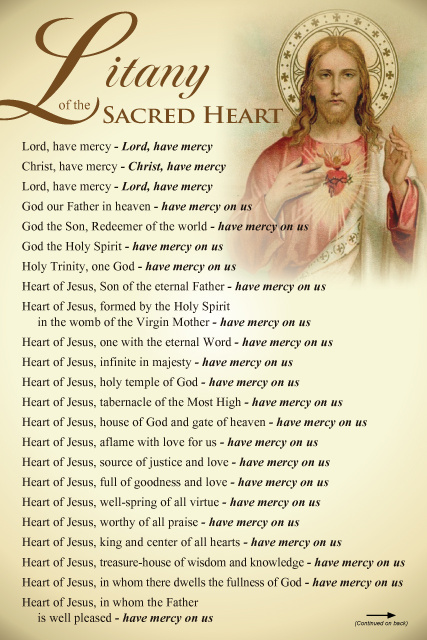
Praying to the Sacred Heart of Jesus

This, like the ritual of the Mass itself, the alleged moment of transubstantiation, is another of those Catholic rituals I simply can't accept, and don't get, as both a secularist AND an ex-Lutheran.

And, no, any Catholics, do NOT tell me these are prayers to Jesus. They are prayers to his sacred heart. And they're as literal, even literalistic, as Ken Ham or other Protestant fundamentalist beliefs and belief statements.

The image at left, along with many others like it on the Net, makes that clear, as do the countless prayers, novenas and other words of devotion that can also be found online.

I've elsewhere said that pre-Columbian Contact Aztecs who ripped beating hearts from still living sacrificial victims show that many New World First Peoples were NOT Rousellian noble savages. At the same time, as with Puebloan "versus" monastic flagellation (yes, Puebloans did it pre-contact), it seems like there was openness to cross-pollination.

The Sacred Heart devotion, like indulgences and other nonsense, started in the late Middle Ages, even though the first Feast of the Sacred Heart did not get celebrated until 1670. It arises out of older meditational devotion to the wounds of Christ.

That itself, per the Aztecs above, is itself blood-drenched and bloodthirsty enough. Per devotion to all five wounds, it comes off like Roman augury, that the wounds of Jesus might not just be comforting, but with enough meditation, might even have revelatory messages.

And yet, Martin Luther himself did NOT condemn it, unlike many other Catholic things, including the veneration of relics, which kind of parallels this. As shown at left, the famous Luther Rose has a heart at the center, which cannot be but a less bloodthirsty version of the Sacred Heart, even if Luther said the heart in his rose was the heart of faith.

As with the best biblical interpretation of the Lord's Supper, I think Luther was wrong and the Reformed were right. And it's not just the Reformed. Orthodox accuse Catholics of Nestorianism with the Sacred Heart. Arguably they're right, too.

And, of course, because there's a Sacred Heart of Jesus, as Mariology grew, especially the Immaculate Conception, there's an Immaculate Heart of Mary. And, with qualifications, Marty would probably be OK with that, too. Other than rejecting her as redemptrix, Luther's Mariology was basically pretty Catholic his whole life.

Speaking of finding things online, per a previous post of mine about advertisements in Catholic church bulletins, it seems like Catholics don't miss a chance to make a buck when devotional dedication is the issue. Check out this page, which I was led to on Googling. And, I'm going to go further on this in a follow-up post. I mean, who could resist a prayer pillow case?

And, speaking of philosophy and beating hearts, the Aztecs practiced philosophy just as sophisticated as the Thomist system that the Spanish Inquisitors brought to the new world.

Friday, October 04, 2019

More on Wittgenstein, the overrated Platonist

Via Massimo Pigliucci, I saw a new piece from a British magazine — it appears to be some sort of magazine of "ideas," but not philosophy-specific — about the overrated (yes, he's on my list of overrated philosophers) Ludwig Wittgenstein.

It reinforces my idea of a few years ago that part of Wittgenstein's problem is that he is a Platonist. Beyond that link, part of what "triggered" me into this was his work on Haus Wittgenstein. Click that link and Wittgenstein's fussiness seems to me to smack of Platonism.

It also seems to smack a small bit of bipolar disorder, and I wonder how much the two issues are connected. I do not think bipolar disorder causes a tendency toward Platonism in the philosophically minded, but, per genetics in general, might it be a "nudge" of some sort for those already leaning that way? I think so. I also think that the Haus Wittgenstein issues also hint at obsessive-compulsive disorder. On the psychology side, I think there probably some at-least tenuous ties between bipolar and OCD. On the philosophy side, as OCD is in part a quest for perfectionism, I certainly see how it would be a "nudge" for Platonist beliefs.

Now, beyond the non-philosophy issues?

First, look at the "early" Wittgenstein. Abstract logic, as in the Tractatus, is about as idealistic as you get. Imagine the consternation when he found "holes" in his system, and that he had no more shown an "end to philosophy" than Fukuyama had shown an "end to history."

Imagine even more, though I've never read about his reactions, what consternation he might have had when he read Kurt Gödel's incompleteness theorums, then Alfred Tarski's expansions of them with his undefinability theorum. (I certainly would appreciate comment from anybody who knows what sort of reactions he had, if any that have been recorded.)

Imagine more yet, if the flood of late 20th century work in things such as multi-valued logic had hit a century earlier. Wittgenstein might have had yet another nervous breakdown.

Now, the "late" Wittgenstein. (It's a British mag, so it wouldn't pick up on this, but I think now of "early" versus, or allegedly versus, "late" Nixon.)

Note that the late Witty's work on linguistic analysis, to pick up his criticizing Moore's "hand" illustration, was ultimately about language in the abstract, not everyday linguistic claims. Again, that's ... Platonic.

It's also part of why modern linguistic philosophy has largely passed him by.

In addition, to also tie this back to the top link, rather than wanting to improve linguistic clarity and related issues, I think that, vis a vis his peers, he wanted to shut down discourse. He was trying to have an ordinary language end to philosophy, or at least to philosophy of the past.

Thursday, September 26, 2019

More problems for reincarnationists

Stimulated by reading a book Michael Shermer wrote last year, I've identified two more explanatory problems for the people who tout reincarnation.

I'm talking primarily about those who tout traditional religion-based reincarnation, whether the personal soul version of much of Hinduism and Jainism, or the impersonal life force version of Buddhism.

I'm not talking about the New Ager distortionists who believe all their past lives were as the king, queen, or mighty warrior, because they're wrong even within the world of reincarnation.

Anyway, the actual reincarnation world of Hindus, Jains and Buddhists says you may come back not as the  king or queen, but as the peasant shoveling shit out of the king's stables, or, much more importantly for this, a dung beetle in that shit in the stable.

We have, a la ideas explored by and generated from Thomas Nagel's famous, or infamous, "What Is It Like to be a Bat," (text here) a mind-mapping problem. This is more a problem for the personal soul type of reincarnation; obviously, an impersonal life force doesn't have human personal soul characteristics. Whether early Buddhists thought of this as a way to explain, or explain away, this issue, I don't know.

Anyway, Nagel argued that we can't understand bat consciousness because of its subjectivity and its different sensory basis, and went from there.

Well, except for Hindus and Jains, many people, whether of professional biological bent or not, would have difficulty extending consciousness at all to a beetle. Plus, the difference between its sensory interactions with the world and ours is orders of magnitude different from the human-bat difference.

So, if karma is an iron law of rewards and punishments, beyond the well known difficulties with people (if we're all being reincarnated) not remembering past lives, how can it even be a punishment to be reincarnated as a beetle? How can the "beetle-self" feel punished? Since as far as we know, beetles don't have emotions, period, along with not having consciousness, how can they feel anything, as in feeling as emotional affect and not sensory input?

This has a flip side. If, especially if you're a Jain who takes consciousness of some sort down to what most of us would call inanimate objects, what if a, say, an ameba is being rewarded by getting promoted UP to being a beetle for being an incredible ethical and altruistic ameba?

Does that sound as silly to you reading it as it did to me, typing it?

That leads to what I see as the even larger problem. (Yep, the above is the lesser problem.) And this one hits the Buddhist types as well.

While Charles Darwin wasn't around 2,500 or more years ago, nonetheless, these ideas of reincarnation and the karma behind them seem based on a "progress" misunderstanding of evolution, and of biology in general.

Who says it's "worse"being a beetle than a shoveler of the king's shit or even the king? I suppose a "good Buddhist" might use this as a wedge to claim that the whole idea of karma is itself maybe maya, but in that case, he or she is already lighting the fuse on their own petard. From that, they're making themselves even more irrelevant to the discussion.

So, we move forward. Given that the planet would soon be run over with shit, if we had no dung beetles, whereas the world might be quite good had we no more Homo sapiens, if I were to engage a progress-based version of zoology, I'd argue the dung beetle is superior. (And, we haven't even talked about the myth of cockroaches surviving nuclear war.)

That's bad enough. Let's take it inside the human world.

Here, of course, the claim is that being the shoveler of the king's shit is worse than being the king.

Says who? Per the French Revolution, we could stand to get rid of yet more kings. Per the labor theory of value, the shoveler of the king's shit is more important whether the king is alive or shat mat.

In other words, karma and reincarnation, taken as a unit, are ultimately part of the classism of the Hindu caste system. And, as I see it, here, Buddhism talking about only an impersonal life force being reincarnated is still a Social Darwinist failure too. It still based karmic reincarnation cycles on the idea that some humans are, by group sociological observations, superior to others.

On the third hand, the British Raj intensified and codified the caste system, as part of the old divida et impera.

Thursday, September 19, 2019

Benjamin Libet dethroned; what replaces him?


I had never before known what the backstory was of the Libet experiments, what inspired Benjamin Libet.

And now I do.

It would seem indeed, per the author of an interesting pieceat The Atlantic, that the decade-earlier German research, now understood better today, undermines Libet's experimental angle.

But also reinforces his philosophical scrivening.

Here’s the backstory:
 In 1964, two German scientists monitored the electrical activity of a dozen people’s brains. Each day for several months, volunteers came into the scientists’ lab at the University of Freiburg to get wires fixed to their scalp from a showerhead-like contraption overhead. The participants sat in a chair, tucked neatly in a metal tollbooth, with only one task: to flex a finger on their right hand at whatever irregular intervals pleased them, over and over, up to 500 times a visit. 
The purpose of this experiment was to search for signals in the participants’ brains that preceded each finger tap. At the time, researchers knew how to measure brain activity that occurred in response to events out in the world—when a person hears a song, for instance, or looks at a photograph—but no one had figured out how to isolate the signs of someone’s brain actually initiating an action. 
The experiment’s results came in squiggly, dotted lines, a representation of changing brain waves. In the milliseconds leading up to the finger taps, the lines showed an almost undetectably faint uptick: a wave that rose for about a second, like a drumroll of firing neurons, then ended in an abrupt crash. This flurry of neuronal activity, which the scientists called the Bereitschaftspotential, or readiness potential, was like a gift of infinitesimal time travel. For the first time, they could see the brain readying itself to create a voluntary movement.
Twenty years later, Libet used this to argue for what he then sought to show by his own experiments — that “we” act before any of “us” makes a conscious decision to act.

But Bahar Gholipour says Libet got it wrong, and wrong from the start:
The Bereitschaftspotential was never meant to get entangled in free-will debates. If anything, it was pursued to show that the brain has a will of sorts. The two German scientists who discovered it, a young neurologist named Hans Helmut Kornhuber and his doctoral student Lüder Deecke, had grown frustrated with their era’s scientific approach to the brain as a passive machine that merely produces thoughts and actions in response to the outside world. Over lunch in 1964, the pair decided that they would figure out how the brain works to spontaneously generate an action.
Well, there you go.

Problem was, this was 1964. MRIs, CAT scans, none of that existed. What’s an early neuroscientist to do? This:
They had a state-of-the-art computer to measure their participants’ brain waves, but it worked only after it detected a finger tap. So to collect data on what happened in the brain beforehand, the two researchers realized that they could record their participants’ brain activity separately on tape, then play the reels backwards into the computer. This inventive technique, dubbed “reverse-averaging,” revealed the Bereitschaftspotential. 
But, what did it mean? Gholipour said that was anybody’s guess. One possibility? 
Scientists explained the Bereitschaftspotential as the electrophysiological sign of planning and initiating an action. Baked into that idea was the implicit assumption that the Bereitschaftspotential causes that action. The assumption was so natural, in fact, no one second-guessed it—or tested it.
Enter Libet:
He repeated Kornhuber and Deecke’s experiment, but asked his participants to watch a clocklike apparatus so that they could remember the moment they made a decision. The results showed that while the Bereitschaftspotential started to rise about 500 milliseconds before the participants performed an action, they reported their decision to take that action only about 150 milliseconds beforehand. “The brain evidently ‘decides’ to initiate the act” before a person is even aware that decision has taken place, Libet concluded.
Argument has been fast and furious ever since. The original attack angle was to accuse Libet of mismeasurement, especially since 150 milliseconds is pretty thin slicing.

And, Libet has had his defenders, including to fair degree, yours truly. That said, I took the findings in other directions, namely that selfhood isn’t so unitary; I didn’t see this as a proof of “determinism” at all.

Anyway, more and more neuroscientists, cognitive scientists and philosophers of mind have accepted that Libet got it all measured correctly. It was just the interpretation was wrong for many of them.

Move to 2010, as Gholipour does:
In 2010, Aaron Schurger had an epiphany. As a researcher at the National Institute of Health and Medical Research in Paris, Schurger studied fluctuations in neuronal activity, the churning hum in the brain that emerges from the spontaneous flickering of hundreds of thousands of interconnected neurons. This ongoing electrophysiological noise rises and falls in slow tides, like the surface of the ocean—or, for that matter, like anything that results from many moving parts. “Just about every natural phenomenon that I can think of behaves this way. For example, the stock market’s financial time series or the weather,” Schurger says.
“Static.” “Noise.” “Snow.” We all know this.

Surely that type of noise is random, though, and can’t be what Libet, or his German predecessors found, can it? Welll …
But it occurred to Schurger that if someone lined them up by their peaks (thunderstorms, market records) and reverse-averaged them in the manner of Kornhuber and Deecke’s innovative approach, the results’ visual representations would look like climbing trends (intensifying weather, rising stocks). There would be no purpose behind these apparent trends—no prior plan to cause a storm or bolster the market. Really, the pattern would simply reflect how various factors had happened to coincide. 
“I thought, Wait a minute,” Schurger says. If he applied the same method to the spontaneous brain noise he studied, what shape would he get?  “I looked at my screen, and I saw something that looked like the Bereitschaftspotential.” Perhaps, Schurger realized, the Bereitschaftspotential’s rising pattern wasn’t a mark of a brain’s brewing intention at all, but something much more circumstantial.
And from there, a new interpretation.
Two years later, Schurger and his colleagues Jacobo Sitt and Stanislas Dehaene proposed an explanation. Neuroscientists know that for people to make any type of decision, our neurons need to gather evidence for each option. The decision is reached when one group of neurons accumulates evidence past a certain threshold. Sometimes, this evidence comes from sensory information from the outside world: If you’re watching snow fall, your brain will weigh the number of falling snowflakes against the few caught in the wind, and quickly settle on the fact that the snow is moving downward. 
But Libet’s experiment, Schurger pointed out, provided its subjects with no such external cues. To decide when to tap their fingers, the participants simply acted whenever the moment struck them. Those spontaneous moments, Schurger reasoned, must have coincided with the haphazard ebb and flow of the participants’ brain activity. They would have been more likely to tap their fingers when their motor system happened to be closer to a threshold for movement initiation. 
This would not imply, as Libet had thought, that people’s brains “decide” to move their fingers before they know it. Hardly. Rather, it would mean that the noisy activity in people’s brains sometimes happens to tip the scale if there’s nothing else to base a choice on, saving us from endless indecision when faced with an arbitrary task. The Bereitschaftspotential would be the rising part of the brain fluctuations that tend to coincide with the decisions. This is a highly specific situation, not a general case for all, or even many, choices. 
Other recent studies support the idea of the Bereitschaftspotential as a symmetry-breaking signal.
Symmetry breaking. Like the weak nuclear force and certain particle symmetry being broken once cosmic inflation expanded enough, according to the “Standard Model”?

Why not?
It’s still possible that Schurger is wrong. Researchers broadly accept that he has deflated Libet’s model of Bereitschaftspotential, but the inferential nature of brain modeling leaves the door cracked for an entirely different explanation in the future.
So, I’ll expound my idea.

As I see it, this is similar to "virtual particles" popping up out of a "quantum foam," per an idea in quantum mechanics.

Put another way, this takes Dan Dennett's idea on how "subselves" pop up another step further, while also refuting part of it.

Those subselves, or specific actions by bigger ones of them, at least, aren't a matter of Darwinian competition. Rather, they're ultimately that mental substrate version of quantum foam.

Of course, I have long rejected Dennett's ideas that Darwinian-type evolution drives much of life outside of biological evolution. I have even more rejected the idea that algorithms are the driver. Quantum mechanics, when it comes to individual events, no matter what quantum interpretation one stakes one's life on, is not algorithmic. 

With Dennett, more than the greedy reductionism he decries in others but seems to practice all too much himself, often, I now think, it's lazy reductionism.

I've argued with Massimo Pigliucci about Libet before, as here. (Polite, not normal Internet arguing, but in the more professional sense, and we don't totally disagree on some things; in fact, we semi-agree on a fair amount of free will and volition ideas.) I could partially reconcile on Libet's interpretation of his experiments being wrong, but I've never fully bought into his interpretation in the first place. I've always interpreted them in the vein of subselves, and now, this new take on what Libet was actually finding only moves me more that way.

==

Update, Nov. 5: Bill Bryson, in his excellent new book "The Body," talks about the one-fifth second delay in optic nerve transmission speed and how the brain confabulates that to try to give a "real time" appearance of what we see. While there's no choice nor veto there, that confabulation also calls into account traditional ideas of free will, while also not at all supporting traditional ideas of determinism, either.